

Shipping Freight Rates Hit All-Time High—Why the Boom Won’t Fade Soon
ClarkSea Index soars to $64,569 per day, 27% above the 2007 peak as tankers, bulkers, and containers rally.
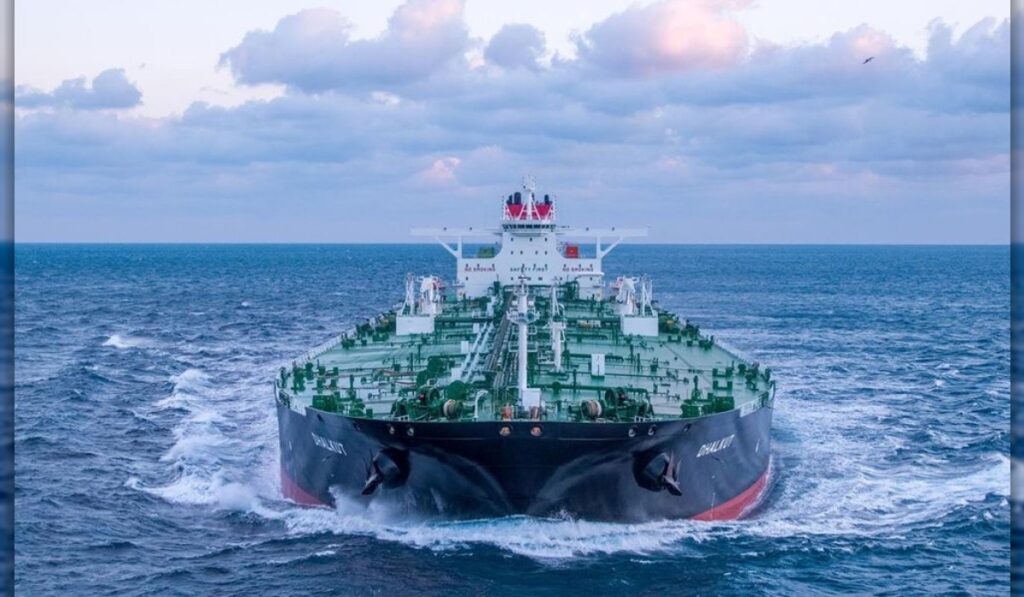
The global shipping industry has reached unprecedented earnings levels, with the ClarkSea Index hitting a historic high of $64,569 per day. This figure surpasses the previous record set in December 2007 by 27%, marking a significant milestone for the sector.
The latest surge—a 14% increase in a single week—was driven primarily by crude tankers, where market conditions have reached extraordinary levels. Very Large Crude Carriers (VLCCs) are now earning an average of $643,000 per day, a 40% jump from the previous week. Suezmax and Aframax tankers are also seeing strong demand, with daily earnings at $375,000 and $184,000, respectively. Analysts attribute this spike to geopolitical tensions, particularly the ongoing conflict between the U.S. and Iran, which has disrupted traditional oil routes and extended voyage times.
Broad-Based Rally Across Shipping Sectors: clarksea index
The current market rally is notable not just for its scale but for its breadth. Unlike the 2007-08 boom, which was largely concentrated in a few segments, today’s record-breaking earnings span multiple sectors.
Dry bulk carriers, for instance, are entering their traditionally stronger seasonal period from an already elevated position. Average earnings for bulk carriers stand at $24,233 per day, 63% above the ten-year average. Meanwhile, the container shipping market has also seen a sharp rise in rates. Spot freight rates from Asia to the U.S. East Coast have surged by over 320% since late February, reaching $11,259 per forty-foot equivalent unit (FEU), just 11% below the pandemic-era peak.
Gas carriers are another standout performer. Very Large Gas Carriers (VLGCs) on the Houston-Japan route are earning $189,711 per day, a 23% increase from the previous week. Rates on the Middle East Gulf-Japan route have climbed even higher, to $219,297 per day. Industry reports indicate that available tonnage in the U.S. is effectively booked until the end of October, pushing charterers to secure vessels well in advance as winter demand approaches.
Even niche segments like car carriers are experiencing a surge in earnings. Pure Car and Truck Carriers (PCTCs) with a capacity of 6,500 car equivalent units (CEU) are now earning $85,000 per day, a 30% increase over the past three months. This rise is largely driven by booming Chinese vehicle exports, which are absorbing available shipping capacity faster than new vessels can enter the market.
Geopolitical factors continue to play a critical role in shaping market dynamics. New York-based broker Poten & Partners noted in a recent report that the escalating conflict has introduced additional risks and uncertainties, further tightening the market and pushing freight rates to unprecedented levels.


Sign up free to ask CAMAL AI for a summary, the key points or anything else about this story.
Related stories
CAMAL AI
 Financial Ports Newsletter
The maritime economy, every morning
Ports, shipping and freight markets in one short email. Free.
Financial Ports Newsletter
The maritime economy, every morning
Ports, shipping and freight markets in one short email. Free.



