

Shipping’s Talent Crisis: Why 5,000 Young Professionals Are Demanding
YoungShip’s global network of under-35s grows to 5,000 members as industry grapples.
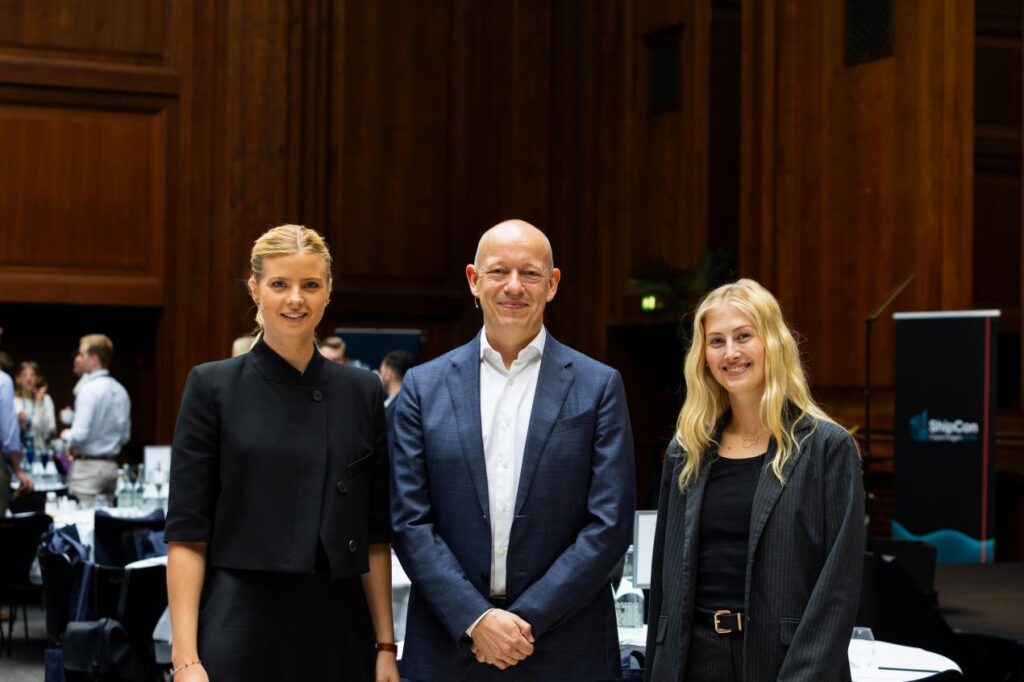
The maritime industry’s next generation is making its voice heard, loudly.
Yet, as ShipCon delegates heard, many young people still perceive shipping as little more than ships, containers, and ports. The reality, however, is far broader: a career in maritime today spans finance, law, technology, energy transition, and global trade.
Mathilde Boye, a shipbroker at German group H. Vogemann and vice chair of YoungShip Denmark, knows this firsthand.
“From my first student job I was working on real problems, not watching from the sidelines. Compared to five years ago, now I read the news through a whole new lens: how might it affect the company and our customers? What does it mean for the routes we sail?”
Mathilde Boye·Shipbroker and Vice Chair of YoungShip Denmark
For Boye, the appeal of shipping lies in its immediacy. World events, from regulatory shifts to geopolitical crises, don’t just make headlines; they reshape markets, alter trading patterns, and force operational pivots.
What Young Professionals Really Want
According to ShipCon’s discussions, the answer is threefold: early responsibility, cross-disciplinary collaboration, and long-term career development. Marie Kristensen, a lawyer at DS Norden and chair of YoungShip Denmark, emphasises the industry’s unique need for diverse perspectives.
“This industry demands real professional crossover. There is a place for many different graduates and specialists, each contributing a different viewpoint. Bringing those perspectives together enables companies to successfully assess risks, develop solutions, and act on complex commercial and operational challenges.”
Kristensen’s point is critical. Shipping is not a siloed industry. A broker’s decision might hinge on regulatory changes, a lawyer’s advice on geopolitical risks, and an engineer’s work on the feasibility of alternative fuels. Yet, too often, young professionals are confined to narrow roles, missing the bigger picture. ShipCon’s workshops and panels aimed to bridge this gap, offering attendees a chance to hear from regulators, technologists, and senior executives across the maritime value chain.
The conference, held at Copenhagen’s Nimb Axelborg, attracted delegates from four continents and featured speakers from industry heavyweights like the World Shipping Council, BIMCO, and the Mærsk Mc-Kinney Møller Center for Zero Carbon Shipping. Topics ranged from AI and digitalisation to the green transition and the maritime skills gap, reflecting the breadth of challenges, and opportunities, facing young professionals today.
For many attendees, the event was a rare opportunity to step outside their day-to-day roles. A broker could hear how regulators approach compliance; a lawyer could gain insight into the commercial pressures driving operational decisions. As Kristensen put it:
“The aim isn’t to turn specialists into generalists, but to help people understand those parts of the industry their work touches.”
Marie Kristensen·Lawyer at DS Norden and Chair of YoungShip Denmark
This holistic approach is central to YoungShip’s mission. Founded in Norway, the network has become a hub for young maritime professionals seeking to build long-term careers in an industry that often struggles to retain talent. Through a mix of industry talks, company visits, networking events, and social gatherings, YoungShip provides the kind of exposure and connections that traditional corporate structures often lack.
Denmark’s shipping industry, which generated DKK 383.5 billion in exports in 2024 and employs around 100,000 people, is a case in point. Despite its economic importance, the sector has faced challenges in attracting young talent, particularly in non-traditional roles like law, finance, and technology. YoungShip Denmark’s rapid growth suggests that young professionals are hungry for opportunities to engage with the industry’s broader ecosystem.
The stakes couldn’t be higher. As shipping grapples with decarbonisation targets, digital disruption, and geopolitical instability, the need for a skilled, adaptable workforce has never been more urgent. Yet, as ShipCon made clear, the industry’s future depends not just on attracting new talent, but on giving young professionals a reason to stay. That means offering early responsibility, cross-disciplinary collaboration, and clear career pathways, not just jobs.
For Mathilde Boye, the message is simple: shipping is more than just ships. It’s a global industry with the power to shape economies, influence geopolitics, and drive the energy transition. The question now is whether the industry can rise to the challenge, and give its next generation the tools they need to succeed.


Sign up free to ask CAMAL AI for a summary, the key points or anything else about this story.
Related stories
CAMAL AI
 Financial Ports Newsletter
The maritime economy, every morning
Ports, shipping and freight markets in one short email. Free.
Financial Ports Newsletter
The maritime economy, every morning
Ports, shipping and freight markets in one short email. Free.



