

Panama Canal Smashes Record as Hormuz Closure Reroutes 5% of Global Trade
The 80 km waterway handled 521 million tonnes in 2026, a 6.5% jump despite drought and El Niño restrictions.
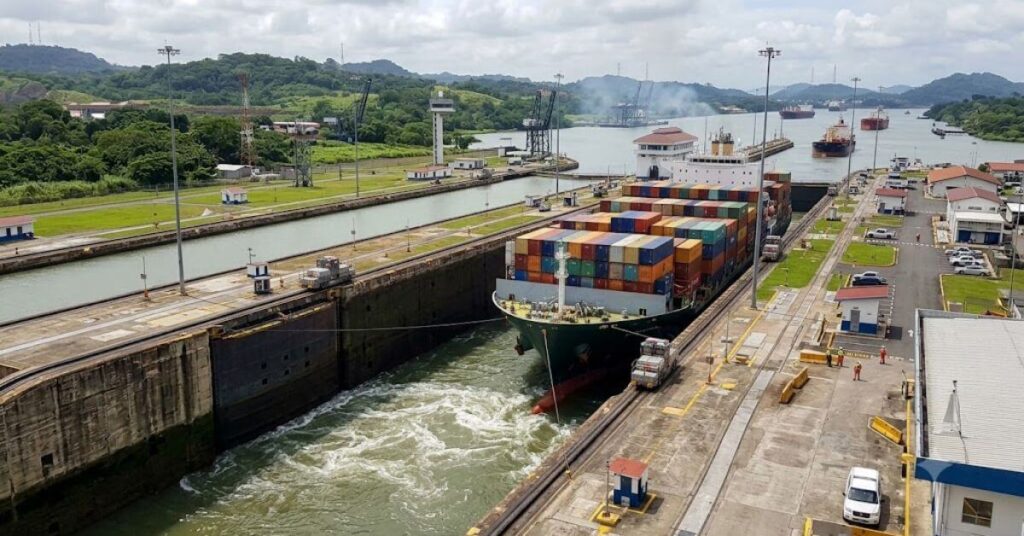
The Panama Canal achieved a historic milestone in fiscal 2026, processing a record 521 million tonnes of cargo, surpassing its previous high of 518 million tonnes set in 2022. The 80-kilometre waterway, a critical link between the Atlantic and Pacific oceans, saw 13,951 ship transits during the year ending September 30, a 4% increase from the prior period. Revenue also climbed 16.6% to $6.6 billion, according to figures released by the Panama Canal Authority (ACP) on October 21.
The surge in traffic was driven by the closure of the Strait of Hormuz, a key energy shipping route through which 20% of the world’s oil and liquefied natural gas (LNG) typically passes. With the strait inaccessible due to conflict in the Middle East, shipping companies rerouted vessels through the Panama Canal, which handles roughly 5% of global maritime trade. The canal temporarily expanded its daily transit capacity from 36 to 41 ships to accommodate the influx.
Geopolitical tensions and climate challenges: Panama Canal
However, the relief was short-lived. By early September, drought conditions linked to the El Niño climate pattern forced the ACP to reduce the daily limit to 32 ships, later adjusting it to 33. The canal relies on freshwater from two artificial lakes to operate its locks, and below-average rainfall lowered water levels, restricting ship movements. Canal Administrator Ilya Espino de Marotta noted that the effects of El Niño were most acute during the final four months of the fiscal year.
Natural Gas
“Despite the water shortage, the canal was able to carry more cargo when shipping companies needed an alternative route.”
Ilya Espino de Marotta·Canal Administrator
The canal’s primary shipments include containers, liquefied petroleum gas (LPG), vehicles, grain, and LNG, with LNG volumes seeing the sharpest recent increase. The United States remains the largest user of the waterway, which serves as a vital shortcut for vessels traveling between Asia, particularly China, Japan, and South Korea, and the U.S. East Coast.
Key cargoes and global trade impact
The record cargo volume underscores the canal’s resilience amid dual pressures: geopolitical disruptions and environmental constraints. While the ACP managed to handle the increased traffic, ongoing drought conditions could further limit capacity if rainfall remains insufficient. The authority’s ability to balance these challenges will be crucial as global shipping firms navigate delays and rising costs.
The Panama Canal’s performance in 2026 highlights its role as a linchpin of international trade, even as climate variability and regional conflicts test its operational limits.


Sign up free to ask CAMAL AI for a summary, the key points or anything else about this story.
Related stories
CAMAL AI
 Financial Ports Newsletter
The maritime economy, every morning
Ports, shipping and freight markets in one short email. Free.



