

Oil surges past $118 as Houthi strikes and Hormuz attacks tighten supply
Brent crude futures hit six-month highs after drone strikes on Saudi oil fields and tanker attacks in the Strait of.
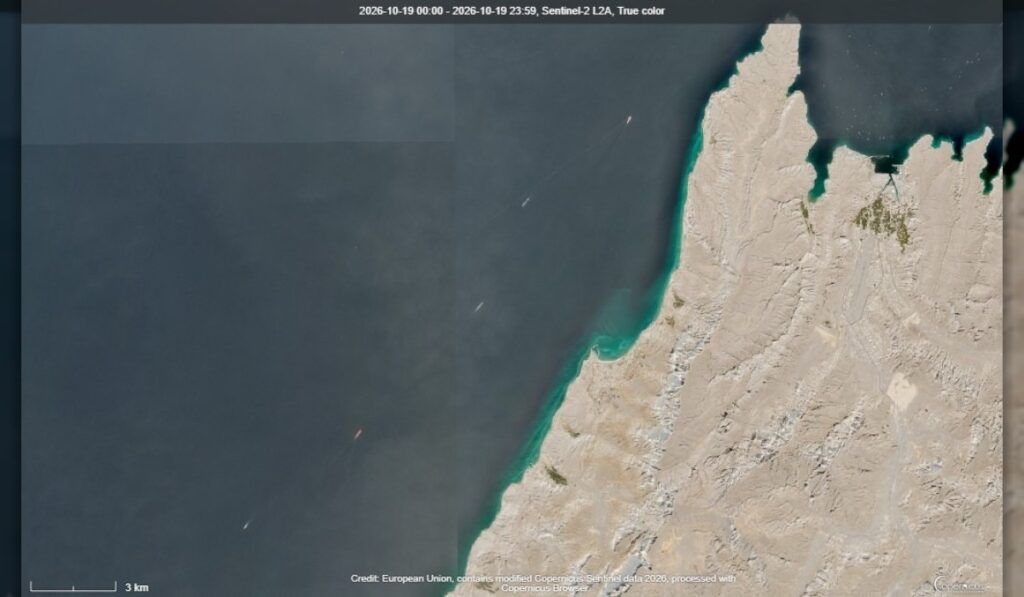
Oil prices surged to six-month highs on Friday as Houthi drone strikes on Saudi Arabia’s Shaybah oil field and unconfirmed tanker attacks near the Strait of Hormuz tightened global supply. Brent crude futures settled at $117.64 a barrel, up $2.76, while US WTI rose 2.08% to $104.12, capping a week of volatility driven by Middle East tensions.
The latest escalation began on Wednesday when Saudi air defences intercepted a Houthi drone targeting a processing facility at the Shaybah oil field, located in the Empty Quarter. Though the drone was shot down outside the perimeter fence, debris struck a contractor’s vehicle, killing two workers, a Philippine and a Nepali national, and injuring two others, one Pakistani and one Indian. Parallel attacks on King Fahd International Airport in Dammam killed two more, Saudi officials confirmed.
Gulf supply risks deepen as Houthi strikes persist
The attacks on Shaybah, which produces 1 million barrels per day, did not disrupt operations, but the mere threat of damage sent shockwaves through energy markets. Saudi Aramco, already on high alert after a strike on its Dhahran headquarters earlier this month, ordered the evacuation of non-essential personnel. The US State Department followed suit, directing non-emergency diplomatic staff to leave Saudi Arabia effective October 23, citing “safety risks.”
Brent Crude
Jasem Mohamed Albudaiwi, Secretary General of the Gulf Cooperation Council (GCC), condemned the attacks in a statement, calling them “treacherous” and accusing the Houthi militia of “targeting civilians and vital facilities.” The GCC’s rebuke underscored the growing unease among Gulf states as the conflict with Yemen’s Houthis shows no signs of abating.
Meanwhile, Iran reported a separate wave of attacks on tankers in the Strait of Hormuz and the Arabian Gulf. Tehran claimed three vessels were struck by naval mines near the strait, while four more were hit during ship-to-ship (STS) transfer operations, a particularly vulnerable moment for tankers, with limited manoeuvrability and exposed fuel hoses. Videos circulating on social media appeared to show damage to at least four tankers, though UK Maritime Trade Operations (UKMTO) reported no new incidents in the past 22 hours.
Market braces for further escalation as Iran’s oil vanishes
The attacks come at a precarious time for global oil supply. Analysts at Kpler confirmed that Iranian oil has effectively disappeared from the market, with its last floating reserves sold to Chinese buyers. The US blockade on Iranian energy exports, fully enforced since late August, has left the National Iranian Oil Company without a single cargo loaded in months. The loss of Iranian barrels, combined with the threat of further disruptions in the Gulf, has left traders on edge.
Dennis Kissler, senior vice president of trading at BOK Financial, warned that markets would remain fixated on “oil flows out of the Middle East and the likely escalation by US and allied forces.” His remarks followed Friday’s attack on a tanker in the Strait of Hormuz, where explosive devices attached by a small boat caused damage but no reported casualties. The incident marked the first successful strike in the strait using limpet mines since the US-Israeli war with Iran began in February 2026.
Saudi Arabia’s energy infrastructure has faced repeated Houthi assaults in recent weeks. On Friday, Yemen’s Houthis claimed responsibility for strikes on the Ras Tanura oil refinery, the Rabigh refinery, and a production facility in Abqaiq. A Saudi-led coalition intercepted a cruise missile launched toward the kingdom’s western region, while state media released footage of damage to homes and a mosque in Jazan province from an earlier attack. The Houthis also claimed to have struck a Saudi military base in a neighbouring province.
The East-West oil pipeline, a critical artery for Saudi crude exports, was shut down on Friday after a drone strike originating in Iraq. The closure threatens up to 4% of global oil supply, further tightening an already strained market. With the Bab el-Mandeb Strait handling 4-5% of global oil flows in recent months, the risk of chokepoint disruptions has become a dominant theme in trading floors worldwide.
Diplomatic efforts to de-escalate the crisis have yielded little progress. Qatari mediators returned to Tehran on Friday in a bid to broker a deal between the US and Iran, while US Vice President JD Vance reached out to Iranian officials to facilitate medical supplies. However, with both sides entrenched, analysts warn that further supply shocks could push oil prices beyond current highs.
For now, the market’s focus remains on the Strait of Hormuz and Saudi Arabia’s ability to protect its energy infrastructure. With Brent crude up 13.6% this month and WTI rising 15.2%, the stakes for global supply stability have rarely been higher.


Sign up free to ask CAMAL AI for a summary, the key points or anything else about this story.
Related stories
CAMAL AI
 Financial Ports Newsletter
The maritime economy, every morning
Ports, shipping and freight markets in one short email. Free.



