

Spot Rates Surge 90¢: Why Truckers Still Can’t Relax
Truckload rejections hit 14.5% as spot rates climb to $3.42 per mile, but diesel costs keep carriers on edge.
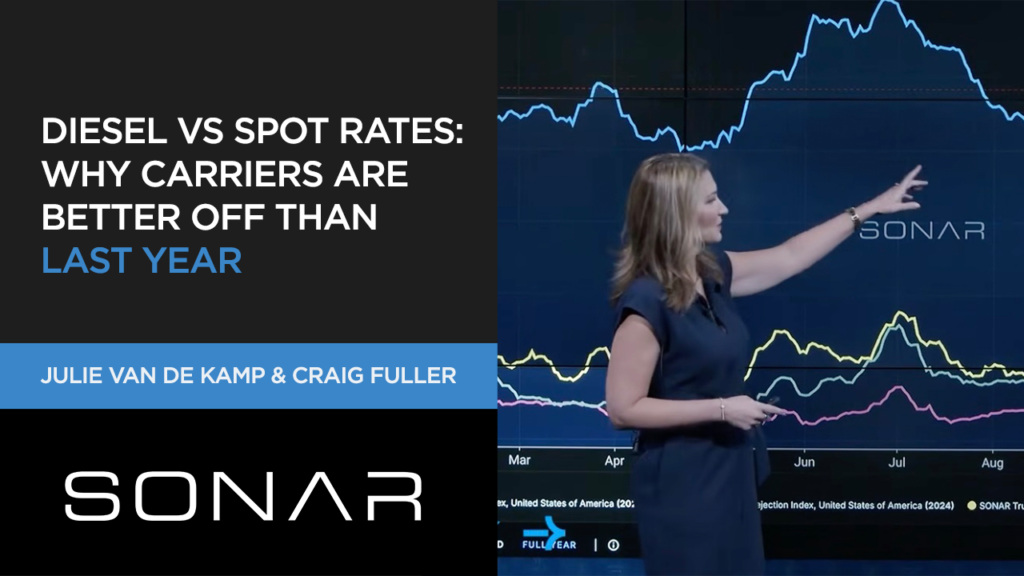
Truckload carriers are earning more per mile than last year, but record diesel prices and tightening capacity are keeping the industry on edge. FreightWaves SONAR data reveals spot rates have surged by 90 cents year over year, yet cash-flow pressures threaten to offset those gains.
The Truckload Rejection Index hit 14.5% in mid-September, a clear sign that peak season may finally be taking hold. Analysts at FreightWaves Today, however, warn that while the market is healthier than in 2023, when tender rejections failed to materialise, carriers still face an uphill battle to achieve sustainable profitability.
Why Rates Are Rising, But Not Enough: spot rates
The Net Truck Index of Linehaul (NTIL), which strips out diesel costs, shows carriers are still running approximately $0.70 per mile ahead of 2023 levels. Yet, as Julie Van de Kamp noted, the question remains: “Have rates risen enough for carriers to be comfortable? And the answer is no, not yet.".
“I know I’m going to get some hate on this because I have, carriers are doing better this year despite higher fuel prices,” he said. “Because there’s more demand, and rates are higher on the spot market on the spot market.” The data suggests that while carriers are outperforming last year’s revenue figures, the gains are fragile.
The third quarter proved softer than expected, with freight volumes remaining relatively flat. Fuller described 2023 as “the depths of the freight recession,” and while 2024 shows improvement, the market has yet to fully rebound.
Diesel Costs: The Hidden Threat to Cash Flow
Even as spot rates rise, diesel prices remain a significant cash-flow stress. Fuel surcharges, designed to offset rising costs, do not cover deadhead or repositioning miles, leaving carriers to absorb those expenses directly. Fuller highlighted the timing mismatch as a critical issue: “Fuel bills are due at the pump or within two to three days, while freight payments can lag 60 to 90 days.” Banks, he added, are “getting a little bit skittish right now in terms of lending money.”
With capacity continuing to shrink, the balance of power may shift further toward truckers, but only if demand holds steady.
The Truckload Rejection Index typically climbs heading into peak season, and any surge in demand could accelerate that trend. However, the market’s recovery remains uneven. While volumes are up year over year, gains have been modest, and the third quarter’s sluggish performance has left many carriers cautious.
Carriers will need to navigate diesel costs, regulatory pressures, and shifting demand patterns if they hope to turn these rate gains into lasting profitability.


Sign up free to ask CAMAL AI for a summary, the key points or anything else about this story.
Related stories
CAMAL AI
 Financial Ports Newsletter
The maritime economy, every morning
Ports, shipping and freight markets in one short email. Free.
Financial Ports Newsletter
The maritime economy, every morning
Ports, shipping and freight markets in one short email. Free.