

Volvo’s ‘lock and leave’ cuts truck downtime by 24%—here’s how
Volvo Trucks’ over-the-air update system now allows North American drivers to start updates and walk away.
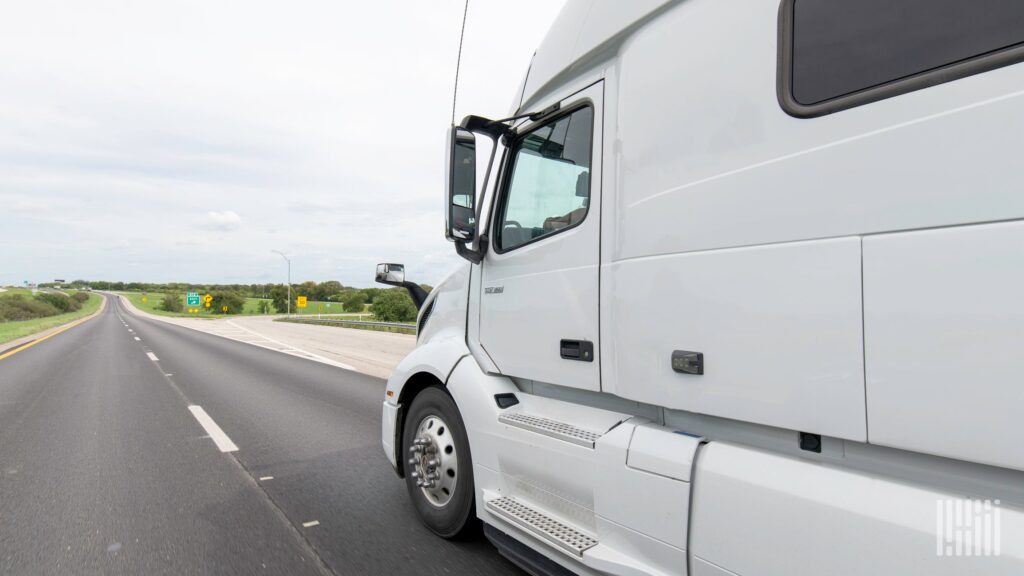
Volvo Trucks has completed the North American rollout of its ‘lock and leave’ software update system, allowing drivers to start over-the-air updates and leave their trucks while the software installs, cutting unplanned downtime by nearly a quarter.
Available across the U.S. and Canada, the feature builds on Volvo’s existing Remote Programming system, which has already completed more than 40,000 updates since its expansion in 2018.
How ‘lock and leave’ transforms truck uptime
The system allows drivers to initiate updates during breaks, overnight stops, or scheduled downtime, eliminating the need for separate service centre visits. Updates can modify engine performance, transmission settings, and battery management, all while the truck remains operational for its next shift.
Volvo reports that trucks running the latest software experience a 24% reduction in unplanned stops, a critical improvement for fleets where vehicles operate eight to 11 hours a day. The company’s connected systems can now dispatch up to 20,000 updates daily, with more than 7,500 completed in August alone.
By enabling updates to run unattended, Volvo has effectively turned what was once a disruptive service stop into a seamless background process.
Peter Voorhoeve, President of Volvo Trucks North America, emphasised the convenience: “As software plays a greater role in improving uptime, updating the software should be as easy and convenient as possible. Now a driver can lock and leave their truck while the update runs during a break and return to a truck that is up to date and ready to go to work.”
The technology behind Volvo’s connected fleet
Volvo’s Remote Programming system, first expanded to North America in 2018, initially allowed eligible trucks with factory-installed connectivity hardware to receive software and parameter updates remotely. By 2023, the system had evolved to include six programmable vehicle modules, covering critical systems such as engine performance, transmission, and battery management. This expansion laid the groundwork for the unattended ‘lock and leave’ feature introduced in June.
The all-new Volvo VNL and VNR models, which began production at the company’s New River Valley plant in Dublin, Virginia, in February, are built on a 24-volt electrical architecture. This platform is central to Volvo’s connected strategy, enabling real-time data exchange between trucks and the company’s backend systems. The VNL, introduced in 2024, was designed with these capabilities in mind, integrating hardware and software to support over-the-air updates, remote diagnostics, and predictive maintenance. This proactive approach minimises unplanned stops and keeps fleets running smoothly.
The shift to over-the-air updates reflects a broader industry trend: treating software as a dynamic component rather than a static installation.
The financial benefits extend beyond direct savings. This flexibility is especially valuable in industries with tight delivery windows, such as logistics and refrigerated transport.
Volvo’s data shows that the share of connected North American trucks running the latest software rose from 25% to over 80% in just six months, a testament to the system’s effectiveness. The company’s ability to dispatch up to 20,000 updates per day ensures that fleets can stay current with minimal disruption. This scalability is critical as the number of connected trucks continues to grow, with Volvo’s fault-code analytics now covering a significant portion of the North American fleet.
For fleet operators, the ‘lock and leave’ system represents a significant step forward in vehicle management. By reducing unplanned downtime and improving first-time fix rates, the system helps fleets maintain higher levels of productivity and reliability. The ability to update software remotely also means that fleets can respond more quickly to emerging issues, such as software bugs or performance optimisations, without waiting for a scheduled service visit.
Drivers, too, benefit from the system’s convenience. No longer required to sit through software updates at a service centre, they can use their breaks more effectively, whether for rest, meals, or other tasks. This improvement in driver experience can contribute to higher job satisfaction and retention, particularly in an industry where driver shortages remain a persistent challenge.
The system’s unattended update capability also aligns with the growing trend toward automation in the trucking industry. As vehicles become more connected, the ability to manage software updates remotely is a natural extension of broader efforts to streamline operations and reduce manual intervention. For fleets already using telematics and fleet management software, Volvo’s system integrates seamlessly, providing a unified platform for vehicle maintenance and performance monitoring.
Fleet operators interested in adopting Volvo’s ‘lock and leave’ system can consult their local Volvo Trucks dealership for more information. The feature is available on eligible models equipped with factory-installed connectivity hardware, including the all-new VNL and VNR trucks. Volvo also offers training and support for fleets transitioning to the new system, ensuring a smooth implementation process.
For real-time updates on software releases and system enhancements, fleet managers can subscribe to Volvo’s official communications channels, including its website and fleet management portal. The company also provides detailed documentation on its Remote Programming system, including best practices for scheduling updates and troubleshooting common issues.
As Volvo continues to expand its connected services, the ‘lock and leave’ system is expected to evolve further, with additional features and capabilities on the horizon. The company’s focus on uptime and efficiency positions it as a leader in the digital transformation of the trucking industry, offering fleets the tools they need to stay competitive in an increasingly connected world.
“As software plays a greater role in improving uptime, updating the software should be as easy and convenient as possible. Now a driver can lock and leave their truck while the update runs during a break and return to a truck that is up to date and ready to go to work.”
Peter Voorhoeve·President, Volvo Trucks North America


Sign up free to ask CAMAL AI for a summary, the key points or anything else about this story.
Related stories
CAMAL AI
 Financial Ports Newsletter
The maritime economy, every morning
Ports, shipping and freight markets in one short email. Free.
Financial Ports Newsletter
The maritime economy, every morning
Ports, shipping and freight markets in one short email. Free.



