

Maersk dethrones COSCO: 340,000 TEU shift reshapes Asia’s shipping lanes
Maersk’s 34,000 TEU year-on-year surge propels it past COSCO in the world’s busiest container trade lane.
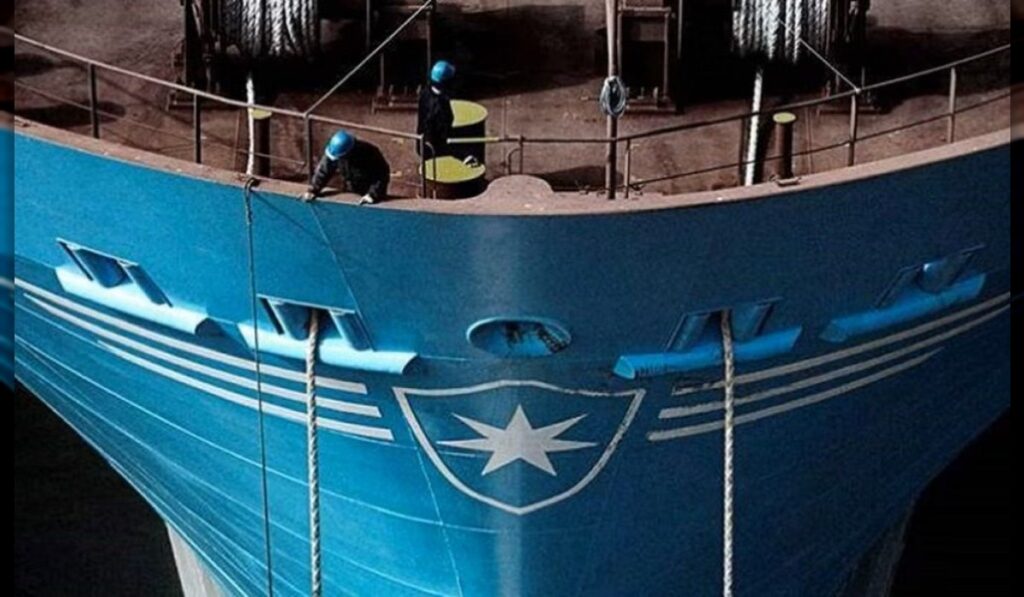
Maersk has seized the top spot in the intra-Asia container market, deploying over 340,000 TEU across the region’s routes in mid-August, enough to eclipse COSCO’s long-standing dominance. The Danish carrier’s aggressive expansion, fuelled by its Gemini Cooperation hub-and-spoke model, has reshaped the competitive landscape of the world’s largest container trade.
The shift is stark. While COSCO operates more vessels, over 120, its deployed capacity has barely budged year-on-year, leaving it trailing Maersk’s 108-ship fleet. Maersk’s average vessel size of 3,176 TEU, the largest among leading intra-Asia operators, has given it a decisive edge in a market where scale increasingly dictates survival. Alphaliner’s latest fleet survey, which excludes domestic trades, confirms the reversal: total capacity in international intra-Asia services now stands at just under 2.6 million TEU, a 6.2% annual rise.
How Maersk’s hub-and-spoke model outmanoeuvred COSCO: Asia
Gemini Cooperation, Maersk’s joint venture with Hapag-Lloyd, has been the linchpin of its intra-Asia strategy. By leveraging a network of Asian shuttle services to feed its main east-west loops, the carrier has optimised vessel utilisation without the need for a larger fleet. This hub-and-spoke approach has allowed Maersk to deploy fewer but larger ships, maximising efficiency in a market where regional carriers still rely on smaller, niche vessels.
A.P. Møller-Maersk
COSCO’s stagnation is equally telling. Despite its numerical advantage in ships, the Chinese carrier’s capacity has remained flat, highlighting a broader trend: mainline operators now control 63% of deployed capacity in intra-Asia, even though they run fewer vessels than regional specialists. The average mainline vessel size of 2,699 TEU dwarfs the 1,338 TEU typical of regional carriers, underscoring the growing divide between global and local players.
CMA CGM, the world’s third-largest container line, has also made inroads, adding 15,000 TEU to its intra-Asia capacity, enough to overtake Evergreen for third place. Yet Maersk’s lead remains unassailable for now, with its 34,000 TEU year-on-year increase more than double CMA CGM’s gain. The market’s fragmentation is evident: over 80 carriers now compete in intra-Asia, but the top three, Maersk, COSCO, and CMA CGM, dominate the bulk of capacity.
What the leadership shift means for shippers and supply chains
The implications of Maersk’s rise extend beyond carrier rankings. Drewry Intra-Asia Container Index (IACI)-Asia Container Index (IACI) hit a record $1,323 per FEU this month, a 1% weekly increase driven by geopolitical tensions and typhoon-related disruptions. With capacity constraints tightening, shippers face higher freight rates and reduced flexibility, particularly on routes where Maersk’s larger vessels now dominate.
For regional specialists like SITC, the challenge is existential. The carrier remains the largest regional operator in intra-Asia, with 109 ships and 157,000 TEU deployed, but its focus on smaller ports leaves it vulnerable to the economies of scale wielded by mainline players. SITC’s strategy, connecting niche markets rather than competing on vessel size, may insulate it from direct competition, but it also limits its ability to capture larger volumes.
Maersk’s victory in intra-Asia is not just a fleet capacity play; it reflects a broader industry shift toward consolidation and efficiency. Gemini Cooperation’s model, which prioritises high-frequency shuttle services over sprawling networks, has proven particularly effective in a region where port congestion and unpredictable demand require agile responses. As the carrier continues to refine its approach, competitors will need to adapt, or risk being left behind in the race for Asia’s lucrative trade lanes.
The next few months will be critical. With the IACI IACI Composite Index at all-time highs, carriers and shippers alike are bracing for further volatility. Maersk’s ability to maintain its lead will depend on its capacity to navigate disruptions, from geopolitical flashpoints to climate-related delays. For now, however, the message is clear: in the intra-Asia container market, size, and strategy, matter more than ever.


Sign up free to ask CAMAL AI for a summary, the key points or anything else about this story.
Related stories
CAMAL AI
 Financial Ports Newsletter
The maritime economy, every morning
Ports, shipping and freight markets in one short email. Free.
Financial Ports Newsletter
The maritime economy, every morning
Ports, shipping and freight markets in one short email. Free.