

US Navy’s 4-Pillar Plan to Double Submarine Production by 2031
The US Navy targets two Virginia-class and one Columbia-class submarine annually under a new industrial strategy.
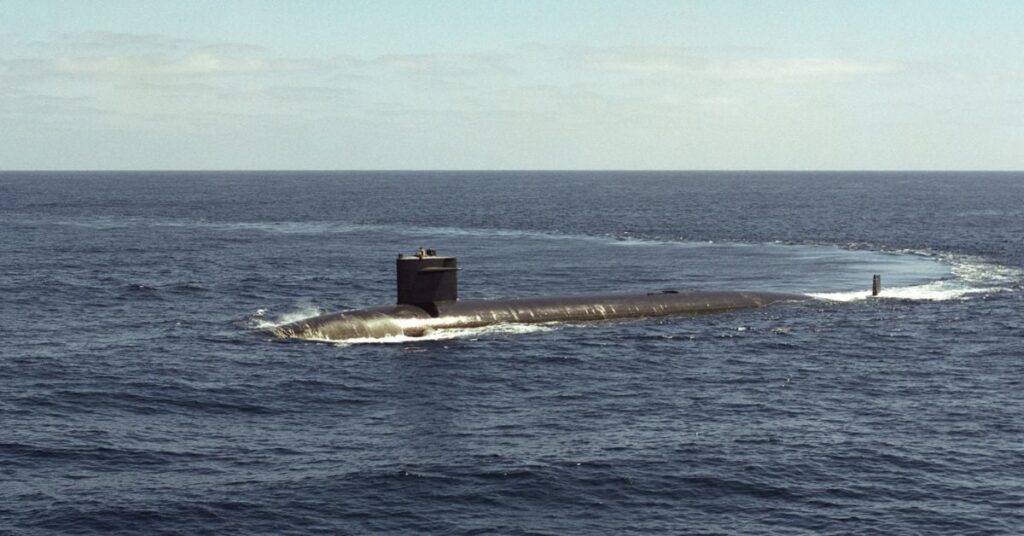
The US Navy has unveiled a four-pillar strategy to accelerate the production of its Virginia and Columbia-class submarines, aiming to deliver two Virginia-class vessels annually by 2031 and one Columbia-class submarine per year by 2030. The plan, led by Vice Admiral Rob Gaucher, Director of Submarine Programs, marks a shift in naval shipbuilding to overcome industrial bottlenecks and meet growing undersea fleet demands.
However, achieving these long-term goals hinges on meeting short-term milestones, including the delivery of the lead Columbia-class submarine in 2028 and maintaining a steady production rate thereafter. Admiral Daryl Caudle, Chief of Naval Operations, has set 2032 as the deadline for stabilising annual production, though Vice Admiral Gaucher aims to meet the target by 2031 or sooner.
Design Stability and Shipyard Optimisation: The first two pillars: US Navy
The first pillar of the strategy enforces design stability for the Virginia-class submarines through a “pencils down” policy. This means no engineering or design changes will be permitted unless they are essential for safety or operational requirements, and even then, they will require higher-level authorisation. The goal is to minimise disruptions and ensure continuity in production lines.
The second pillar focuses on shipyard optimisation. Non-critical work, such as component manufacturing and preliminary hull assembly, will be delegated to secondary yards. This allows the two primary naval shipyards, General Dynamics Electric Boat and Huntington Ingalls Industries Newport News, to concentrate on module integration, final testing, and hull assembly. By distributing workloads, the Navy aims to reduce congestion at its main facilities and accelerate overall production timelines.
Expanding the Defense industrial base and Balancing Producibility
The third pillar seeks to expand the defence industrial base by outsourcing component manufacturing to partner contractors, including Rhoads, Austal, and BAE Systems. This approach not only alleviates pressure on the primary shipyards but also ensures that work continues in parallel across multiple facilities, reducing delays caused by single-point bottlenecks.
The fourth and final pillar emphasises producibility, balancing operational needs with production simplicity. For the next-generation SSN-X attack submarines, the Navy is prioritising manufacturing efficiency over frequent technical redesigns. This shift reflects a broader philosophical change in naval shipbuilding, where speed and scalability are now as critical as technological advancement.
The integrated approach between Virginia and Columbia-class production is essential, given that both programmes share shipyards, manufacturing methods, and a skilled workforce. General Dynamics Electric Boat and Huntington Ingalls Industries Newport News are the sole builders of these submarines, making coordination between the two programmes a logistical imperative. For the US Navy, the stakes are high.
The new four-pillar approach directly addresses these pain points by streamlining processes and expanding the supplier base.
Looking ahead, the Navy’s ability to meet its 2031 and 2032 targets will serve as a litmus test for the strategy’s effectiveness.


Sign up free to ask CAMAL AI for a summary, the key points or anything else about this story.
Related stories
CAMAL AI
 Financial Ports Newsletter
The maritime economy, every morning
Ports, shipping and freight markets in one short email. Free.
Financial Ports Newsletter
The maritime economy, every morning
Ports, shipping and freight markets in one short email. Free.



