

UK Defence Cuts Leave Royal Navy With Just Two Operational Submarines
The Royal Navy’s Astute-class fleet is collapsing, with only two of seven submarines potentially operational.
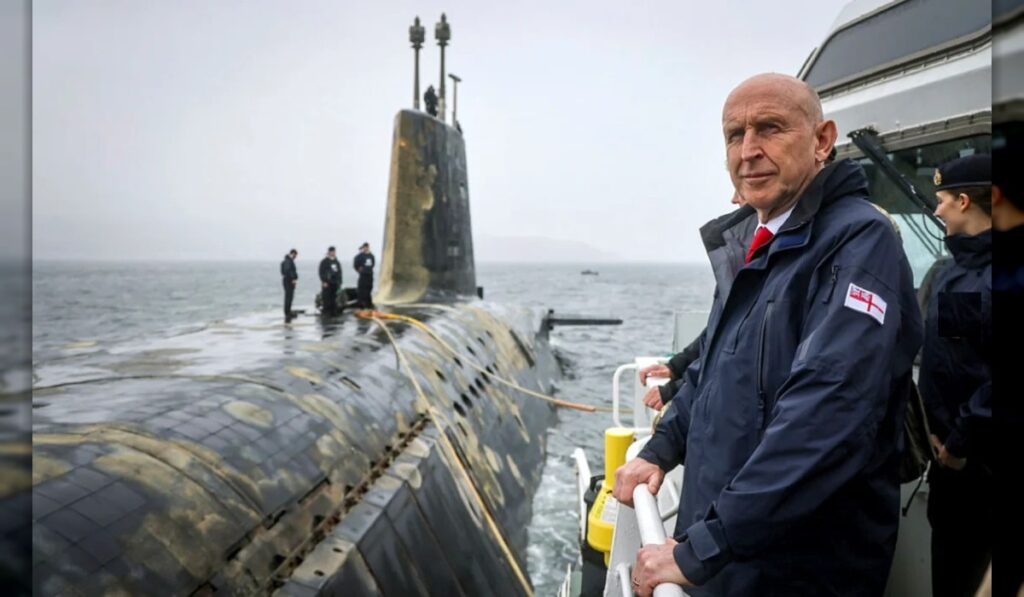
The UK’s Royal Navy is grappling with severe operational gaps as delays in defence funding force the extension of ageing equipment, leaving key capabilities at risk. Prime Minister Andy Burnham confirmed last week that social spending will not be reduced to meet the 3% GDP defence target by 2030, pushing back any budget increases to later years. The decision leaves the Ministry of Defence struggling to fund existing programmes, with immediate consequences for both submarines and surface vessels.
The Royal Navy’s Astute-class submarines, once a cornerstone of its undersea deterrent, are now a liability. Of the seven boats in the fleet, only two—HMS Audacious and HMS Anson—are potentially operational. The former is completing post-maintenance trials, while the latter awaits repairs after a deployment to Australia and the Arabian Sea. The remaining five are either stuck in shipyards (HMS Agamemnon and HMS Achilles) or non-operational at Faslane Naval Base (HMS Astute, HMS Ambush, and HMS Artful).
Royal Navy Faces Critical Shortages as Defence Budget Stalls
The shortage is most acute in the Greenland-Iceland-UK gap, a critical zone for tracking Russian submarine activity. With the AUKUS submarine programme delayed—no final decision has been made on the number of nuclear attack submarines to be built—the navy may have to extend the service life of the Astute-class, despite their poor reliability record. This risks leaving the UK without a credible submarine force for years.
The Royal Navy’s surface fleet is also under strain. Only three of the six Type 45 Daring-class destroyers are currently active: HMS Duncan was last seen escorting Russian warships through the English Channel, HMS Dragon is deployed in the Eastern Mediterranean and Arabian Sea, and HMS Dauntless is set to rotate with it in October. The other three—HMS Daring, HMS Diamond, and HMS Defender—are undergoing upgrades.
Submarine Fleet in Crisis
These destroyers, equipped with Aster 30 Block 1 missiles and Sampson radars, provide a unique anti-ballistic missile capability, vital for countering threats like Iran’s Qasem Basir and Kheibar Shekan missiles. However, their planned 2038 retirement date is now in doubt, with no clear replacement timeline. The navy’s ability to protect its aircraft carriers, HMS Queen Elizabeth and HMS Prince of Wales, is also at risk as the fleet shrinks.
The strain is already visible. The June 5 seizure of the Aframax tanker Smyrtos, part of a crackdown on dark fleet vessels, highlighted the navy’s limited resources. With Russia maintaining a permanent presence in the English Channel and Iranian missile threats growing, the UK’s naval capabilities are being tested like never before.


Sign up free to ask CAMAL AI for a summary, the key points or anything else about this story.
Related stories
CAMAL AI
 Financial Ports Newsletter
The maritime economy, every morning
Ports, shipping and freight markets in one short email. Free.
Financial Ports Newsletter
The maritime economy, every morning
Ports, shipping and freight markets in one short email. Free.