

U.S. Missile Tracking Ships Get $500m Boost: First Hull Due in 2030
MARAD and TOTE finalise contract for three next-generation Missile Range Instrumentation Vessels to replace 50-year-old.
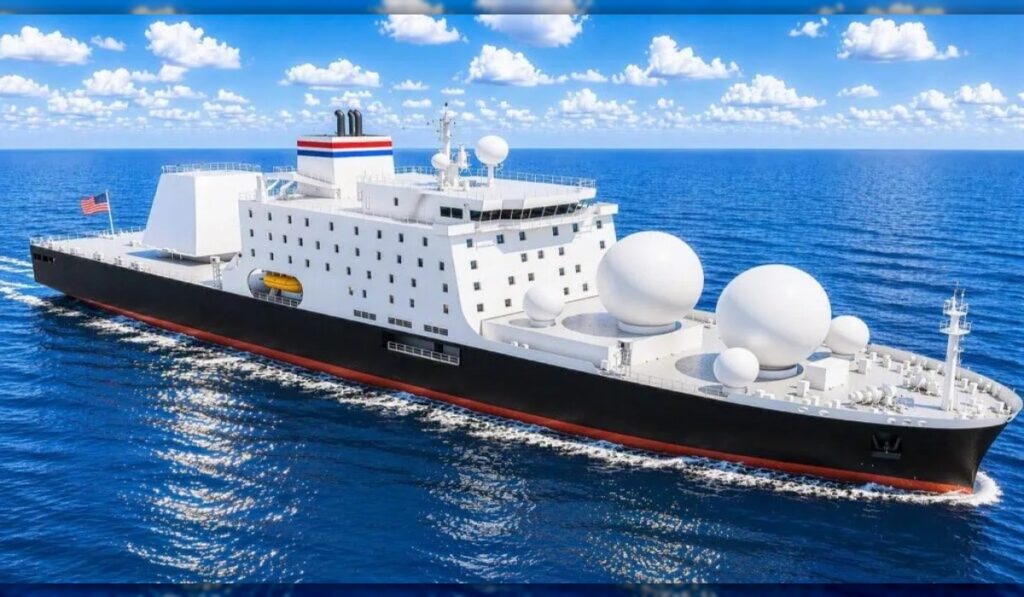
The first vessel, Golde, is scheduled for delivery in 2030, replacing two ageing ships that have served for over half a century.
These vessels will be equipped with house-sized radar units, including two giant radomes on the foredeck and a box-shaped radar array on the stern, to track and analyse missile flights during testing. The design is derived from the National Security Multi-Mission Vessel (NSMV), a series of school ships built for America’s state maritime academies, which has already demonstrated its versatility in naval auxiliary roles.
The MRIVs are not just an upgrade in technology but also in efficiency.
David Kim, CEO of Hanwha Philly Shipyard, emphasised the strategic importance of this project:
“The MRIV program demonstrates the value of maintaining an active, capable U.S.
The vessels will replace the Pacific Tracker and Pacific Collector, which were built in 1965 and 1970, respectively. The new MRIVs will provide a modern, capable platform to ensure the MDA can continue its vital work in missile defence.
One of the most striking aspects of the MRIV project is the use of the Vessel Construction Management (VCM) model, which has already proven its worth in the NSMV program.
The VCM model has allowed TOTE and Hanwha Philly to complete design advancements, contract negotiations, and firm fixed-price arrangements in less than three months, a process that typically takes a year or more under traditional government shipbuilding contracts.
The first MRIV, Golde, will be built on the same production line as the NSMV, ensuring continuity in workforce and supply chain. The NSMV program has already demonstrated its versatility, with the State University of New York Maritime College’s vessel preparing to deploy in support of US forces overseas. This dual-use capability underscores the adaptability of the design, which was always intended to serve as a naval auxiliary when required.
The MRIVs will feature significant modifications from the NSMV design, including a reduced wheelhouse and accommodations block to make room for the massive radar arrays. These changes reflect the vessels’ specialised role in missile tracking, where space and weight are at a premium. The reduced number of lifeboats is also a nod to the vessels’ operational profile, which prioritises radar functionality over passenger capacity.
For the US maritime industry, the MRIV project represents a critical step forward in modernising the country’s defence infrastructure. The collaboration between MARAD, TOTE Services, and Hanwha Philly Shipyard demonstrates how public-private partnerships can deliver cutting-edge technology while controlling costs. The project also highlights the importance of maintaining a robust domestic shipbuilding industry, capable of responding quickly to the evolving needs of the US military.
The delivery of the first MRIV in 2030 will mark the beginning of a new era for the MDA’s missile tracking capabilities. As the US continues to invest in its missile defence systems, the MRIVs will play a crucial role in ensuring the country’s readiness to counter emerging threats. The project’s success could also pave the way for future collaborations between the government and private sector, setting a new standard for efficiency and innovation in defence shipbuilding.
For stakeholders in the maritime and defence sectors, the MRIV project offers a blueprint for how to modernise ageing infrastructure without breaking the bank. The use of proven designs, streamlined procurement models, and active shipyard facilities provides a roadmap for future projects, ensuring that the US remains at the forefront of maritime defence technology.


Sign up free to ask CAMAL AI for a summary, the key points or anything else about this story.
Related stories
CAMAL AI
 Financial Ports Newsletter
The maritime economy, every morning
Ports, shipping and freight markets in one short email. Free.
Financial Ports Newsletter
The maritime economy, every morning
Ports, shipping and freight markets in one short email. Free.



