

US Navy’s New 9,700-Ton Destroyer: Why Alaska Just Became a Missile
The USS Ted Stevens, second Flight III Arleigh-Burke-class destroyer, enters service.
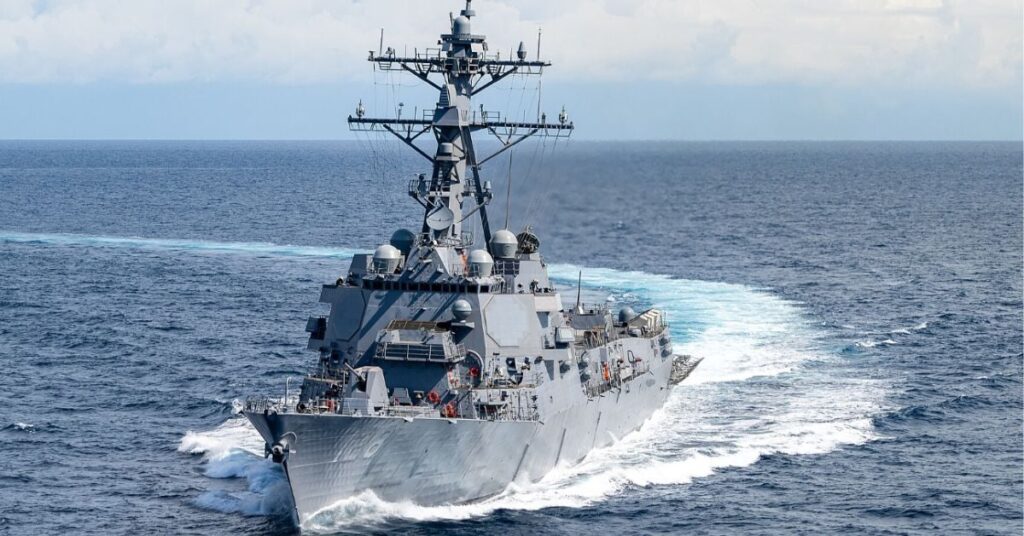
The U.S. Navy has officially commissioned the USS Ted Stevens, its second Flight III Arleigh-Burke-class destroyer, in a ceremony held in Whittier, Alaska, on October 3, 2026. The 9,700-ton warship integrates advanced missile defense technology and is designed to enhance naval operations in the Arctic and North Pacific regions.
The USS Ted Stevens was delivered to the Navy on December 29, 2025, after construction at the Ingalls Shipbuilding yard in Mississippi. Following sea trials and acceptance evaluations, the destroyer departed the shipyard in May 2026 for a week-long transit to Naval Station Norfolk, Virginia. From there, it continued to Alaska via Florida and the Panama Canal ahead of its commissioning.
Equipped with the AN/SPY-6(V)1 Air and Missile Defense Radar and the Aegis Baseline 10 combat system, the destroyer can simultaneously counter air, submarine, surface, and ballistic missile threats. Its Mk 41 vertical launching system provides offensive and defensive capabilities, while upgraded cooling and electrical systems allow operations in extreme environments alongside allied forces.
Honoring a Legacy and Strengthening Arctic Defense: Alaska
The ship is named after Ted Stevens, Alaska’s longest-serving U.S. Senator (1968–2009) and a decorated World War II Air Force pilot. Stevens flew hazardous missions over the Himalayas during the China-Myanmar-India conflict, earning multiple military honors. The commissioning in Alaska underscores the state’s strategic importance to U.S. naval operations in the Arctic and North Pacific.
Acting Secretary of the Navy Hung Cao emphasized the destroyer’s role in bolstering maritime dominance and global deterrence. The ceremony also marked the ship’s transition to active service, with sponsors—Stevens’ widow, Catherine Ann Stevens, and daughters Susan Stevens Covich and Lily Stevens Becker—issuing the traditional command: “Man our ship and bring her to life!” At that moment, the crew boarded to activate the vessel’s combat systems.
Commanding Officer Capt. Mary Katey Hayes affirmed the crew’s readiness, stating the ship would defend national interests from Alaska’s coasts to distant theaters. The USS Ted Stevens will now proceed to its home port in Norfolk, Virginia, where it will join the fleet as a critical asset in surface warfare and missile defense.


Sign up free to ask CAMAL AI for a summary, the key points or anything else about this story.
Related stories
CAMAL AI
 Financial Ports Newsletter
The maritime economy, every morning
Ports, shipping and freight markets in one short email. Free.
Financial Ports Newsletter
The maritime economy, every morning
Ports, shipping and freight markets in one short email. Free.



