

US Navy Bets $137m on Ursa Major to Break Missile Production Bottleneck
The two contracts fund solid rocket motors for next-gen air and naval missile programmes.
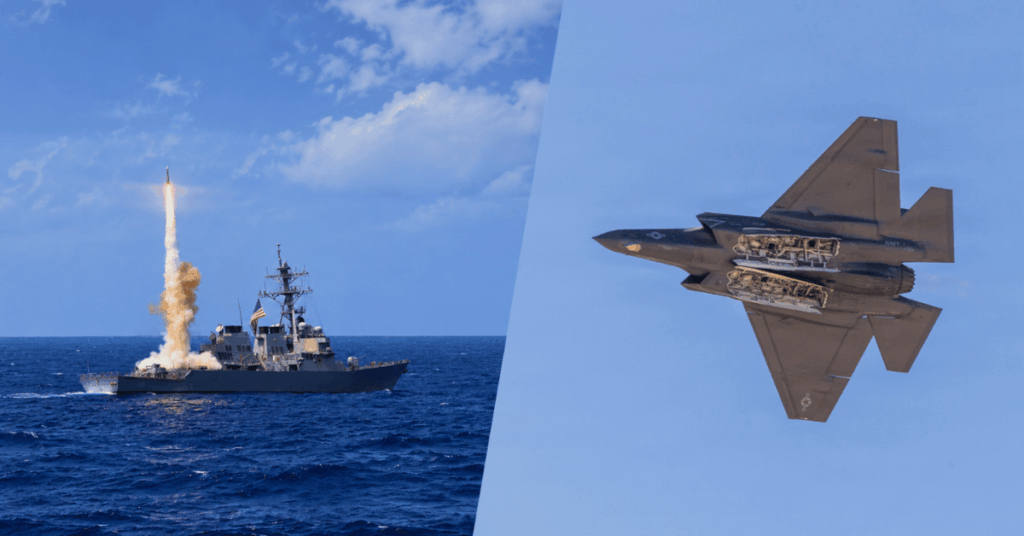
The US Navy has placed a $137 million bet on Ursa Major to break the production bottleneck in its missile programmes, awarding the company two contracts to develop and qualify solid rocket motors for next-generation air and naval systems. The deals, funded through the Office of the Office of the Under Secretary of War (OUSW) of War (OUSW), target the Compact Air-to-Air Missile (CAAM) and the Naval Modular Missile (NMM) medium-range variant, both critical to modernising the Navy’s arsenal.
The contracts leverage Ursa Major’s Lynx manufacturing approach, which combines advanced additive manufacturing with expanded energetics production capacity. The goal is to deliver motors that can be produced at scale, addressing what company president Jason Meredith calls “the bottleneck in missile programmes right now".
Why These Motors Matter for Naval and Air Capabilities
For the CAAM programme, Ursa Major is designing a 7-inch (17-centimetre) solid rocket motor using Highly Loaded Grain technology. This compact, low-cost motor is engineered to meet performance requirements within tight volume constraints, a critical factor for air-launched missiles deployed on current and next-generation aircraft. The design mirrors production methods planned for full-scale manufacturing, ensuring a seamless transition from qualification to mass production.
The NMM medium-range variant, meanwhile, will rely on a 10-inch (25.4-centimetre) motor designed for high-rate production and compatibility with existing Navy shipboard launch systems. This dual focus on air and naval systems underscores the Navy’s push to modernise its missile inventory across multiple domains.
The contracts build on Ursa Major’s existing work with the Navy, including a $10 million award in July to advance its MK 104 design through critical design review and static fire testing. Earlier this year, Ursa Major completed a $25 million cost-share Solid Rocket Motor Manufacturing Pathfinder Programme, which involved designing, building, and static-firing a 10-inch Highly Loaded Grain motor.
How Ursa Major’s Approach Could Reshape Missile Production
Jason Meredith, president of Solid Missile Systems at Ursa Major, emphasised the strategic importance of the contracts in a statement. “By investing in CAAM and NMM, the Navy and OUSW are building solid rocket motor capacity now and getting new tactical air and naval capabilities into development sooner,” he said. “Our Lynx manufacturing approach and growing energetics capacity enable us to design, build, test, qualify and field these motors faster to support the warfighter. Production is the bottleneck in missile programmes right now, and that’s the part we’ve been building for.”
“By investing in CAAM and NMM, the Navy and OUSW are building solid rocket motor capacity now and getting new tactical air and naval capabilities into development sooner. Our Lynx manufacturing approach and growing energetics capacity enable us to design, build, test, qualify and field these motors faster to support the warfighter. Production is the bottleneck in missile programmes right now, and that’s the part we’ve been building for.”
Jason Meredith·President, Solid Missile Systems at Ursa Major
This is particularly valuable for the Highly Loaded Grain technology used in the CAAM motor, which packs more propellant into a given volume to achieve higher thrust without increasing size.
In September, Avio USA broke ground on a new facility in Virginia expected to produce thousands of solid rocket motors annually, with production slated to begin in 2029. Northrop Grumman has also expanded its footprint, opening a Propulsion Innovation Center in Elkton, Maryland, that is expected to employ about 250 engineers. Meanwhile, L3Harris Technologies invested $25 million in June to expand its manufacturing capacity in Huntsville, Alabama, further signalling the sector’s growth.
Ursa Major’s contracts are part of a larger trend of the US defence industry shifting toward domestic production of critical components. The Pentagon has increasingly prioritised supply chain resilience, particularly for missile systems, which have faced delays due to reliance on foreign suppliers. The company’s announcement earlier this year that it plans to become a publicly traded entity reflects confidence in its growth trajectory and the long-term demand for its products.
For the US Navy, the stakes are high. The CAAM and NMM programmes are designed to enhance the service’s ability to counter emerging threats, from hypersonic missiles to advanced aircraft. The CAAM, in particular, is intended to provide a compact, cost-effective solution for air-to-air engagements, while the NMM’s modular design allows for flexibility in naval operations. The success of these programmes hinges not just on the performance of the motors but on the ability to produce them at scale, a challenge that Ursa Major’s contracts aim to address head-on.
The next steps for Ursa Major include completing the design and qualification phases for both motors, with static fire testing and critical design reviews on the horizon. The company’s work with the Naval Air Warfare Center Weapons Division at China Lake and the Naval Surface Warfare Center Indian Head Division will continue to play a pivotal role in ensuring the motors meet the Navy’s exacting standards. As the defence industry ramps up production, the focus will remain on balancing speed, cost, and reliability, a trifecta that will define the future of missile technology.


Sign up free to ask CAMAL AI for a summary, the key points or anything else about this story.
Related stories
CAMAL AI
 Financial Ports Newsletter
The maritime economy, every morning
Ports, shipping and freight markets in one short email. Free.
Financial Ports Newsletter
The maritime economy, every morning
Ports, shipping and freight markets in one short email. Free.



