

West’s Missile Defence Gap: Iran War Drains US Stockpiles in Six Months
US Patriot and Thaad interceptors depleted after six months of sporadic fighting with Iran, leaving allies exposed.
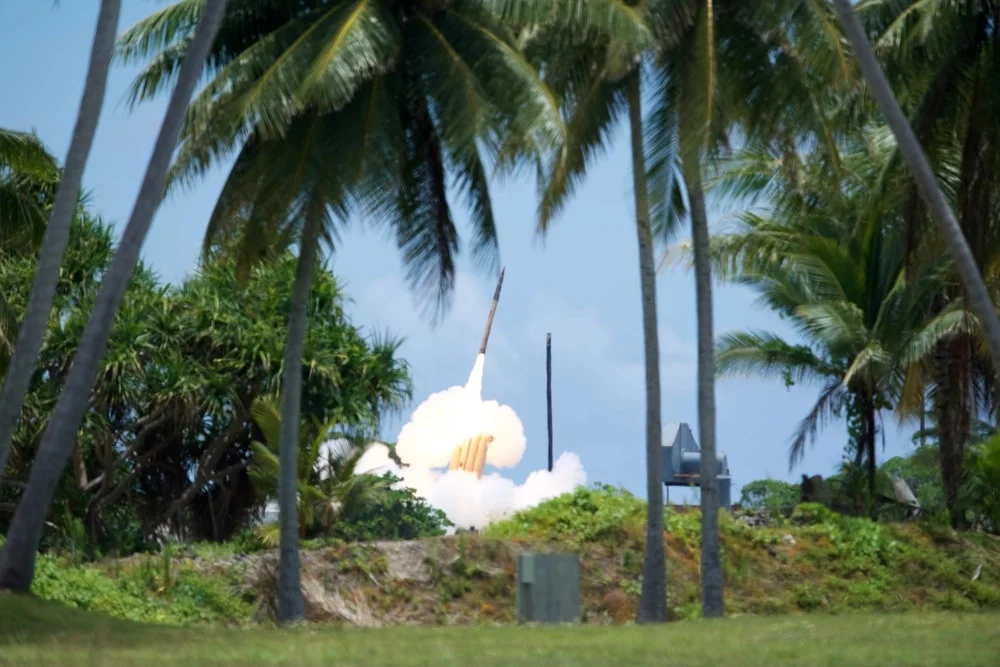
Six months of sporadic fighting with Iran have drained the United States’ stockpile of heavy air-defence interceptors, leaving Western allies perilously exposed to ballistic missile strikes. The Pentagon’s Patriot and Thaad systems, once the backbone of global missile defence, have fired nearly Eliminar ‘nearly 80%’ y reemplazar con: ‘as many as 290 Thaad and 1,430 Patriot interceptors, representing roughly 80% of the Thaad pre-war stockpile and 62% of the Patriot inventory’ of their pre-war inventory, with production lines unable to replenish supplies for years.
The crisis extends far beyond American shores. Since the US supplies the bulk of the West’s heavy interceptors, the shortage has become a global vulnerability.
How the US Burned Through Its Missile Stockpile
The numbers are stark. Before the first US and Israeli bombs struck Iran in February 2026, the Pentagon held around 360 missiles for its eight Thaad batteries and 2,300 for its 60 Patriot batteries, according to the Center for Strategic and International Studies. Six months later, US forces have expended as many as 290 Thaad and 1,430 Patriot interceptors, leaving just 70 and 870 rounds, respectively.
Each Patriot PAC-3 interceptor, capable of hitting incoming ballistic missiles at altitudes of up to 50 km, carries a price tag of $4 million. The Thaad system, designed to intercept missiles at 150 km, costs $12 million per round. With production timelines stretching to 42 months for Patriot and 53 months for Thaad, the US and its allies face a prolonged window of vulnerability.
“We don’t have enough munitions to sustain a long-term fight,” warned Tom Cole, the Oklahoma Republican who chairs the US House of Representatives’ Appropriations Committee. His warning underscores a broader dilemma: while the Pentagon is funnelling tens of billions of dollars into Lockheed Martin and Raytheon to ramp up production, the lag time means allies will go without fresh supplies for years.
Ukraine’s Desperate Gamble: A Blueprint for the West?
With US stocks dwindling, Ukraine has emerged as an unlikely leader in the race to develop alternative missile defences. The country’s Freya initiative, a joint effort with German firm Diehl, aims to transform the Ukrainian-made FP-7 surface-to-surface ballistic missile into an interceptor by adding a German infrared seeker. The goal? A test against a ballistic target by July 2027, a timeline that would compress a programme typically spanning 20 to 30 years into just two.
“We are trying to squeeze a programme that usually takes 20 to 30 years into a framework of a few years,” said Iryna Terekh, chief executive of Kyiv munitions maker Fire Point. Yet its effectiveness remains unproven. Hitting a missile with a missile is one of modern warfare’s most demanding tasks, and the reliability of German seekers could make or break the system.
Ukraine’s existing defences are already stretched thin. The country relies on half a dozen donated Patriot batteries and two Franco-Italian SAMP/T systems, both of which are critically low on missiles. The SAMP/T’s Aster missile, capable of engaging targets at altitudes of up to 25 km, costs $3 million per round. Yet Eurosam, the Franco-Italian consortium behind the system, has shown little urgency in scaling up production. France’s decision to grant Ukraine a license to produce its own Aster missiles has done little to alleviate the shortage.
The consequences of the missile deficit are already playing out in Ukraine. With Patriot batteries running low, Russia has gained the upper hand in its bombardment of cities and power plants.
The Pentagon’s production push may eventually restore American stockpiles, but the clock is ticking for countries that depend on US-supplied interceptors.


Sign up free to ask CAMAL AI for a summary, the key points or anything else about this story.
Related stories
CAMAL AI
 Financial Ports Newsletter
The maritime economy, every morning
Ports, shipping and freight markets in one short email. Free.
Financial Ports Newsletter
The maritime economy, every morning
Ports, shipping and freight markets in one short email. Free.