

Sweden’s Timber Trade Gets a Rail Lift: 44 Containers Every Fortnight
Fiskarheden’s new rail service from Malungsfors to Gothenburg ships 44 forty-foot containers of sawn timber every other.
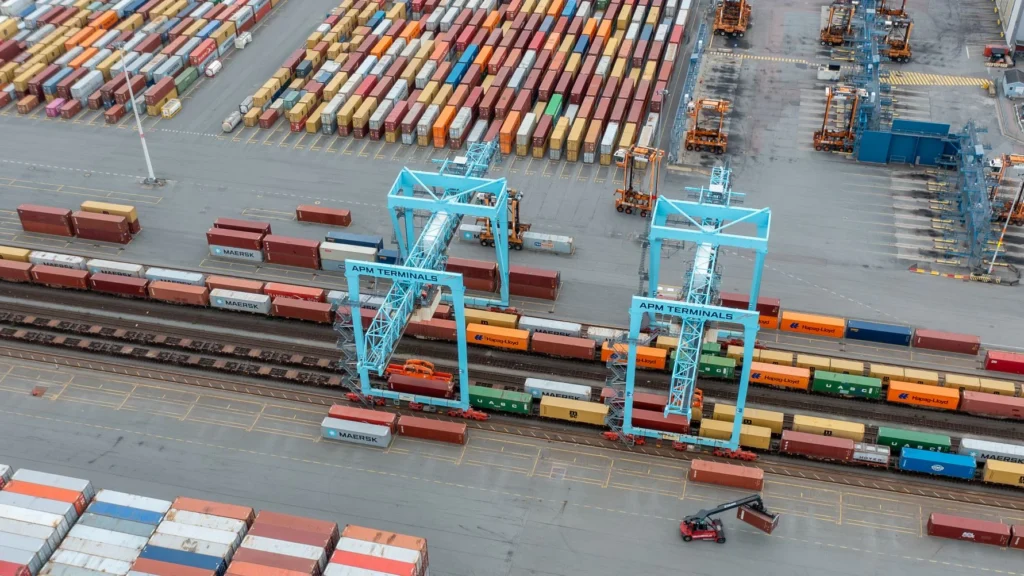
The move marks a strategic shift for Fiskarheden, which exports 90% of its production, used in furniture, construction, and concrete formwork, to global markets. Port of Gothenburg of Gothenburg, Scandinavia’s largest, handles around 20% of Sweden’s total trade and more than half of its container traffic, making it a critical hub for exporters.
The new service departs from Malungsfors in the Dalarna region, with trains initially running every other Monday.
Joakim Limberg, CEO of Fiskarheden, emphasised the cost and flexibility benefits of the rail solution developed by TFK Logistics. “We want to move as much of our inland freight as possible by rail, so it feels very good to be back at the Port of Gothenburg,” Limberg said. “TFK Logistics has developed a cost-effective and flexible solution that suits us and is also open to other companies in the region.”
The service is not limited to Fiskarheden. The return journey from Gothenburg to Dalarna offers capacity for imported goods, creating opportunities for local businesses to reduce their own logistics costs. “We are talking to businesses in the region about shipments in both directions,” Limberg added. “That would make the service even more valuable to local businesses.”
How the New Rail Service Works, and Who Benefits
Richard Mellgren, Senior Business Development Manager at the Port of Gothenburg, highlighted the broader significance of the rail link. “Fiskarheden’s decision to use rail to reach the Port of Gothenburg again is a good example of what Railport Scandinavia can offer,” Mellgren said. “Rail gives exporters inland an efficient way to access international shipping.”
Port of Gothenburg of Gothenburg is a cornerstone of Sweden’s export infrastructure, handling over 20% of the country’s total trade. As the largest port in Scandinavia, it serves as the primary gateway for containerised goods, accounting for more than half of Sweden’s container traffic. The port’s strategic location on the west coast provides direct access to major shipping routes, including those to Asia, Europe, and the Americas.
For timber producers like Fiskarheden, rail transport offers several advantages over road freight.
Why Gothenburg Port is Critical for Sweden’s Export Strategy
The rail link is part of Railport Scandinavia, a network designed to connect inland exporters with Gothenburg’s port facilities.
The company’s sawn timber is used in a variety of applications, from furniture manufacturing to construction and concrete formwork. With 90% of its production destined for export, the ability to transport goods efficiently and sustainably is critical to maintaining its competitive edge in global markets.
The service’s initial phase sees trains departing every other Monday, but Fiskarheden and TFK Logistics have left the door open for expansion. For now, the focus remains on ensuring the smooth operation of the new rail link and maximising its potential for both exports and imports.
Looking ahead, the success of this service could serve as a model for other Swedish exporters seeking to reduce their reliance on road transport. With the Port of Gothenburg continuing to invest in rail infrastructure, the potential for similar initiatives across the country is significant. For businesses in Dalarna and beyond, the message is clear: rail is not just a viable alternative to road freight, it’s a smarter, more sustainable way to reach global markets.


Sign up free to ask CAMAL AI for a summary, the key points or anything else about this story.
Related stories
CAMAL AI
 Financial Ports Newsletter
The maritime economy, every morning
Ports, shipping and freight markets in one short email. Free.
Financial Ports Newsletter
The maritime economy, every morning
Ports, shipping and freight markets in one short email. Free.



