

Gothenburg RoRo Terminal hits 5% volume growth after €200m upgrade
The Swedish hub reports a 5% rise in cargo volumes in H1 2026 following a three-year investment programme.
The growth coincides with a broader shift in European logistics, as geopolitical uncertainty and supply chain disruptions push more companies toward regional transport solutions.
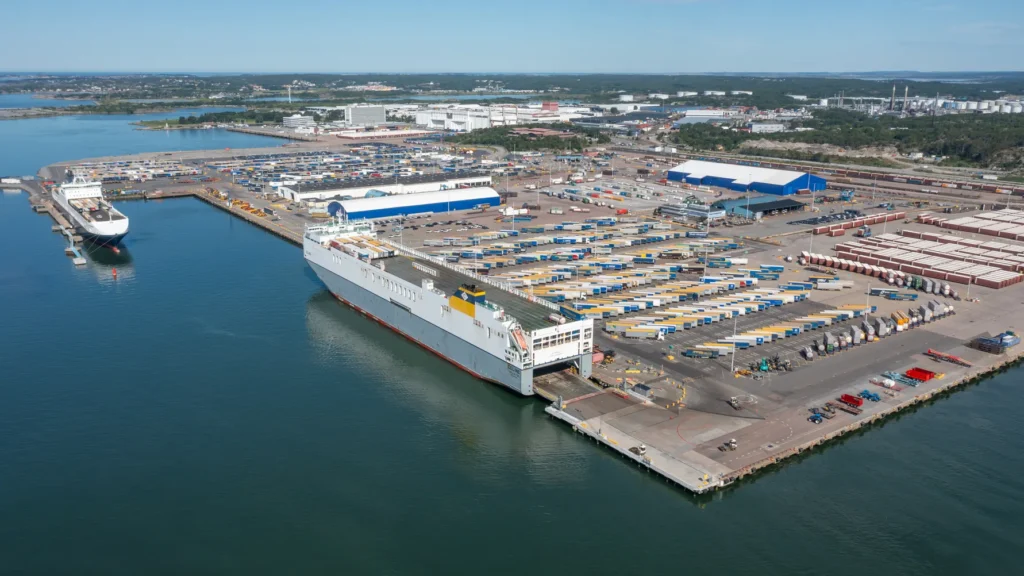
The past three years have transformed Gothenburg RoRo Terminal into what senior officials describe as a “2.0” operation. The project provided a more contiguous operational site behind berths 712 and 713, improving accessibility and efficiency.
In 2023, the terminal integrated Arken Intermodal Terminal into its operations, adding 65,000 square metres of space and seven rail tracks. Two new cross-docking facilities, “The Steel Tent” (11,000 square metres) and “The Paper Roll” (6,000 square metres), were also constructed to handle specialised cargo.
Investments deliver a ‘2.0’ terminal: gothenburg roro terminal
Jacob Minnhagen, Senior Market Development Manager at the Port of Gothenburg, said the upgrades have positioned the terminal for continued growth. “Gothenburg RoRo Terminal has taken major steps forward and is very well equipped for continued growth,” he said. “Upgrades to quays, rail connections, terminal areas and equipment have further strengthened efficiency. The rapid pace of development means there really is a ‘2.0’ feel to the terminal as a whole.”
The terminal’s positive performance reflects a wider trend in European logistics. Geopolitical tensions, tariff disputes, and disruptions to global supply chains have prompted companies to seek more predictable, regional transport solutions. Gothenburg RoRo Terminal, with its frequent sailings to the UK and Central Europe, has emerged as a critical node in this shifting landscape.
Maria Franksen, CEO of Gothenburg RoRo Terminal, attributed the volume growth to a long-term focus on capacity and efficiency. “We have taken a focused, long-term approach to developing the terminal’s capacity, quality and efficiency,” she said. “The volume growth is a positive indication that this work is paying off. But we will not be complacent. We continue to improve and adapt our operations to meet the current and future needs of Swedish industry.”
Why intra-European shipping is gaining ground
RoRo and short sea shipping offer a viable alternative to congested inland transport corridors, which have faced recurring disruptions in parts of Europe. The terminal’s ability to accommodate larger vessels, thanks to a deeper, wider approach channel dredged in 2022/2023, has further enhanced its appeal. Shipping lines CLdN and DFDS, the terminal’s most frequent callers, have both deployed larger, more modern vessels on their routes to and from Gothenburg.
The terminal’s cargo mix remains diverse, ranging from forest products and steel to automotive components and electronics.
As European supply chains continue to adapt to new realities, Gothenburg RoRo Terminal is positioning itself as a cornerstone of regional logistics, one that balances capacity, sustainability, and resilience.


Sign up free to ask CAMAL AI for a summary, the key points or anything else about this story.
Related stories
CAMAL AI
 Financial Ports Newsletter
The maritime economy, every morning
Ports, shipping and freight markets in one short email. Free.



