

FEPORT highlights EU Ports Strategy and private investment role during Summer General Assembly in Constanţa
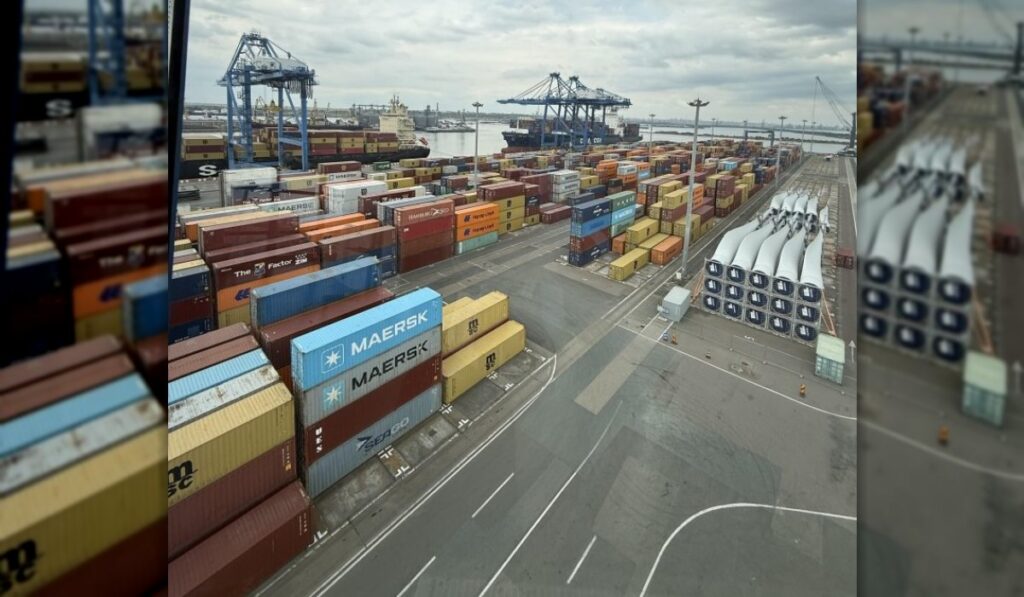
The FEPORT members, gathered for their Summer General Assembly in Constanţa at DP World’s terminal, extensively discussed the EU Ports Strategy that was adopted in March this year. FEPORT members also welcomed the recently adopted EU Transport Council conclusions on the EU Ports Strategy, which among others reiterate that European ports must remain attractive destinations for investment and that screening mechanisms should be risk-based, proportionate and non-discriminatory.
The investments made by DP World in Constanţa are presented as an example of how private investment can keep EU supply chains resilient and competitive in Eastern and Central Europe.
Situated at the mouth of the Danube–Black Sea Canal, DP World’s port and terminals include 24/7 operations of container, Ro-Ro and project cargo terminals in one hub, supported by an on-site CFS facility for inspections, stuffing and storage. Direct rail and motorway links move cargo inland quickly, while a dedicated project cargo zone supports heavy and oversized loads.
Expanding multimodal connectivity across Europe
In line with the European Union’s objectives to strengthen multimodal transport, enhance logistics efficiency and advance the TEN-T policy framework, DP World has expanded its inland logistics footprint through the development of the Aiud Intermodal Terminal.
Strategically located in central Romania, the Aiud terminal improves connectivity between major European transport corridors and the Port of Constanţa, facilitating smoother cargo flows across rail and road networks.
According to FEPORT President Gunther Bonz, it is crucial that the EU Ports Strategy “unleashes the potential that private investments represent for EU ports and their connectivity by de-risking private capital and enhancing predictability and bankability for ports as clusters for energy transition.”
He also stressed the need to respond to a rapidly changing geopolitical landscape and emerging risks such as cyberattacks, drone threats and hybrid warfare, while warning that ports require massive investments in infrastructure and energy access to remain resilient and support the energy transition.
Bonz further highlighted the need for clarity in State aid and funding rules, calling for the revision of the General Block Exemption Regulation to provide legal certainty and avoid a fragmented framework that could deter investors.
Energy transition, electrification and regulatory challenges
FEPORT welcomed the EU Transport Council’s conclusions on the Electrification Action Plan as support for port electrification. It also emphasized that recognition in the Grids Package of electricity grid infrastructure and shore-side electricity (OPS) as being of “overriding public interest” should help reduce permitting delays.
The organization also pointed to the risk of traffic diversion to non-EU transhipment hubs linked to the implementation of the EU Emissions Trading System (ETS). It called for ETS revenues to be partially earmarked at national level for investments in battery-electric cargo handling equipment and the deployment of shore-side electricity.
FEPORT members concluded by expressing their intention to continue close cooperation with the European Commission, the European Parliament, and EU Member States.


Sign up free to ask CAMAL AI for a summary, the key points or anything else about this story.
Related stories
CAMAL AI
 Financial Ports Newsletter
The maritime economy, every morning
Ports, shipping and freight markets in one short email. Free.
Financial Ports Newsletter
The maritime economy, every morning
Ports, shipping and freight markets in one short email. Free.



