

Aarhus Plugs in Denmark’s First Shore Power for Box Ships
Denmark’s largest container hub tests 6.5 MWh connection for 2,150-TEU vessel ahead of 2030 EU rules.
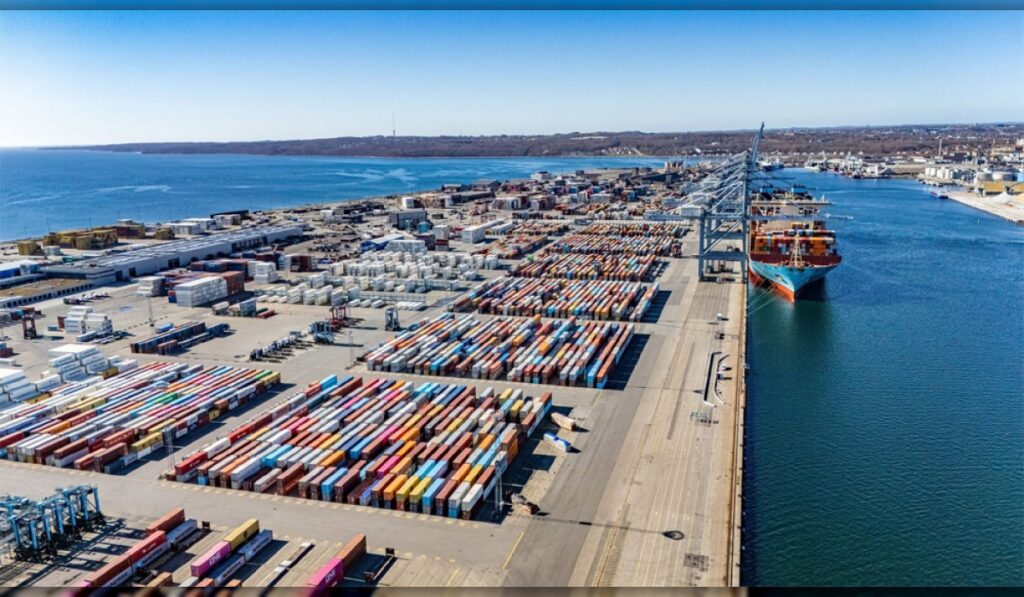
The Port of Aarhus has achieved a significant milestone by successfully testing Denmark’s first shore power facility designed specifically for containerships. The trial, conducted with the Icelandic vessel Dettifoss, demonstrated the port’s readiness to support sustainable operations for cargo ships at berth.
The Dettifoss, a 180-meter containership with a capacity of 2,150 TEU, was connected to the new shore power system for nearly 10 hours during the trial. The vessel, operated by Eimskip and built in China in 2020, received approximately 6.5 MWh of electricity from the port’s grid. This marked the first time a containership in Denmark drew power directly from a container terminal while docked.
First Test Marks Progress Toward Sustainability: Shore Power
Thomas Breth Clausen, Managing Director of Eimskip Denmark, expressed satisfaction with the achievement. “We’ve been using shore power in Iceland for some time, so contributing to this project in Aarhus is a major step forward,” he said. The trial highlighted the port’s ability to reduce emissions and noise pollution from ships while meeting upcoming regulatory requirements.
The Port of Aarhus expects the shore power system to be fully operational by January 2027, allowing containerships to connect voluntarily. However, officials acknowledged the complexities of electrifying container vessels compared to cruise ships or ferries. Unlike other ship types, containerships require continuous power for operations such as refrigerated containers and onboard infrastructure, placing higher demands on the electrical grid.
Once fully implemented, the facility will have the capacity to supply power to up to four containerships simultaneously, accommodating vessels of varying sizes and berth locations. The project is part of a broader effort to comply with the EU’s FuelEU Maritime Regulation, which will require container and passenger ships above 5,000 gross tons to use shore power by 2030.
Challenges and Future Plans
Ulrik Andersen, CEO of the Port of Aarhus, emphasized the strategic importance of the initiative. “Shore power for containerships is a key development for a more sustainable port,” he said. “As the primary hub for Denmark’s container cargo, this facility strengthens our competitiveness and supports the green transition.”
The project received funding from the EU’s Connecting Europe Facility and aligns with similar efforts in other European ports, including Hamburg and Rotterdam. Rotterdam’s ongoing collaboration with ABB aims to deliver over 100 MVA of shore power capacity by the second half of 2028, serving multiple container terminals at Europe’s largest port.


Sign up free to ask CAMAL AI for a summary, the key points or anything else about this story.
Related stories
CAMAL AI
 Financial Ports Newsletter
The maritime economy, every morning
Ports, shipping and freight markets in one short email. Free.



