

US Port Grants Hit Five-Year Low as AAPA Warns of $10.9bn Shortfall
MARAD awards $498m in final PIDP funding from the Bipartisan Infrastructure Law, the lowest level in five years.
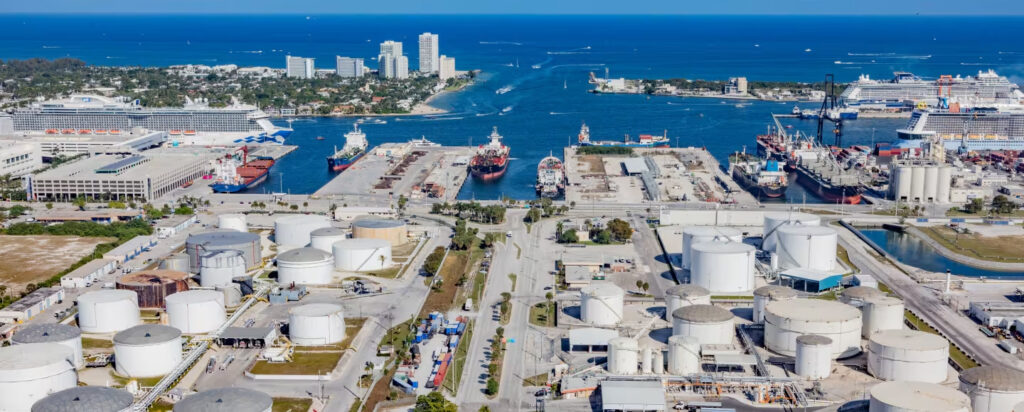
The US Maritime Administration (MARAD) has awarded $498 million in Port Infrastructure Development Program (PIDP) grants for 2026, marking the lowest funding level in five years and the final allocation from the $2.25 billion earmarked under the Bipartisan Infrastructure Law.
The largest single grant this year went to Whittier, Alaska, which received $50.5 million to replace its DeLong Dock with a new 1,150-foot facility. Alaska continued to secure a significant share of the funding, with additional grants of $26 million for the Saint Herman Harbor recapitalisation programme and over $6.3 million for stevedore facilities in Anchorage.
Other major awards included $40 million each for the reconstruction of the Blount Island Marine Terminal berth in Jacksonville, Florida, and the Port of Kahului cargo yard expansion in Hawaii.
“The strength of our nation’s economy is directly tied to the state of our ports,” said US Transportation Secretary Sean P. Duffy. “This nearly half-billion-dollar investment will deliver critical upgrades to ports across America so we can enhance supply chains, lower shipping costs, and create good-paying jobs.”
Funding Decline Sparks Industry Alarm Over Future Investment: Grants
While the 2026 PIDP grants represent a significant investment, the total is notably lower than in previous years. April, MARAD awarded $774 million for 37 projects, while November 2024 saw $580 million for 31 projects, November 2023 $653 million for 41 projects, and October 2022 $703 million for 41 projects. The decline in funding has raised concerns within the industry, particularly as the PIDP programme exhausts its advanced appropriations from the Bipartisan Infrastructure Law.
The American Association of Port Authorities (AAPA) has called for urgent Congressional action to include advance appropriations for PIDP in the next Surface Transportation Reauthorisation. Without such measures, the AAPA warns that American ports will face an infrastructure investment deficit of $10.9 billion over the next five years.
“Ports don’t want government handouts. For every dollar ports apply for in competitive grants from PIDP, they match it with a dollar of state, local, or private investment, averaging a 50 percent non-federal cost share, unlocking significant non-federal infrastructure investment. In the six years since PIDP was created, ports have applied for $4.51 for every $1 that was awarded. If Congress expands PIDP, ports will unlock additional private investment and use taxpayers’ dollars in projects that will bolster the American economy.”
AAPA·Industry Association
MARAD Administrator Stephen M. Carmel emphasised the broader impact of the grants, stating that they are part of a commitment to modernising the United States’ port and maritime infrastructure.
The programme, administered by MARAD under the Department of Transportation, is open to more than 300 ports operated by states, counties, municipalities, and private corporations. Its goals include reducing shipping times and costs for shippers while fostering economic growth.
With the Bipartisan Infrastructure Law’s allocations now exhausted, the AAPA’s call for renewed Congressional support has taken on added urgency. The association highlights that ports have consistently leveraged federal grants to attract additional private and local investment, with a 50% non-federal cost share requirement ensuring that every federal dollar is matched by external funding.
The projected $10.9 billion shortfall over the next five years could have far-reaching consequences for the US maritime sector. Ports across the country rely on PIDP funding to upgrade ageing infrastructure, expand capacity, and adopt new technologies. Without sustained investment, industry leaders warn that supply chain inefficiencies could worsen, leading to higher costs for shippers and consumers alike.
As the debate over future funding intensifies, the AAPA and other industry stakeholders are urging lawmakers to prioritise port infrastructure in the upcoming Surface Transportation Reauthorisation. The outcome of these discussions will determine whether the US can maintain its competitive edge in global trade or risk falling behind due to underinvestment in critical maritime assets.


Sign up free to ask CAMAL AI for a summary, the key points or anything else about this story.
Related stories
CAMAL AI
 Financial Ports Newsletter
The maritime economy, every morning
Ports, shipping and freight markets in one short email. Free.



