

Containership orderbook nears 16m teu as carriers bet on LNG
Global newbuilding pipeline hits 15.12m teu, with Maersk and Hengli leading a wave of LNG-powered megamax orders.
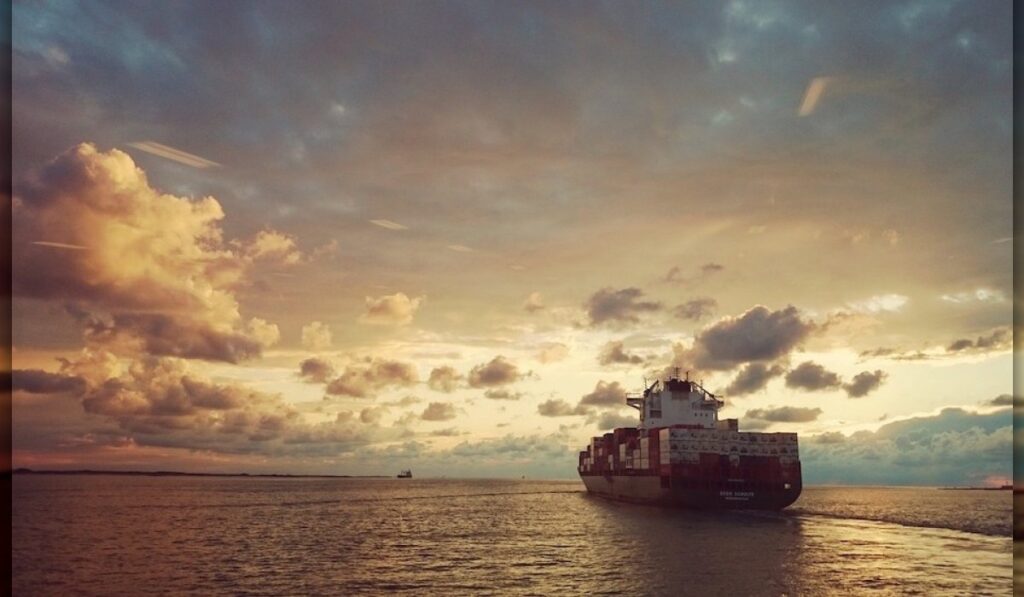
The global containership orderbook has surpassed 15 million twenty-foot equivalent units (TEU), reaching 15.12 million TEU, equivalent to 43.9% of the current trading fleet. Industry analysts expect this figure to approach 16 million TEU by the end of 2026, driven by a new wave of megamax vessel orders from major carriers.
Alphaliner’s latest data indicates that around 40 additional large containerships are set to enter the newbuilding pipeline. Maersk, Yang Ming, CMA CGM, and MSC are among the companies involved, with Maersk and Yang Ming’s orders expected to materialize shortly. While CMA CGM and MSC are believed to have finalized contracts, these deals remain unconfirmed.
The most significant pending order comes from Maersk, which is negotiating exclusively with Chinese shipyards for twelve 24,000-TEU LNG dual-fuel vessels. The Danish carrier may also exercise options for an additional twelve ships. The initial order is valued at approximately $2.88 billion, with the total potentially rising to $5.76 billion if all options are taken. These vessels would mark Maersk’s first entry into the 24,000-TEU category, moving beyond its long-standing twin-engine Triple-E designs. Chinese yards are reportedly favored due to cost efficiency and available construction slots.
Natural Gas
Maersk’s shift to LNG-powered megamax vessels: containership orderbook
The rapid growth in newbuild orders coincides with a shift in global shipping routes. Sea-Intelligence reports that 60% of Asia-Europe capacity is now operating, or scheduled to operate, via the Suez Canal, rather than the longer Cape of Good Hope route. If security conditions allow, further normalization is expected by the first quarter of 2027. This shift will reduce voyage times, effectively increasing available vessel capacity in a market already facing a surge in new deliveries.
Alphaliner projects fleet capacity to grow by 9.2% in 2027 and 14.4% in 2028. However, industry analysts warn of potential oversupply. Braemar’s latest container briefing describes the combination of Suez’s revival and the expanding orderbook as “not an ideal combination for charter rates.” Jefferies has similarly cautioned that newbuilding deliveries could outpace cargo demand in 2027.
Market risks amid fleet expansion and route changes
Despite these concerns, the current charter market remains robust. Only 0.8% of the global cellular fleet is commercially idle, and charter rates have climbed to their highest levels in four years. Some large vessels are reportedly earning six-figure daily rates, reflecting persistent tightness in available tonnage.
The ordering boom is also reshaping propulsion preferences. LNG dual-fuel vessels now account for 56% of contracted capacity, while methanol dual-fuel ships represent just 12%. Conventional propulsion makes up the remaining 32%. Alphaliner recorded 2.3 million TEU of LNG dual-fuel orders in 2026, with the latest megamax contracts potentially adding another 1 million TEU. In contrast, methanol ordering has nearly stalled.
While geopolitical disruptions and tight vessel availability continue to support high charter earnings, Alphaliner warns that the impending delivery wave “will eventually take its toll on the market.”


Sign up free to ask CAMAL AI for a summary, the key points or anything else about this story.
Related stories
CAMAL AI
 Financial Ports Newsletter
The maritime economy, every morning
Ports, shipping and freight markets in one short email. Free.



