

Wallenius Wilhelmsen bets $1.5bn on 26-ship fleet overhaul
Norwegian car carrier secures $300m to fund dual-fuel PCTCs with options for 12 more vessels by 2032
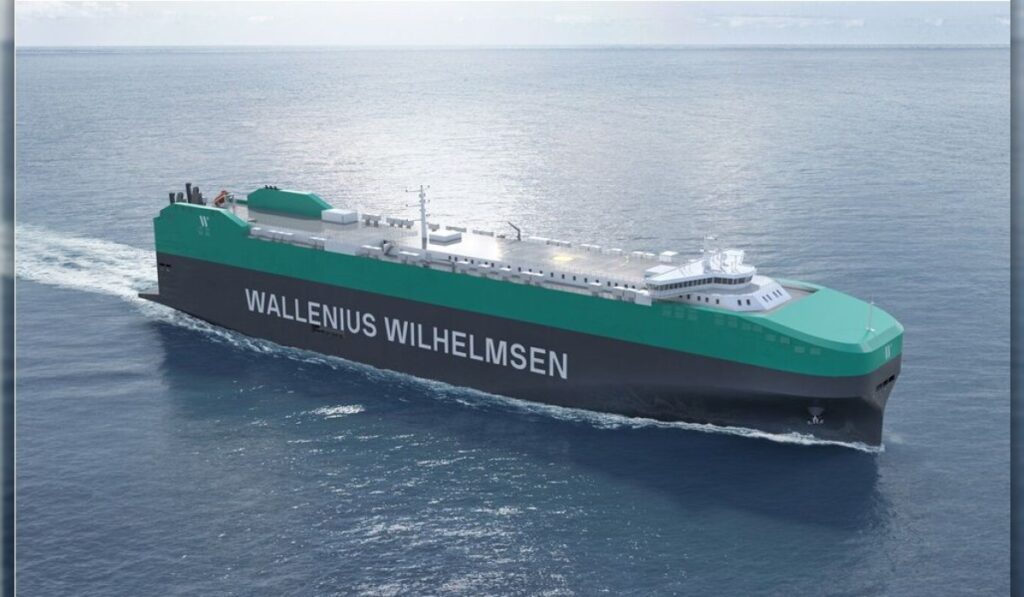
The Oslo-based group, which operates 127 vessels across 15 trade routes, raised $300m earlier this month to fund the expansion, which it describes as the largest newbuilding programme in its history.
The financial backbone of the programme is a NOK2.88bn ($300m) private placement completed on October 6, in which Wallenius Wilhelmsen issued 17.145m shares at NOK168 each. The proceeds, combined with debt financing, will support the construction of up to up to 12 additional LNG dual-fuel vessels, adding to the 14 already contracted at China Merchants Jinling Shipyard in China. Of those 14, six have a capacity of 9,300 car equivalent units (ceu) and eight can carry 11,700 ceu; seven are powered by LNG dual-fuel engines, while the remaining seven use methanol dual-fuel propulsion.
The latest orders, placed with Jinling Shipyard (Jiangsu), cover four firm 9,900 ceu PCTCs for delivery from mid-2030, with options for another eight vessels, four in 2031 and four in 2032.
Wallenius Wilhelmsen
From capital raise to construction: the numbers behind the push: Wallenius Wilhelmsen
The new Shaper Class vessels are designed to handle a wide range of cargo types, from passenger vehicles to heavy machinery. Key features include hoistable decks, reinforced ramps and adaptable cargo spaces, which allow the ships to switch between different load types with minimal downtime. The dual-fuel LNG engines are part of Wallenius Wilhelmsen’s broader push to reduce emissions, aligning with tightening international regulations on carbon output from shipping.
Xavier Leroi, Chief Operating Officer Shipping Services at Wallenius Wilhelmsen at Wallenius Wilhelmsen, underlined the strategic rationale behind the expansion.
“The company continues to see strong opportunities across the segments it serves and wants to secure the capacity and flexibility needed to support customers in the decades ahead. He added that expanding the newbuilding programme reflects confidence in the long-term fundamentals of the deepsea ro-ro market.”
Xavier Leroi·Chief Operating Officer Shipping Services at Wallenius Wilhelmsen
The programme is not just about replacing older vessels; it is also about future-proofing the fleet.
Design, fuel and flexibility: what the new Shaper Class brings
The Shaper Class vessels will also offer greater operational flexibility. The hoistable decks, for example, can be adjusted to accommodate taller vehicles or machinery, while the reinforced ramps allow for faster loading and unloading.
Wallenius Wilhelmsen’s move is a clear signal that the car carrier sector is preparing for sustained growth. The company’s confidence in ordering 26 vessels, including options, suggests it expects demand for vehicle shipping to remain robust well into the 2030s.
The focus on LNG and methanol dual-fuel engines also reflects a broader industry shift toward cleaner fuels.
The company’s existing fleet has struggled to keep up with demand during peak periods, leading to delays and higher freight rates. The newbuilds should help stabilise supply, particularly on high-volume routes such as those linking Asia with Europe and North America.
The first of the new Shaper Class vessels are due to enter service in mid-2030, with the optional ships following in 2031 and 2032. If all options are exercised, the programme will see a new vessel delivered roughly every quarter from 2030 to 2032, ensuring a steady stream of modern, fuel-efficient tonnage into the fleet. For an industry that has historically been slow to adopt new technologies, this represents a significant step forward.
As the programme progresses, industry observers will be watching closely to see whether other major car carriers follow suit. With emissions regulations tightening and demand for vehicle transport showing no signs of slowing, Wallenius Wilhelmsen’s bet on a 26-strong fleet renewal could well set the tone for the next decade of ro-ro shipping.


Sign up free to ask CAMAL AI for a summary, the key points or anything else about this story.
Related stories
CAMAL AI
 Financial Ports Newsletter
The maritime economy, every morning
Ports, shipping and freight markets in one short email. Free.



