

US-Denmark pact puts shipbuilding at the heart of maritime revival
The US and Denmark sign a deal to boost American shipbuilding with Danish investment.
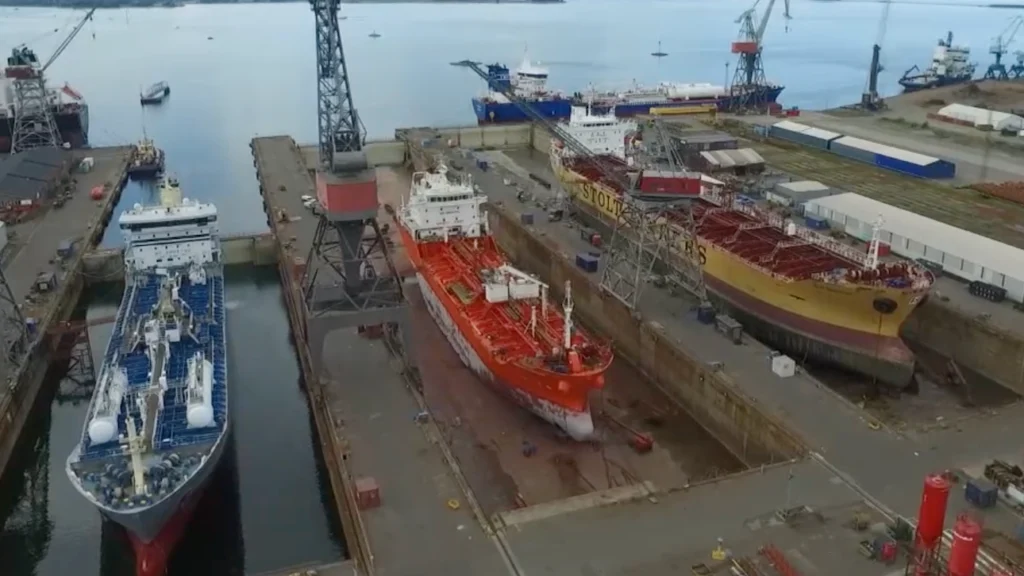
The United States and Denmark have formalized a maritime cooperation agreement designed to strengthen American shipbuilding through workforce training, Danish investment, and technology sharing. The memorandum of understanding was signed on October 22 by U.S. Under Secretary of State for Economic Affairs Jacob Helberg and Danish Foreign Minister Lars Løkke Rasmussen.
The agreement establishes a framework for leveraging Danish maritime expertise to expand U.S. shipbuilding capacity. It focuses on three key areas: developing a skilled workforce, advancing maritime equipment and technology, and providing specialized services for ship construction, repairs, and retrofits. The partnership also encourages local collaborations and joint ventures to modernize and expand American shipyard infrastructure.
U.S. and Denmark sign maritime pact to boost American shipbuilding: us shipbuilding
While the announcement did not specify investment amounts, individual projects, or implementation timelines, it creates opportunities for Danish suppliers to enter the U.S. maritime market. The State Department described the initiative as a first step toward a broader maritime partnership, emphasizing its potential to create American jobs and enhance national security.
A.P. Møller-Maersk
The agreement aligns with President Donald Trump’s executive order on restoring American maritime dominance and the administration’s maritime action plan. These policies aim to expand shipbuilding capacity, develop a skilled workforce, and strengthen supply chains. Helberg highlighted the urgency of the initiative, stating that “American shipyards need skilled hands, capital, and speed” to compete effectively.
The partnership also seeks to strengthen defense-industrial cooperation, particularly in technologies with both military and commercial applications. Denmark’s Ministry of Foreign Affairs and the U.S. State Department will oversee implementation, including knowledge exchanges on maritime policy and regulatory frameworks involving government agencies, industry associations, and other stakeholders.
Strategic goals and broader implications
This agreement follows similar U.S. partnerships with South Korea and Japan, which focus on investment, workforce development, and production technology. Additionally, the trilateral ICE Pact with Canada and Finland aims to expand icebreaker design and construction capabilities. Together, these initiatives form part of a broader strategy to counter China’s dominance in global shipbuilding by closing workforce and production gaps through allied expertise and investment.
Denmark’s role is particularly notable as the headquarters of Maersk, the world’s second-largest ocean container line. While the next phase of the partnership will focus on developing specific projects, no further details have been released.


Sign up free to ask CAMAL AI for a summary, the key points or anything else about this story.
Related stories
CAMAL AI
 Financial Ports Newsletter
The maritime economy, every morning
Ports, shipping and freight markets in one short email. Free.



