

US to Slap $200,000 Fee on Spanish Ships in Port Dispute
Federal Maritime Commission proposes $200,000 per-voyage fee on Spanish-flagged vessels entering US ports over.
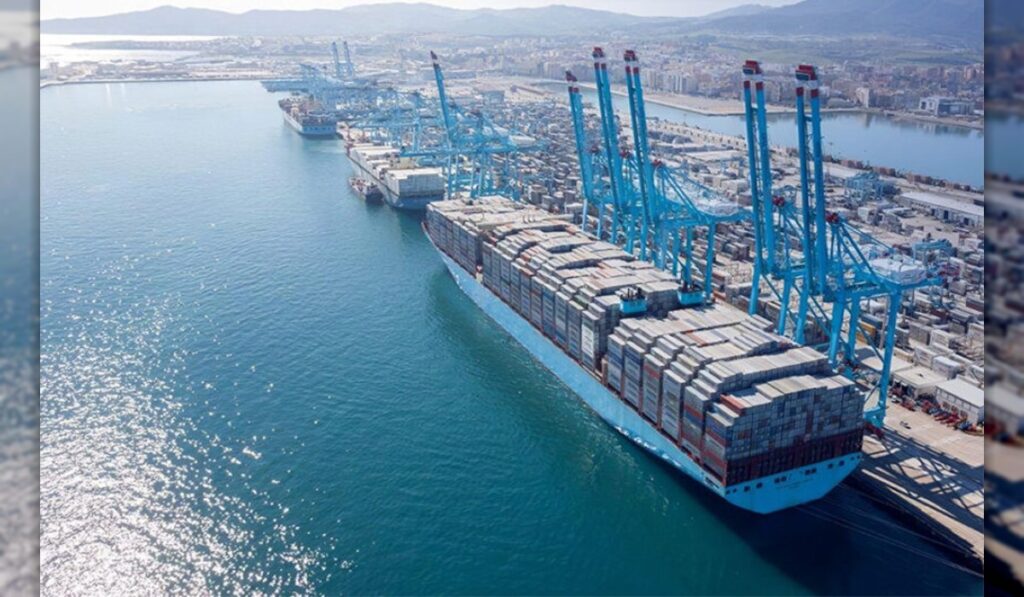
The United States has unveiled plans to impose a $200,000 fee per voyage on Spanish-flagged vessels entering its ports, escalating a nearly two-year dispute over restrictive port practices by Spain that Washington claims are harming US trade.
The proposed measures also include restrictions on certain Spanish imports, such as olive oil, ceramics, and cosmetics, pending a public comment period and a potential hearing for Spanish authorities.
The investigation traces back to November 2024, when three vessels operated by Maersk Line, Ltd., a US-flagged carrier, were diverted from the Port of Algeciras to Morocco after Spanish authorities denied them entry. Activists in Spain had pressured the government to block the ships, alleging they were transporting military supplies to Israel in violation of Spain’s ban on arms transshipment to the country amid the Gaza war.
A.P. Møller-Maersk
Maersk, however, denied the claims, stating that its cargo was entirely legal and did not include weapons or ammunition. A company spokesperson at the time said:
“Cargo to be transshipped through the port does not include any military weapons or ammunition.”
Maersk spokesperson·Company representative
The FMC, which launched its probe in December 2024, determined that Spain’s actions had disrupted US trade by forcing carriers to reroute vessels to alternative ports, such as Tangier. The commission argued that these diversions undermined the efficiency and reliability of the global shipping supply chain, as well as the US’s ability to maintain a liner fleet capable of meeting national security needs.
The FMC’s investigations often focus on allegations of unfair treatment by foreign governments, with the power to impose penalties or restrictions to safeguard US trade interests.
What the $200,000 Fee Means for Spanish Shipping and US Imports
The FMC’s proposed remedies include not only the $200,000 per-voyage fee on Spanish-flagged vessels but also potential restrictions on key Spanish exports. Among the goods that could face limitations are olive oil, perfumery, ceramics, articles of stone, and sugar confectionaries. The measures would take effect after a public comment period and a hearing, where Spain could present its case.
Spanish authorities have consistently defended their actions, arguing they were applied under international and Spanish law, as well as EU restrictions. They maintain that the limitations were imposed on all vessels, regardless of flag, and were not targeted specifically at US-flagged ships. The proposed restrictions on Spanish imports could have significant economic consequences. The FMC’s statement underscored the broader implications of the dispute:
“These unfavorable conditions have grave consequences for the efficiency and reliability of the international ocean shipping supply chain, as well as the ability of the FMC to promote the growth and development of U.S. exports, encourage the development of a liner fleet of U.S. vessels capable of meeting national security needs and supporting commerce, and supporting the U.S. merchant marine.”
Federal Maritime Commission·US regulatory body
Maersk Line, Ltd., which participates in the US Maritime Administration’s (MARAD) Maritime Security Program, has been at the center of the dispute. A significant portion of Maersk Line, Ltd.’s cargo consists of government-owned goods and equipment, including military supplies, though the company has repeatedly denied transporting weapons through Spanish ports.
The rerouting of vessels from Algeciras to Tangier has already had operational consequences, with carriers adjusting their schedules to avoid Spanish ports. Algeciras, one of Europe’s busiest ports, handles over 100 million tonnes of cargo annually and serves as a critical hub for transshipment between Europe, Africa, and the Americas. The diversion of even a small number of vessels can create bottlenecks and increase transit times, affecting global supply chains.
For Spanish shipping companies, the proposed $200,000 fee per voyage could significantly increase operational costs. With Spain’s merchant fleet comprising over 300 vessels, the financial burden of the penalties could force some operators to reconsider their routes or pass costs onto customers. The FMC’s proposal also sets a precedent for how the US may respond to restrictive port practices in the future, potentially emboldening other countries to adopt similar measures.
The dispute highlights the delicate balance between national security concerns and the principles of free trade. While Spain’s actions were framed as a response to the Gaza conflict, the FMC’s investigation suggests they have had unintended consequences for US carriers and global shipping efficiency. The outcome of the public comment period and potential hearing will be closely watched by industry stakeholders, as it could shape future trade policies and port regulations worldwide.
Public comments on the FMC’s proposal are now open, and stakeholders can submit their views through the FMC’s official website. Spanish authorities have the opportunity to present their case in a hearing before any penalties are imposed. The final decision could take several months, with industry analysts warning that further escalation could lead to retaliatory measures from Spain or other EU member states.


Sign up free to ask CAMAL AI for a summary, the key points or anything else about this story.
Related stories
CAMAL AI
 Financial Ports Newsletter
The maritime economy, every morning
Ports, shipping and freight markets in one short email. Free.