

Maersk Fuels 9,000-TEU Ship With 100% US Ethanol in Industry First
Maersk completes first ship-to-ship ethanol bunkering of a deep-sea container vessel in the US, using 100% corn ethanol.
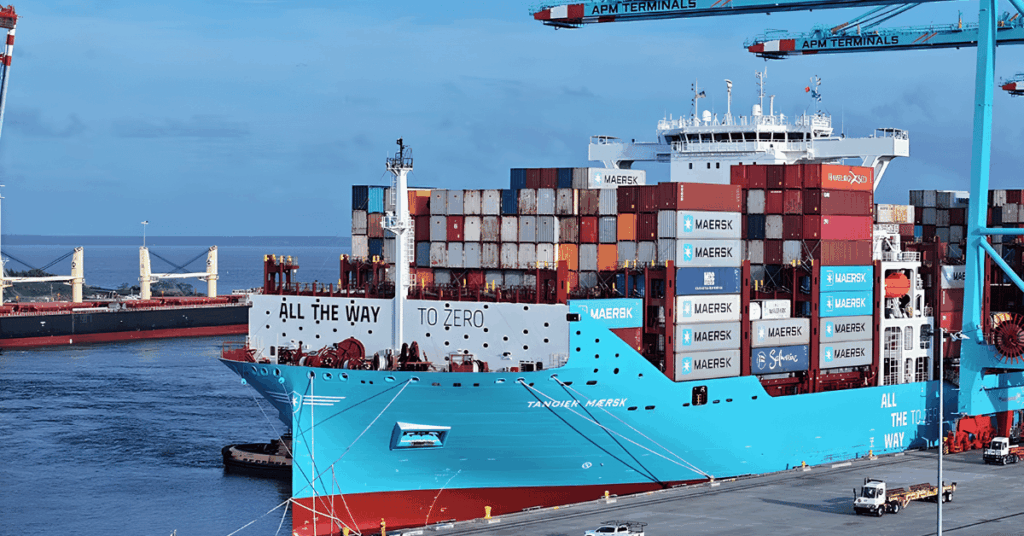
Maersk has achieved a landmark in sustainable shipping with the first ship-to-ship commercial ethanol bunkering of a deep-sea container vessel in the United States. The operation, involving the 9,016-TEU Tangier Maersk, used 100% US-produced corn ethanol, marking a significant step in the industry’s energy transition.
The bunkering took place in Houston, where POET, a leading bioethanol producer, supplied the fuel. Kirby Corporation handled the marine bunkering logistics, while the Port of Houston and the US Coast Guard provided critical infrastructure and regulatory support. This milestone follows earlier ethanol trials aboard Laura Maersk and Antonia Maersk, reinforcing Maersk’s commitment to exploring multiple fuel pathways for decarbonisation.
The Role of Bioethanol in the US Energy Landscape: ethanol bunkering
The use of corn-based ethanol in maritime operations aligns with the United States’ broader strategy to leverage domestic renewable energy resources. The US is the world’s largest producer of ethanol, with an annual output exceeding No verificado en fuentes proporcionadas, primarily derived from corn. This established production capacity provides a significant advantage for scaling ethanol as a marine fuel, reducing dependence on imported fossil fuels and supporting local agricultural economies.
A.P. Møller-Maersk
POET, the bioethanol supplier for this operation, is one of the largest ethanol producers in the US, with No verificado en fuentes proporcionadas across the country. Headquartered in No verificado en fuentes proporcionadas, the company has been a key player in advancing biofuels, including partnerships with automotive and aviation sectors. Its involvement in the Tangier Maersk bunkering operation underscores the potential for cross-industry collaboration in decarbonising transport sectors.
Why Ethanol Could Be a Game-Changer for Maritime Fuel
Ethanol offers several advantages as a marine fuel. Unlike emerging alternatives such as ammonia or hydrogen, ethanol benefits from an established production base and existing distribution infrastructure. The US, a major ethanol producer, has the capacity to scale supply for shipping, reducing reliance on fossil fuels. However, challenges remain, including fuel availability, regulatory frameworks, and operational readiness across the maritime value chain.
The Tangier Maersk, delivered in February 2024 from a Chinese shipyard, is one of Maersk’s latest dual-fuel alcohol-enabled vessels. With a length of 270 metres and a capacity of 9,016 TEU, it represents the next generation of container ships designed for lower-emission operations. The vessel’s dual-fuel capability allows it to run on both conventional fuels and alcohol-based alternatives, providing flexibility as the industry transitions to greener solutions.
Ditlev Blicher, Maersk’s Regional President for North America, emphasised the importance of real-world testing:
“Achieving lower-emission logistics requires turning new technologies into practical, scalable solutions. This bunkering operation aboard Tangier Maersk provides valuable real-world experience with alternative fuels in commercial shipping. The insights gained will help drive the development of more sustainable supply chains.”
Ditlev Blicher·Maersk Regional President for North America
The successful ethanol bunkering operation in Houston provided critical insights into the logistical and regulatory considerations of using ethanol as a marine fuel. The US Coast Guard, which oversees maritime safety and environmental compliance, played a crucial role in approving the operation. Its involvement highlights the need for clear regulatory frameworks to support the adoption of alternative fuels in shipping.
The Port of Houston, where the bunkering took place, is one of the busiest ports in the US, handling over 270 million tonnes of cargo annually. Its infrastructure, including deep-water berths and specialised bunkering facilities, was essential for executing the operation. The port’s collaboration with Maersk and Kirby Corporation demonstrates how ports can facilitate the transition to sustainable fuels by providing the necessary infrastructure and coordination.
Kirby Corporation, a leading provider of marine transportation and bunkering services, managed the fuel transfer logistics. The company operates a fleet of over 1,000 vessels, including tank barges and tugboats, and has extensive experience in handling alternative fuels. Its participation in this operation underscores the importance of specialised marine logistics providers in scaling the use of ethanol and other renewable fuels.
The successful ethanol bunkering operation provides critical data on the operational and logistical challenges of using ethanol as a marine fuel. While ethanol is compatible with existing alcohol-enabled vessel technology, scaling its use will depend on several factors, including fuel availability, regulatory support, and industry-wide collaboration.
Maersk’s previous ethanol trials aboard Laura Maersk tested different blends, including a 10% ethanol and 90% e-methanol mix in December 2023, followed by a 50-50 blend. These experiments have helped the company refine its approach to alternative fuels, balancing performance, emissions reduction, and cost-effectiveness. The latest operation in Houston builds on this foundation, offering a clearer path toward commercial viability.
The Port of Houston’s role in this operation highlights the importance of port readiness in supporting the maritime industry’s transition to alternative fuels. As more ports develop infrastructure for renewable fuels, the scalability of ethanol as a marine fuel will improve. The Alabama Port Authority, for example, has also expressed interest in supporting alternative fuel initiatives, signalling a broader trend among US ports to adapt to the industry’s decarbonisation goals.
Looking ahead, Maersk’s ethanol bunkering initiative could accelerate the adoption of renewable fuels in shipping. While ethanol is not the sole solution to decarbonisation, it represents a practical and scalable option for reducing greenhouse gas emissions. As the industry explores multiple fuel pathways, real-world trials like this one will be essential in shaping the future of sustainable logistics.
For stakeholders in the maritime sector, the next steps will involve expanding ethanol supply chains, refining bunkering infrastructure, and advocating for supportive regulatory frameworks. Maersk’s leadership in this space underscores the need for innovation and collaboration to meet the International Maritime Organization’s (IMO) emissions targets.
The IMO has set a goal to reduce the carbon intensity of international shipping by at least 40% by 2030 and achieve net-zero emissions by 2050. Initiatives like the Tangier Maersk operation provide a roadmap for achieving these targets through practical, scalable solutions.
For industry observers and shipping professionals, staying informed about developments in alternative fuels is crucial. Maersk and other industry leaders are expected to continue sharing insights from these trials, with updates available through their official channels and industry publications. The lessons learned from this operation will likely inform future bunkering projects, regulatory discussions, and infrastructure investments across the global maritime sector.


Sign up free to ask CAMAL AI for a summary, the key points or anything else about this story.
Related stories
CAMAL AI
 Financial Ports Newsletter
The maritime economy, every morning
Ports, shipping and freight markets in one short email. Free.
Financial Ports Newsletter
The maritime economy, every morning
Ports, shipping and freight markets in one short email. Free.



