

IMO’s climate vote mirrors Brazil’s shock election: why the underdog
Brazil’s presidential runoff delivers a 51.76% victory for Lula and a stark warning to the IMO.
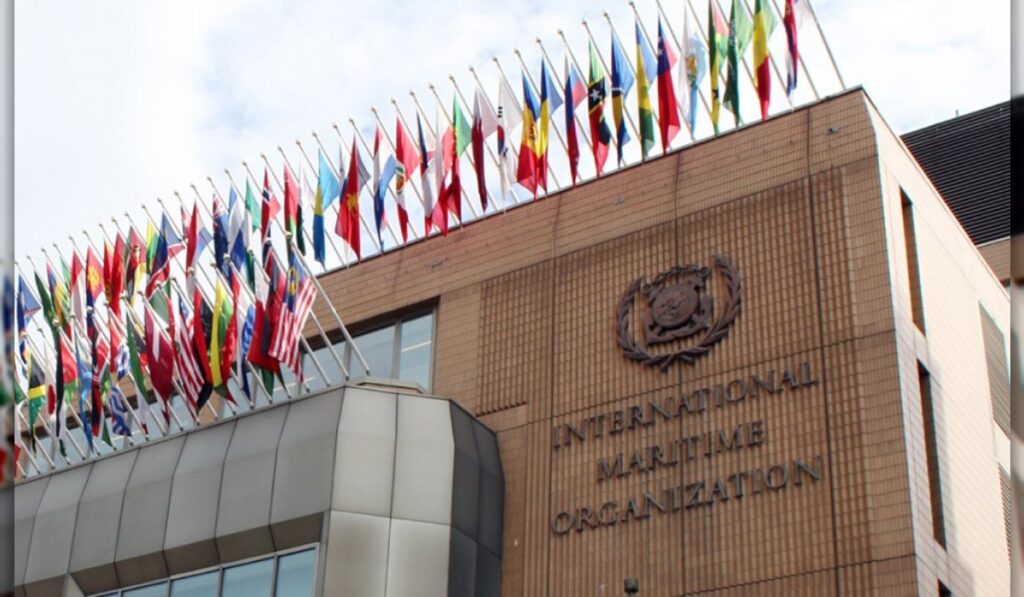
The International Maritime Organization (IMO) faces a pivotal moment next month as it reconvenes in London to finalize the Net-Zero Framework (NZF), a landmark agreement to curb shipping emissions. The outcome may echo Brazil’s recent presidential election, where an underdog candidate defied expectations to secure victory.
Elissama Menezes, co-director of the nonprofit Equal Routes, highlights this parallel in a recent analysis. Brazil’s runoff election saw Luiz Inácio Lula da Silva, who trailed in the first round, win the presidency with 51.76% of the vote. His triumph underscores a broader lesson: political landscapes can shift rapidly, and assumptions about outcomes are often proven wrong.
The IMO’s climate negotiations have followed a similarly contentious path. The NZF, agreed upon by most member states in April 2025, introduces carbon intensity targets and a pricing mechanism to accelerate decarbonization. Yet the U.S. has opposed the framework, employing tactics last year to delay its adoption. Menezes describes these moves as heavy-handed, mirroring the diplomatic pressure Brazil faced during its election.
Natural Gas
Lula’s victory carries significant implications for the IMO. Brazil played a central role in shaping the NZF, and its government’s renewed mandate strengthens the framework’s legitimacy. Skeptics who questioned the agreement’s future due to political instability in Brazil now have little ground to stand on. With Lula’s administration committed to climate action, including a pledge to end deforestation by 2030, Brazil’s influence at the IMO is set to grow.
The urgency of global action: Brazil
Delaying the NZF comes at a cost. The shipping industry requires clear, long-term signals to invest in zero-emission technologies like e-fuels and wind-assisted propulsion. Without a global standard, projects stall, and early adopters risk being penalized. Meanwhile, the window to address short-lived pollutants like methane, emitted by the expanding LNG-fueled fleet, narrows with each passing month.
Regional measures, such as the EU’s Emissions Trading System (ETS) for shipping and FuelEU Maritime, offer partial solutions but cannot replace a unified global approach. FuelEU’s most ambitious emission cuts are not scheduled until the 2040s, leaving a gap for business-as-usual practices in the interim. The EU, which helped broker the NZF, must now push for its adoption without hesitation. Other member states that previously abstained under pressure should stand firm this time.
Brazil’s election demonstrated that nations need not wait for external approval to shape their future. The IMO must take note. The framework’s adoption would send a clear message: global shipping is ready to move beyond delays and toward meaningful climate action.


Sign up free to ask CAMAL AI for a summary, the key points or anything else about this story.
Related stories
CAMAL AI
 Financial Ports Newsletter
The maritime economy, every morning
Ports, shipping and freight markets in one short email. Free.



