

US-Denmark pact slashes shipbuilding costs with Danish tech
Agreement brings Danish investment, training, and green tech to American yards to cut costs and speed up construction.
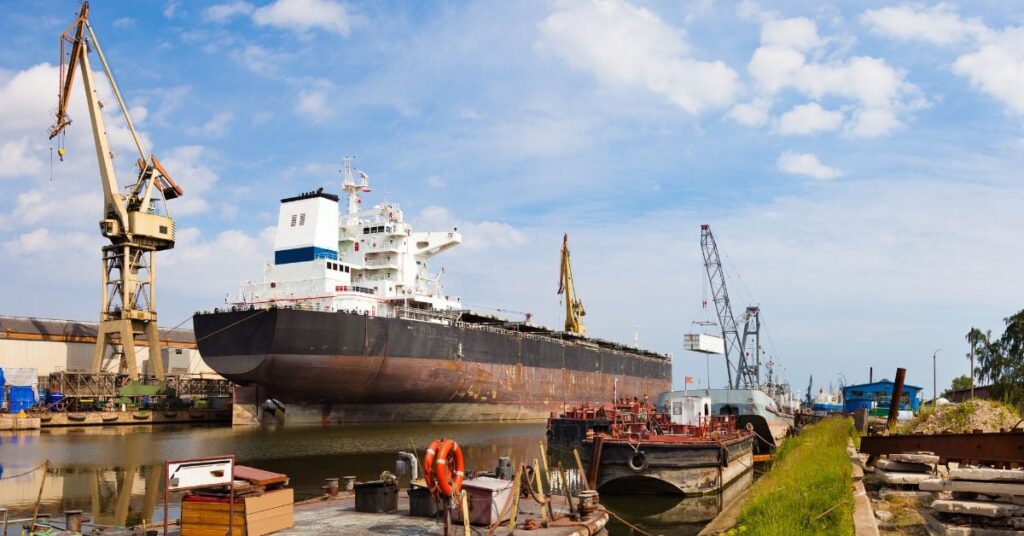
The United States and Denmark have signed a maritime cooperation agreement to modernise American shipyards with Danish investment, workforce training, and advanced shipbuilding technologies. The pact, part of President Donald Trump’s Maritime Action Plan, aims to reduce costs and accelerate vessel construction and repairs in US yards.
The memorandum of understanding (MOU) was signed on October 22 by US Under Secretary of State for Jacob Helberg and Danish Foreign Minister Lars Løkke Rasmussen Løkke Rasmussen. It establishes a framework for Danish maritime expertise to strengthen American shipbuilding capacity, focusing on workforce development, maritime equipment, and specialised services for construction, repairs, and retrofits.
Danish tech and capital to transform US shipyards
The agreement is expected to bring Danish investment into American shipyards, providing access to Denmark’s pioneering green ship technologies and expertise in ship design, construction, and repairs. Helberg highlighted the urgency of the initiative, stating on social media platform X that American shipyards need skilled hands, capital, and speed. He added that the MOU promises all three: quicker training, Danish funding, and cheaper newbuilds and faster ship repairs at lower costs.
A.P. Møller-Maersk
«American shipyards need skilled hands, capital, and speed.»
Jacob Helberg·US Under Secretary of State for Economic Affairs
The partnership is also expected to generate thousands of jobs in the US maritime sector. Denmark, home to Maersk, the world’s second-ranked ocean container line, is recognised as a maritime superpower with one of the largest commercial shipping fleets and a leader in green ship technologies.
Framework for broader maritime cooperation
The MOU calls for exploring local partnerships and joint ventures to expand and modernise US shipyard capacity. The implementation of the agreement will be overseen jointly by the US Department of State and the Danish Ministry of Foreign Affairs.
Despite strict US domestic protection laws, such as the Jones Act, which mandates that commodities shipped between US ports must be carried on American-built and crewed vessels, Denmark has historically supplied core maritime components to the US. These include energy-efficient ship engines and propulsion systems, demonstrating the potential for continued collaboration under the new agreement.
The US and Denmark have maintained cordial diplomatic relations since 1801 and share a long history of maritime cooperation. Denmark joined the US as a charter founding member of NATO, committing to securing transatlantic sea lines of communication. One of their most notable maritime transactions occurred in 1917, when Denmark sold its territories in the Caribbean Sea, the Danish West Indies, to the US. Today, these territories are known as the US Virgin Islands.
On a regional level, the partnership builds on existing collaborations, such as Washington State’s direct maritime pacts with the Royal Danish Embassy. These agreements focus on ferry electrification and zero-emissions port development, aligning with the broader goals of the new MOU to promote sustainable maritime practices.
La implementación del acuerdo se supervisará en la próxima reunión del comité bilateral prevista para el primer trimestre de 2025, donde se evaluarán los avances en los sistemas de propulsión y las iniciativas de electrificación portuaria ya en marcha.


Sign up free to ask CAMAL AI for a summary, the key points or anything else about this story.
Related stories
CAMAL AI
 Financial Ports Newsletter
The maritime economy, every morning
Ports, shipping and freight markets in one short email. Free.



