

Shipping’s AI silence: why the industry is losing its workforce to caution
The maritime sector’s hesitation over AI adoption risks sidelining both junior and senior professionals.
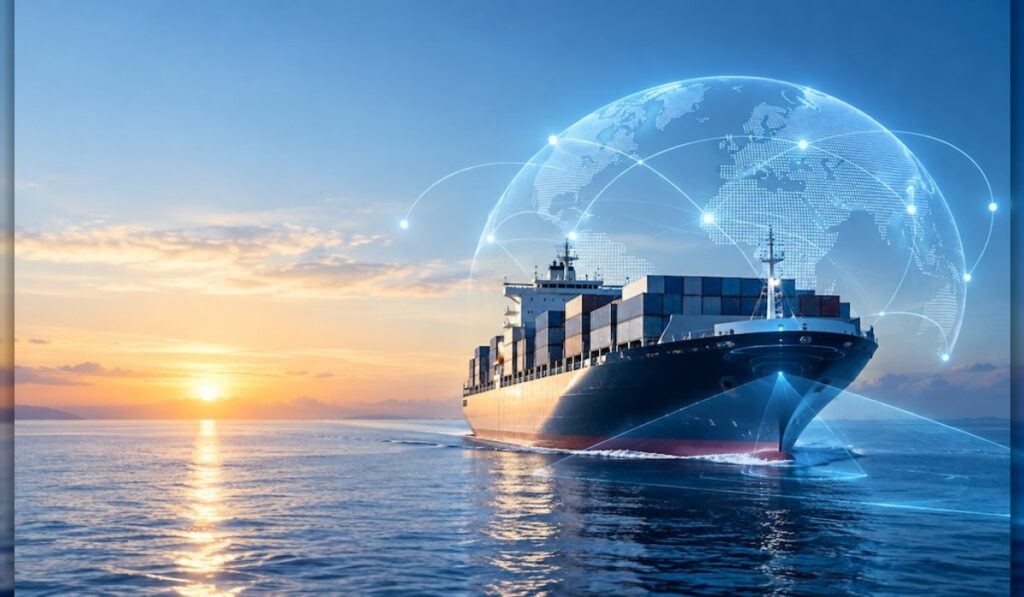
The shipping industry’s reputation for caution is turning into a liability as artificial intelligence reshapes global business.
Olga Boenigk, founder of AI goes Maritime, argues that the industry’s traditional approach, waiting to see what works before adopting new tools, is no longer sustainable. “We’re an industry that’s proud of being careful,” she says. “We take our time. We wait to see what works before we touch it, and most of the time that has served us well. I’d defend it in a lot of things.” But, she adds, “careful only works when the ground stays still. And it isn’t standing still.”
Why shipping’s enterprise systems are failing: ai adoption shipping
The cracks in maritime’s cautious strategy are most visible in its enterprise software. Vendors that once dominated the sector with reliable, if outdated, systems are now struggling to integrate AI. Teams across the industry are quietly building their own workarounds, bypassing the expensive platforms they’ve relied on for years. “Talk to the people using them now and you hear the same story everywhere,” Boenigk notes. “Teams building their own workarounds, quietly, because what they’re paying for can’t do what they need it to.”
The problem isn’t just technical, it’s structural. Large shipping companies, burdened by legacy systems and decades-long roadmaps, are losing ground to smaller players with no such constraints. “The small players smelled this a long time ago,” Boenigk explains. “No legacy to protect, no twenty-year roadmap, nothing to migrate. They just build.” The result?
The human cost of AI hesitation
Maritime’s AI dilemma isn’t just about systems, it’s about people. At one end of the workforce, junior employees face the very real threat of displacement. “The worry I hear most often is about the young ones,” Boenigk says. “If I bring AI in, am I putting the next generation out of a job?".
But the problem isn’t confined to entry-level roles. At the other end of the spectrum, senior professionals are quietly stepping away from AI altogether. “Too old for it. Too senior for it. Too whatever for it,” Boenigk describes. “Nobody is making those people redundant. They’re doing it to themselves, on a delay, and they won’t notice until it’s finished.” The result is a double squeeze: junior roles at risk of automation, senior roles opting out of the future.
This isn’t just a theoretical concern. “That’s not a clever line, it’s a manning problem,” Boenigk warns. “We already can’t find enough qualified people. We’ve been saying so at every conference for a decade.".
The skills gap is particularly acute when it comes to AI. “What they can’t do yet is turn that into something useful in a business, safely and legally,” Boenigk says. “That’s a different skill, and almost nobody is teaching it.".
Compounding the issue is the scarcity of true experts. Few AI specialists understand shipping’s unique challenges, and even fewer focus on the human element. The market is flooded with consultants offering generic advice, but few can provide the tailored guidance the industry needs. “You’ve got an industry full of sensible people who want a straight answer,” Boenigk notes, “and a market full of consultants who all know your business better than you do.”
So how does shipping break out of this cycle? Boenigk’s answer is simple: honesty. “What would help isn’t another strategy paper,” she argues. “It’s people in this industry saying honestly what they’ve tried, including the things that flopped.” A single case study, a company admitting it tested an AI tool for two weeks, found it useless, and explaining why, would be more valuable than a year of industry panels.
This culture of transparency is already taking root in other sectors. Tech companies, for example, openly share their AI failures as well as their successes. Shipping, by contrast, remains trapped in a cycle of silence. “Is maritime neglecting AI? I don’t think we’re neglecting it,” Boenigk reflects. “I think we’ve gone silent in front of it, which looks almost the same from the outside and is a lot more forgivable.”
But that forgiveness has an expiry date. “It won’t stay forgivable for long.” The longer the industry waits, the harder it will be to catch up. Competitors aren’t standing still, they’re learning, iterating, and improving. “There’s no genius involved,” Boenigk says. “They started.”
The path forward isn’t complicated. It requires three things: a willingness to experiment, a culture that rewards honest failure, and a focus on upskilling the workforce. For an industry built on tradition, that may be the hardest shift of all.
El sector marítimo enfrenta ahora un plazo crítico para adoptar estas prácticas. La próxima reunión del Consejo Marítimo Internacional, prevista para el 15 de octubre, abordará los avances en digitalización, mientras que la Organización Marítima Internacional ha fijado el primer trimestre de 2025 para presentar un informe sobre integración de IA. Sin acciones concretas en estos plazos, la brecha con otros sectores se consolidará.


Sign up free to ask CAMAL AI for a summary, the key points or anything else about this story.
Related stories
CAMAL AI
 Financial Ports Newsletter
The maritime economy, every morning
Ports, shipping and freight markets in one short email. Free.
Financial Ports Newsletter
The maritime economy, every morning
Ports, shipping and freight markets in one short email. Free.