

Why the crew of 2035 will need digital judgement more than coding
A survey of 300 seafarers reveals half already experiment with AI, but trust and data literacy remain critical hurdles.
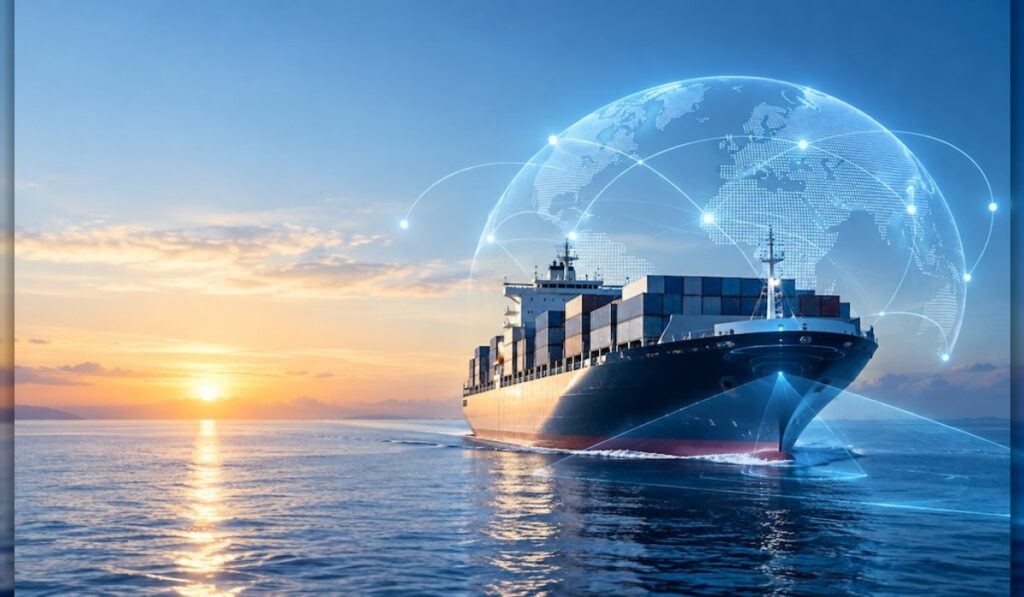
By 2035, ships will be equipped with advanced artificial intelligence systems, but the most critical skill for seafarers won’t be technical expertise—it will be the ability to question the technology they rely on. A recent industry survey of 300 senior officers, including shipmasters with over 20 years of experience, reveals that while half have already experimented with AI, the primary challenge isn’t adoption but trust. The defining capability for future crews? Digital judgement: the skill to assess data, identify flawed assumptions, and override automation when necessary.
Findings from Dualog, published in SplashTech magazine, highlight the current pressures on bridge crews. Captains spend more than half their time on administrative tasks, a burden AI could reduce—but only if it operates within approved company sources and provides reliable outputs.
Silje Moan, Dualog’s chief commercial officer, notes that seafarers are already using AI to solve problems, but the frustration has shifted from accessing information to filtering it effectively. The survey shows that improving the ability to locate critical data makes crews 2.5 times more likely to be satisfied with their tools.
Ardmore Shipping
The critical skill: Knowing when to override the machine: digital judgement
When asked to identify the most important skill maritime academies currently overlook, industry leaders consistently point to the ability to work with intelligent systems without blindly following them. Gert-Jan Panken, vice-president at Inmarsat Maritime, describes this as “digital judgement”—the capacity to determine when to trust automation, when to question it, and how to integrate digital insights with professional experience. He adds that cyber awareness will soon be as fundamental as traditional navigation skills.
Joy Basu, chief executive of Smart Ship Hub, frames the issue through data literacy. By 2035, he warns, ships will be flooded with data, but the real shortage will be crew members capable of turning that information into sound decisions under pressure. The risk isn’t that AI will fail—it’s that human skills will degrade while systems operate flawlessly.
Patrick Ryan, chief technology officer at ABS, emphasizes that as AI takes over operational tasks, seafarers will shift toward oversight, requiring deeper domain knowledge rather than less. Engineers must recognize implausible maintenance recommendations, and navigators must spot edge cases algorithms might miss.
Garry Noonan, director of innovation at Ardmore Shipping, argues that future seafarers must retain the ability to operate when systems fail. GNSS can be jammed, electronic chart displays can freeze, and optimization software can produce questionable recommendations. In each scenario, someone onboard must identify the problem and respond. The solution isn’t to eliminate human oversight but to ensure crews remain proficient in both digital and traditional skills.
Preparing crews for a human-machine partnership
The survey’s respondents, with an average of over 20 years at sea, are not resistant to technology. Half have already tested AI tools, and interviews with shore personnel confirm a strong appetite for systems that reduce administrative work and support decision-making. The challenge isn’t resistance but the growing complexity of tools, alerts, and automated processes. Ships will still depend on human observation, but that observation must be structured in ways machines and shore teams can interpret.
Maritime academies face a dual challenge: integrating digital judgement into existing curricula while ensuring traditional skills—navigation, engineering, and situational awareness—aren’t neglected. The successful seafarer of 2035 will need data literacy, cyber awareness, critical thinking, and the confidence to question automation when necessary. The goal isn’t to turn officers into data scientists but to ensure they can challenge the machine when it matters most.


Sign up free to ask CAMAL AI for a summary, the key points or anything else about this story.
Related stories
CAMAL AI
 Financial Ports Newsletter
The maritime economy, every morning
Ports, shipping and freight markets in one short email. Free.
Financial Ports Newsletter
The maritime economy, every morning
Ports, shipping and freight markets in one short email. Free.