

VLCC delivery wave to hit 50-year high: 100+ supertankers yearly by 2028
Over 100 new very large crude carriers set to enter service annually in 2028 and 2029, matching the 1970s boom.
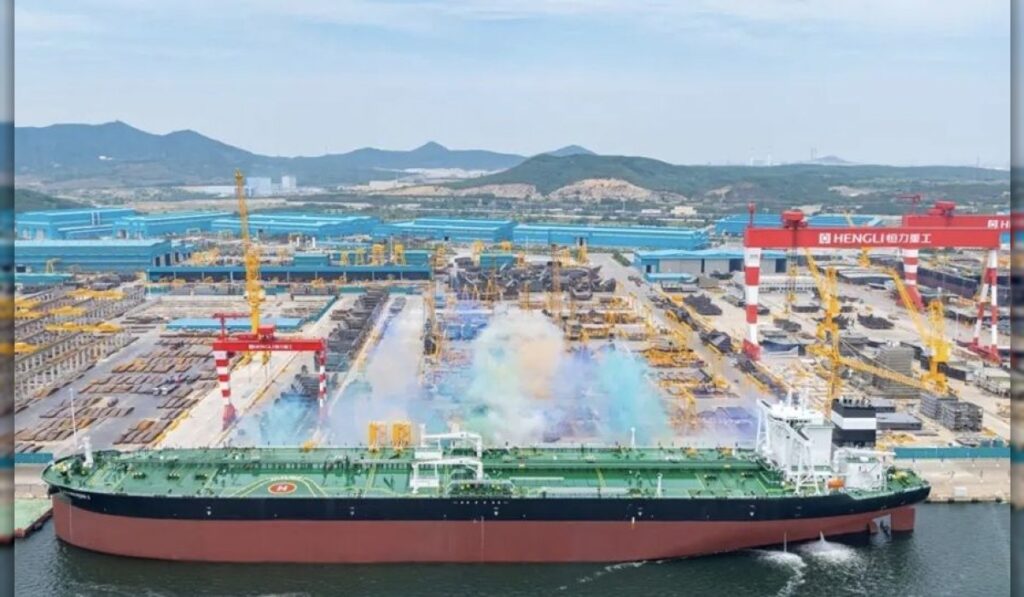
The very large crude carrier (VLCC) market is on track for its largest influx of new vessels in 50 years, with over 100 supertankers expected to enter service annually in both 2028 and 2029. Industry analyst Hartland Shipping Services reports that the current orderbook has swelled to 319 ships, equivalent to 34% of the existing fleet. When excluding sanctioned vessels, this figure jumps to 42%.
Despite the substantial orderbook, deliveries remain limited in the near term. Only 20 VLCCs are scheduled for the next six months, following a slow 2023 that saw just six deliveries. This year has been even quieter, with only one VLCC entering service so far. The bulk of the newbuilds, 138 ships, are not due until 2029 or later, with broker BRS allocating 283 of its 351 VLCC orders to 2028 and beyond.
The last time the VLCC sector saw a delivery wave of this magnitude was in 1974, when a record 116 supertankers entered service. That boom, however, coincided with the 1973 oil shock, which triggered a 23% collapse in global oil trade between 1974 and 1975. Meanwhile, tanker capacity grew by nearly 16%, leading to a catastrophic drop in freight rates. By the end of 1975, 573 tankers totaling 47.8 million deadweight tons were laid up, according to INTERTANKO, pushing many owners to financial ruin.
VLCC sector braces for record delivery wave
The reopening of the Suez Canal in 1975 further compounded the crisis by shortening voyage routes, reducing demand for tanker capacity. Industry analysts now warn that history could repeat itself if the current orderbook materializes amid weakening demand.
Investment bank Jefferies offers a more optimistic outlook, suggesting that most newbuilds will serve as replacements for aging vessels. The bank predicts that tanker rates may decline more gradually than expected, potentially extending the current cycle beyond 2029. However, this argument faces a critical hurdle: shipowners are reluctant to scrap older tonnage. Banchero Costa reports only four VLCC demolitions in the first nine months of this year, despite 172 new orders placed during the same period.
Echoes of the 1970s crisis raise alarms
The reluctance to scrap is driven by strong market conditions. Clarksons values a 15-year-old VLCC at $165 million, far exceeding the $131.5 million cost of ordering a newbuild. High earnings and elevated secondhand prices are keeping older vessels in service, delaying fleet renewal.
Demand-side risks are also emerging. Braemar warns that expensive freight rates are pushing Asian refiners to favor shorter-haul Middle Eastern crude over Atlantic barrels, reducing tonne-mile demand. Additionally, a growing surplus of VLCCs in the Middle East, driven by slowing ship-to-ship transfer activity, could further strain the market. Banchero Costa projects net VLCC fleet growth of 4% this year and 5.7% in 2027, compared with just 0.2% in 2025.
For now, geopolitical disruptions and limited vessel availability are sustaining high earnings. However, if the delivery wave unfolds as scheduled, the VLCC sector could face a reckoning reminiscent of the 1970s, with oversupply threatening to collapse freight rates and destabilize the market.


Sign up free to ask CAMAL AI for a summary, the key points or anything else about this story.
Related stories
CAMAL AI
 Financial Ports Newsletter
The maritime economy, every morning
Ports, shipping and freight markets in one short email. Free.