

US turns shadow tankers into ‘good-guy fleet’ to cut soaring freight costs
Washington approves sales of sanctioned vessels to compliant owners, but analysts doubt impact on rates
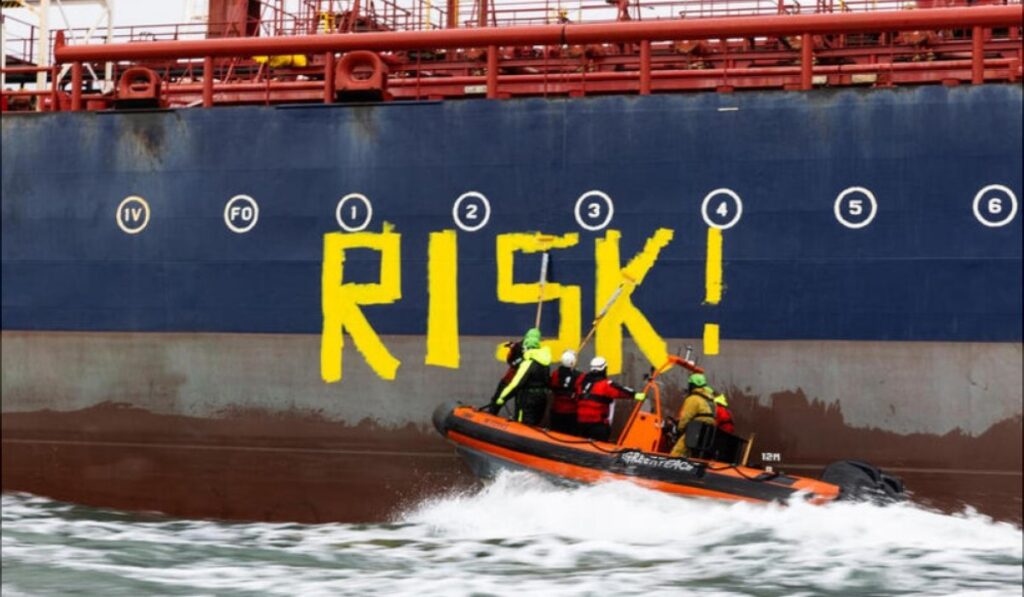
The Trump administration has unveiled a plan to repurpose sanctioned oil tankers, allowing approved investors to purchase and refurbish the vessels for legitimate crude trades. The move, announced by US Energy Secretary Chris Wright during a Citadel Securities event in New York, aims to address surging freight costs amid tensions in the Hormuz region.
The initiative establishes an approval process for formerly blacklisted tankers to operate under recognized ownership, provided they transport only non-sanctioned oil. Wright described the effort as a transition from a “bad-guy fleet” to a “good-guy fleet,” emphasizing that it does not lift sanctions on Iranian or Russian oil. He estimated the global shadow fleet at around 1,600 tankers, suggesting “dozens” or even “hundreds” could eventually re-enter compliant trading.
However, industry analysts and tanker owners have raised doubts about the plan’s effectiveness. Kpler estimates only 24 of approximately 160 OFAC-sanctioned very large crude carriers (VLCCs) could realistically return to mainstream trading after accounting for ownership, age, and compliance restrictions. Braemar Analytics places the potential increase even lower, at just 19 VLCCs, once vessels tied to Iran and European sanctions are excluded. Arrow Research identifies a maximum of 22 eligible tankers across all sizes, including 14 VLCCs, but none in the Suezmax or Aframax segments.
Plan targets shadow fleet but faces skepticism: shadow fleet tankers
The tanker owners’ association INTERTANKO has strongly opposed the initiative, warning that legalizing a vessel does not resolve issues related to its condition, ownership, or insurance. The group highlighted risks posed by opaque insurance arrangements, weak oversight, and missing inspection histories, which could endanger crews, the environment, and coastal states. INTERTANKO argued that policy should instead encourage cargoes to use the existing compliant fleet, which adheres to safety and regulatory standards.
The shadow fleet initiative follows a recent US decision to temporarily authorize Russian diesel trade until April 7, 2027, a move that has drawn criticism from Kyiv and US lawmakers. Despite these efforts, analysts agree that the primary driver of high freight costs is not a lack of vessels but the war-related risks in the Middle East Gulf, particularly around the Hormuz Strait.
BRS, a maritime analytics firm, noted that of the 148 deep-sea tankers sanctioned by the US alone, only 14 have been idle for more than three months. Most of the remaining vessels are already engaged in gray-market trades, and UK and EU restrictions could prevent them from obtaining essential insurance and maritime services. BRS emphasized that a US license does not guarantee compliance with European or British laws, making the initiative’s impact on freight rates uncertain.
Freight rates unlikely to drop despite new capacity
Arrow Research forecasts continued upward pressure on freight rates, with the strong market potentially extending through the first quarter of 2027. The firm attributed this outlook to ongoing shuttle operations, ship-to-ship transfers, and security risks, which keep tonnage tied up regardless of additional capacity. Even if the US plan succeeds in adding vessels to the legitimate fleet, the Hormuz bottleneck is expected to remain the dominant factor in freight costs.
«We’re going to move some of the ships from what I call the ‘bad-guy fleet’ to the ‘good-guy fleet.’»
Chris Wright·US Energy Secretary
Wright reiterated that the administration is not lifting sanctions but converting dark fleet tankers into legitimate assets. “There is no removing of sanctions,” he stated, framing the initiative as a pragmatic step to address market pressures without altering the broader sanctions regime.


Sign up free to ask CAMAL AI for a summary, the key points or anything else about this story.
Related stories
CAMAL AI
 Financial Ports Newsletter
The maritime economy, every morning
Ports, shipping and freight markets in one short email. Free.



