

35,700 containers stranded as US rail gridlock chokes LA–Long Beach
Nearly 10,600 boxes have waited nine days or longer for on-dock trains.
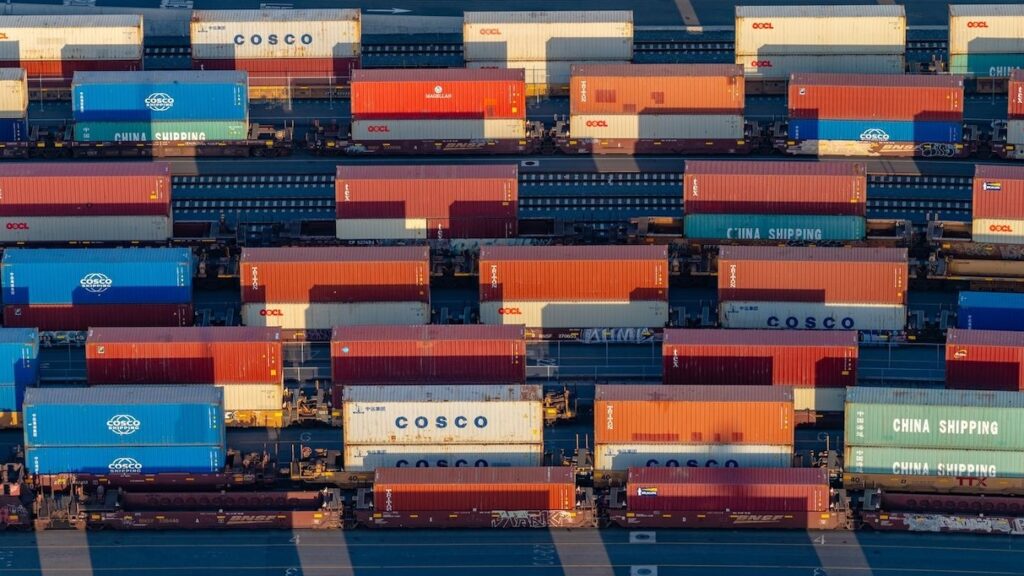
Nearly 35,700 import containers are stranded on docks at the ports of Los Angeles and Long Beach, awaiting rail service as record cargo volumes and railcar shortages choke inland logistics. The backlog, measured on Oct. 26, reveals a stark divide: 41.4% of rail-bound containers at Los Angeles have waited nine days or longer, compared to just 15.1% at Long Beach.
Of the 35,688 containers awaiting rail service on Oct. 26, 10,562 had been stationary for at least nine days, according to The Dwell’s compilation of daily rail reports.
The numbers behind the bottleneck: Long Beach
Los Angeles, with 19,626 containers awaiting trains, saw 8,133 exceed the nine-day threshold. Long Beach, though handling 16,062 rail-bound containers, had only 2,429 in the same category. Truck-bound containers fared better, with dwell times increasing only marginally to 3.18 days from 2.95 days.
eliminar el nombre ‘Natasha Villa’ (fuente no lo incluye), acknowledged the strain but struck a cautiously optimistic tone: “While we saw a modest increase in dwell times in July, cargo continues to move through the San Pedro Bay ports at manageable levels.
The backlog’s timing could not be worse. The Pacific Maritime Association warned on Oct. 27 of a potential Nov. 1 strike by approximately 250 port watchmen, members of the International Longshore and Warehouse Union (ILWU) Local 26. The threatened walkout would affect eight container terminals, which handle roughly 85% of Long Beach’s cargo and 33% of Los Angeles’. While the ports have not yet commented on the strike’s potential impact, industry observers warn that even a brief disruption could exacerbate the existing backlog, pushing dwell times higher and further straining supply chains.
Why the system is failing
Unlike previous congestion crises, this backlog has not been accompanied by a visible offshore vessel queue. The Dwell’s congestion tracker reported only one ship awaiting a berth during the week of Oct. 26, suggesting that the bottleneck is firmly onshore. This dynamic presents a unique challenge: while vessels continue to unload, the containers they carry are piling up on docks, unable to reach their inland destinations.
The implications of the backlog extend far beyond the ports. Retailers, manufacturers, and logistics providers are already bracing for delays as the holiday season approaches. The National Retail Federation has warned that even minor disruptions at West Coast ports can ripple through supply chains, affecting everything from consumer electronics to apparel.
With rail dwell times now exceeding seven days, some shippers are exploring alternative routes, including transloading cargo in Mexico or routing shipments through East Coast ports. However, these workarounds come with their own costs and complexities, including longer transit times and higher expenses.
The ports of Los Angeles and Long Beach, along with their rail partners, have yet to respond to requests for comment from FreightWaves. Industry analysts suggest that resolving the crisis will require a multi-pronged approach: increasing railcar availability, improving terminal efficiency, and addressing labour concerns before the Nov. 1 strike deadline. For now, the backlog remains a stark reminder of the fragility of global supply chains, even in the world’s most advanced logistics hubs.
As the situation develops, stakeholders are advised to monitor updates from the Port of Los Angeles, the Port of Long Beach, and the Pacific Maritime Association. The next few weeks will be critical in determining whether the backlog can be cleared before the holiday shipping rush, or whether it will become a new normal for West Coast ports.


Sign up free to ask CAMAL AI for a summary, the key points or anything else about this story.
Related stories
CAMAL AI
 Financial Ports Newsletter
The maritime economy, every morning
Ports, shipping and freight markets in one short email. Free.



