

Floating Nuclear Barge Secures First Uranium: The Race to Power Ports
Bluecore Energy acquires 4.95% low-enriched uranium for its Long Beach-based floating reactor.
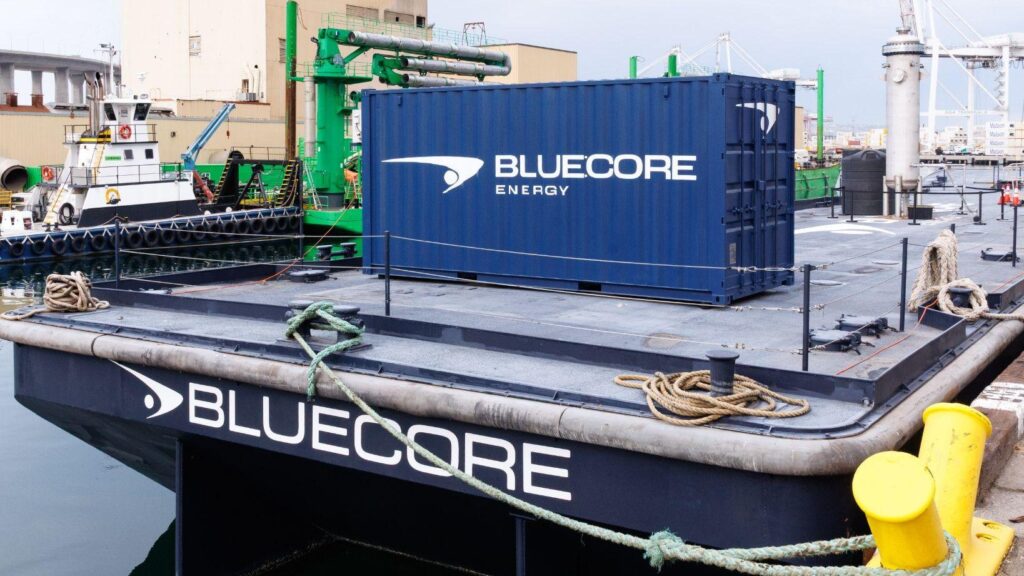
Long Beach-based startup Bluecore Energy has taken a key step toward deploying the first floating nuclear power barge in a U.S. port by securing its initial supply of low-enriched uranium. The company recently purchased a 4.95% U-235 blend, a standard fuel grade for commercial nuclear reactors, marking progress in its plan to deliver zero-emission energy to coastal infrastructure.
The uranium, currently stored as uranium hexafluoride (UF6), will be processed into uranium dioxide (UO2) pellets—the form used in nuclear fuel rods. Bluecore’s supplier, Dutch firm WMC, operates the largest commercial nuclear fuel facility in the United States, providing the startup with critical expertise and infrastructure. Megan Moyette, Bluecore’s Licensing & Safety Lead and a former nuclear submarine officer, highlighted the company’s priorities: “Our goal is not simply to move fast. It is to create and deliver zero-emission energy as safely and quickly as possible.”
“Having access to the expertise and infrastructure at the largest commercial nuclear fuel facility in the U.S. allows us to approach this next phase with the rigor it requires.”
Megan Moyette, Licensing & Safety Lead, Bluecore Energy
Bluecore’s reactor, the BC-15, uses a conventional pressurized-water design with standardized fuel assemblies. By opting for a well-established technology, the company aims to streamline regulatory approval, focusing scrutiny on the maritime aspects of its project—namely, mounting a reactor on a barge and operating it within a port. The review process will involve both the U.S. Department of Energy and the Coast Guard, each assessing different facets of the plan.
Regulatory Path and Industry Backing: Floating Nuclear
The American Bureau of Shipping (ABS) has been a key partner, issuing Bluecore an Approval in Principle (AIP) in June 2026 and providing ongoing technical support. The startup’s regulatory engagement began earlier that year with pre-application discussions at the Department of Energy.
In September 2026, Bluecore hosted a public event at the Port of Long Beach, showcasing its reactor pressure vessel to local officials, including Mayor Rex Richardson. The demonstration underscored the port’s interest in small modular reactor (SMR) technology as a tool for decarbonization. Bluecore’s $50 million seed round, announced shortly before the uranium purchase, will fund further engineering, testing, and compliance efforts.
Unlike some advanced reactor designs that rely on higher-enriched uranium (10-20% U-235, or HALEU), Bluecore’s fuel falls below the proliferation risk threshold. The U.S. Navy, by contrast, uses weapons-grade 93% enriched uranium under strict security protocols. Bluecore’s choice of a 4.95% blend aligns with commercial standards and avoids the regulatory complications associated with dual-use materials.
Historical Precedent and Future Prospects
The concept of floating nuclear power is not new. The U.S. Navy first deployed the USS Sturgis, a converted Liberty Ship, as a moored powerplant in the 1960s. More recently, Russia’s Akademic Lomonosov demonstrated the model’s viability for civilian use. Bluecore’s project, however, represents the first serious attempt to bring such technology to a U.S. port with federal and maritime industry backing.
With the uranium supply secured, Bluecore’s next milestones include finalizing reactor design certification and selecting a deployment site. The Port of Long Beach remains the most likely candidate, given its existing partnership with the startup and its sustainability goals. If successful, the project could serve as a model for other ports seeking to reduce emissions through nuclear energy.


Sign up free to ask CAMAL AI for a summary, the key points or anything else about this story.
Related stories
CAMAL AI
 Financial Ports Newsletter
The maritime economy, every morning
Ports, shipping and freight markets in one short email. Free.



