

Ports to Charge EVs While Moving: Cavotec-EVIAS Deal Cuts Downtime by 90%
Exclusive deal brings automatic ground-based charging to global port terminals.
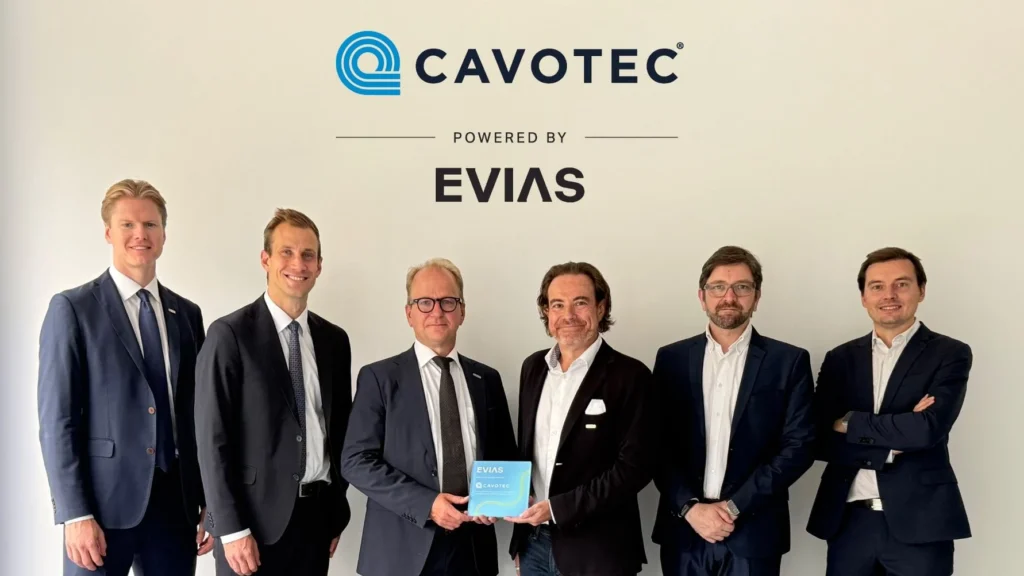
Ports worldwide are set to adopt automatic ground-based charging for electric vehicles, following an exclusive distribution agreement between Cavotec and EVIAS. The partnership will bring EVIAS’ technology to global port terminals, enabling electric vehicles to charge while driving and reducing downtime for terminal tractors, automated guided vehicles (AGVs), and other container-handling equipment.
The deal positions Cavotec as the sole distributor and installer of EVIAS’ conductive charging system for the port segment, commercialised under the co-branding “Cavotec powered by EVIAS”. The technology, designed for intensive fleet operations, uses a vehicle-mounted robotic arm to autonomously connect to a charging rail embedded in the road, allowing power transfer while vehicles are in motion or waiting for containers to be loaded.
The system’s modular design enhances safety by electrifying only the rail segment directly under a charging vehicle, minimising exposure to live components. By eliminating the need for vehicles to park for charging, the solution frees up valuable terminal space and ensures continuous operation.
The partnership responds to a pressing industry demand. Zero Emission Port Alliance Alliance estimates that ports will order between 33,000 and 47,000 new battery-electric container-handling vehicles between 2025 and 2035, driven by the need for operational efficiencies and decarbonisation.
“EVIAS’ fully automatic charging technology fits naturally into the demanding operational environments of our port customers and complements our existing electrification and automation portfolio,” said David Pagels, CEO of Cavotec. “This partnership enables us to expand our offering into horizontal transport and provide customers with an increasingly integrated approach to port electrification, from vessel and crane applications through to terminal operations.”
Pagels added that Cavotec benchmarked various automatic charging solutions before selecting EVIAS, highlighting its standout value proposition and technical design.
What the partnership means for ports and the broader industry: port electrification
The collaboration leverages Cavotec’s 50 years of experience in port electrification and automation, alongside EVIAS’ patented technology. Cavotec’s existing portfolio includes solutions for cranes and vessels, such as MoorMaster automated vacuum mooring and automated plug-in systems for rubber-tyred gantry (RTG) cranes. The addition of EVIAS’ technology extends this offering to horizontal transport, creating a more comprehensive electrification ecosystem for ports.
“Partnering with Cavotec is more than a distribution agreement, it is a strong validation of the maturity and reliability of our technology,” said Olivier Besson, co-founder and CEO of EVIAS.
Besson also emphasised that EVIAS remains focused on developing other strategic markets, including urban transit, road freight, autonomous vehicles, and airports.
For port operators, the adoption of ground-based charging could yield significant operational benefits. By contrast, EVIAS’ system allows vehicles to charge while performing their primary functions, such as transporting containers or waiting for loading operations.
The safety features of the technology are also a major selling point. The modular design ensures that only the rail segment under a charging vehicle is electrified, reducing the risk of accidents and making the system suitable for high-traffic areas. Additionally, the system’s compatibility with existing port infrastructure means that operators can adopt it without significant disruptions or costly upgrades.
As the maritime industry continues to grapple with decarbonisation targets, partnerships like this one are likely to play a pivotal role in accelerating the transition to zero-emission operations. Zero Emission Port Alliance Alliance’s projections underscore the scale of the challenge, with tens of thousands of electric vehicles set to enter service in the coming decade. Technologies that enable efficient charging and reduce operational bottlenecks will be essential in meeting these targets while maintaining productivity.
For port authorities and terminal operators, the Cavotec-EVIAS partnership offers a tangible solution to the electrification challenge. The co-branded offering, “Cavotec powered by EVIAS”, is expected to be rolled out globally, with the first installations likely to take place in major hubs with high volumes of horizontal transport activity. Operators interested in adopting the technology can expect support from Cavotec’s global network of service centres, ensuring smooth implementation and ongoing maintenance.
The partnership also signals a broader shift in the port electrification market. As demand for electric vehicles grows, so too does the need for innovative charging solutions that can keep pace with operational demands. Ground-based charging, which allows vehicles to charge while in motion, represents a significant leap forward from traditional methods, offering a glimpse into the future of port operations.
Looking ahead, the success of this partnership could pave the way for further collaborations between technology providers and port equipment manufacturers. As ports seek to balance efficiency, sustainability, and cost-effectiveness, solutions that address multiple challenges simultaneously, such as reducing downtime, saving space, and lowering emissions, will be in high demand. Cavotec-EVIAS deal is a step in that direction, setting a new benchmark for port electrification and automation.
For industry stakeholders, the key takeaway is clear: the future of port electrification is here, and it is dynamic. With the right technology and partnerships, ports can transition to zero-emission operations without sacrificing productivity or efficiency. Cavotec-EVIAS agreement is a testament to the power of collaboration in driving innovation and shaping the future of global trade.


Sign up free to ask CAMAL AI for a summary, the key points or anything else about this story.
Related stories
CAMAL AI
 Financial Ports Newsletter
The maritime economy, every morning
Ports, shipping and freight markets in one short email. Free.
Financial Ports Newsletter
The maritime economy, every morning
Ports, shipping and freight markets in one short email. Free.