

Nuclear shipping needs 80% cheaper reactors to compete by 2040
UCL study reveals nuclear-powered containerships could cost up to $582m, far above conventional and ammonia alternatives.
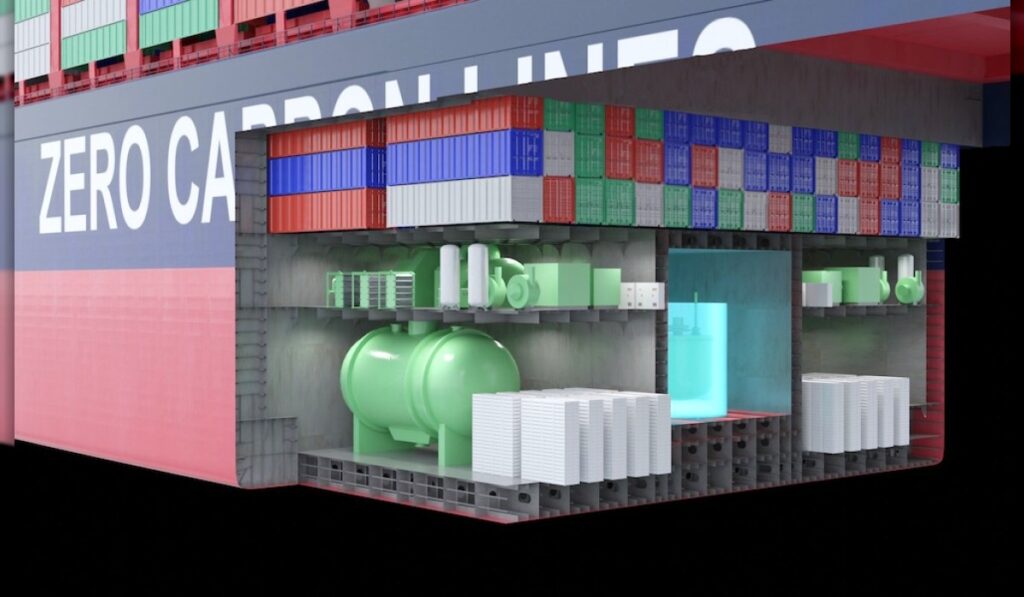
A new study from University College London’s Energy Institute casts doubt on the near-term viability of nuclear-powered commercial shipping, revealing that the technology may only become competitive by 2040 under strict conditions, including an 80% reduction in reactor costs and a robust global carbon regulatory framework.
The research, released today, analyzes the total cost of ownership for nuclear-powered containerships compared to conventional and ammonia dual-fuel vessels. While nuclear propulsion has been touted as a potential game-changer for decarbonizing maritime transport, the findings suggest its economic feasibility remains far from guaranteed.
Cost barriers and regulatory hurdles: Nuclear
The study identifies reactor costs as the most critical factor in determining nuclear shipping’s competitiveness. Current estimates range from $2,600 to $12,400 per kilowatt of electric capacity (kWe), with first-of-a-kind vessels projected to cost between $228 million and $582 million. By comparison, a conventional containership costs $119.6 million, while an ammonia dual-fuel vessel is priced at $148.5 million.
For nuclear to become commercially attractive, reactor production costs would need to drop by as much as 80%, a reduction that has yet to be demonstrated at scale. Even under optimistic assumptions, the study concludes that nuclear propulsion would only outperform conventional shipping from 2040 onward if the International Maritime Organization’s (IMO) proposed Net-Zero Framework is implemented, allowing nuclear vessels to generate revenue from surplus emissions credits.
The research also challenges the idea that nuclear-powered ships could revolutionize container shipping by enabling faster voyages. While a vessel traveling at 25 knots covers 32% more distance annually than one moving at 14.85 knots, it requires over three times the installed power. The resulting increase in reactor costs outweighs the benefits of additional transport capacity.
Unresolved risks and financing challenges
The study highlights several unresolved economic and regulatory obstacles. The model excludes nuclear-specific insurance, reactor maintenance, and hull integration costs, while decommissioning expenses remain highly uncertain. Insurance and liability pose particularly serious challenges, as existing nuclear liability conventions were designed for stationary reactors rather than vessels operating across international waters.
Researchers suggest that the first nuclear-powered merchant ships will likely require bilateral agreements between governments before a global regulatory framework can be established. However, the central question remains: who will finance the expensive first generation of nuclear ships before economies of scale can drive down costs?
As Farah Bziker, a researcher at UCL’s Shipping and Oceans Research Group, noted: “Nuclear can compete, but only with much cheaper reactors and a global emissions policy, and neither exists yet. How both develop over the coming years will decide whether nuclear has a place in shipping.”


Sign up free to ask CAMAL AI for a summary, the key points or anything else about this story.
Related stories
CAMAL AI
 Financial Ports Newsletter
The maritime economy, every morning
Ports, shipping and freight markets in one short email. Free.



