

Japan’s ammonia-fuelled car carriers: the quartet set
Seven Japanese firms unite to build four ammonia-powered vessels by 2030.
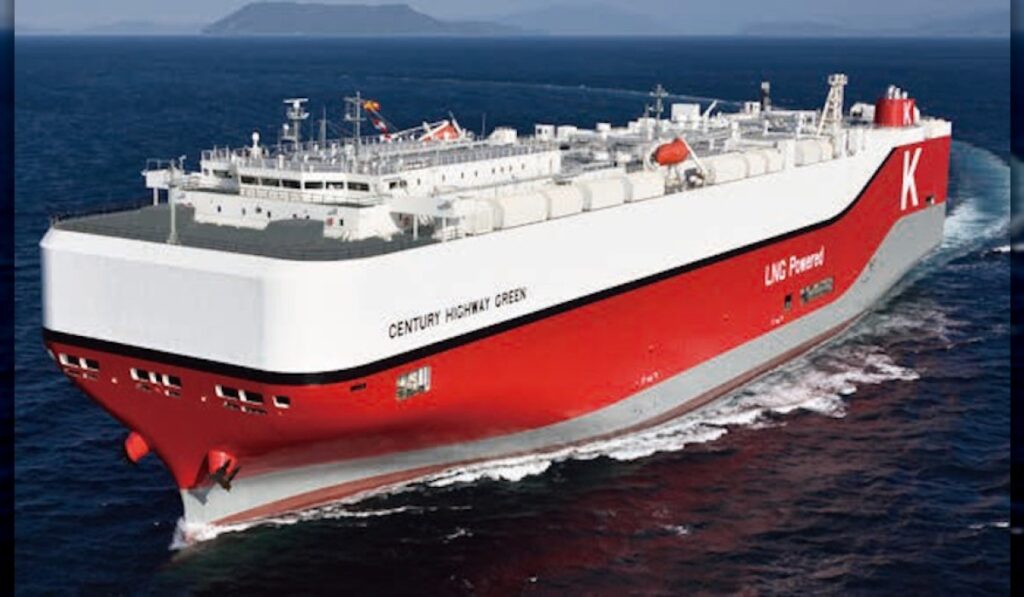
Seven major Japanese companies have formed a partnership to develop four ammonia-powered car carriers and create the world’s first fully integrated marine fuel supply chain for the alternative fuel. The initiative marks one of the most ambitious commercial shipping projects to date focused on ammonia as a cleaner energy source.
The four car carriers, set for delivery in 2030, will be Japan’s first ammonia-fuelled vessels in the automotive transport sector. Each ship will be equipped with dual-fuel engines and large ammonia storage tanks, allowing them to complete transpacific voyages without refuelling. The vessels are expected to serve major clients, including Toyota, transporting vehicles across key international routes.
Vessel specifications and safety measures: Japan
Given ammonia’s high toxicity and corrosive properties, the ships will incorporate multiple safety layers. Advanced detection and neutralisation systems will be installed to prevent and manage potential leaks, ensuring safe operations throughout their service life.
The project extends beyond ship construction, aiming to establish a full ammonia supply chain centred in Japan’s Chubu region. Energy company JERA will play a central role by sourcing green ammonia from renewable energy projects, with potential imports from India. The company will also develop loading infrastructure at its Hekinan terminal to support fuel distribution.
A dedicated ammonia bunkering vessel, built by Kyokuyo Shipyard and scheduled for completion in 2030, will enable ship-to-ship refuelling operations. The bunkering vessel will be owned and operated by NYK or one of its subsidiaries, facilitating fuel transfers at strategic locations such as Nagoya and Mikawa. NYK and K Line will jointly manage fuel supply through an equally owned venture, focusing on commercial bunkering services.
Building a complete ammonia supply network
The collaboration follows Japan’s first successful ship-to-ship ammonia bunkering operation in September, led by NYK. That milestone demonstrated the technical feasibility of ammonia as a marine fuel, paving the way for larger-scale adoption.
The project’s 2030 timeline reflects the complexity of coordinating shipbuilders, energy providers, and shipping operators. If successful, the initiative could serve as a model for other regions seeking to adopt ammonia as a sustainable marine fuel, supporting the global shipping industry’s decarbonisation efforts.


Sign up free to ask CAMAL AI for a summary, the key points or anything else about this story.
Related stories
CAMAL AI
 Financial Ports Newsletter
The maritime economy, every morning
Ports, shipping and freight markets in one short email. Free.



