

Green cruises to Alaska face $1.4bn cost gap: and passengers
A feasibility study reveals passengers could pay up to $480 extra per cruise to make the green methanol corridor viable.
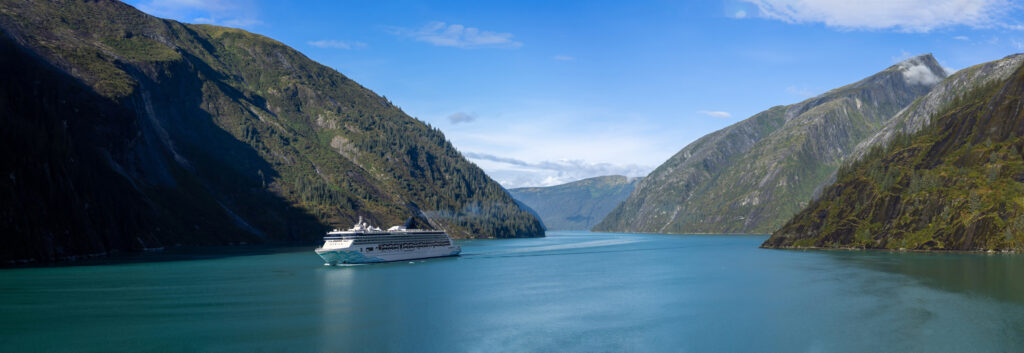
A new study reveals that transitioning cruise ships on the popular Washington-British Columbia-Alaska route to green methanol fuel could cost $1.4 billion over 25 years. This ambitious project, aimed at creating the world’s first cruise green corridor, may require passengers to pay significantly higher fares unless additional funding solutions are found.
The Pacific Northwest to Alaska Green Corridor initiative was launched in 2022 by 15 organizations seeking to reduce emissions in the cruise industry. Their goal is to deploy low- and zero-emission ships by the early 2030s, with green methanol as the primary alternative fuel.
Green Corridor for Alaska Cruises Faces $1.4 Billion Cost Challenge
The Mærsk Mc-Kinney Møller Center for Zero Carbon Shipping conducted the feasibility study, confirming that the green corridor is technically and regulatorily possible. However, the financial outlook presents significant challenges. Under the proposed model, four cruise ships would operate 20 round-trip voyages per season, refueling in Seattle or Vancouver.
This would require 120,000 tonnes of green methanol annually, enabling 320,000 passengers to sail on low-emission cruises each year. The shift from conventional fuel would prevent 224,000 tonnes of CO2e emissions per season, totaling 5.6 million tonnes over the corridor’s 25-year lifespan.
Technical Feasibility Meets Financial Hurdles
Despite these environmental benefits, the economic model remains uncertain. Without policy support or optimized financing, passengers could face additional costs of $360 to $480 per cruise. Even with improved financing, the premium would still range from $310 to $405. Only if both the proposed IMO Net-Zero Framework (NZF) regulations and optimized financing are secured could the extra cost drop to $185-$280 per passenger.
«The project continues to face challenges in achieving economic feasibility. Further exploration of cost management strategies is required to begin narrowing this gap.»
Mærsk Mc-Kinney Møller Center for Zero Carbon Shipping
Beyond financial concerns, the corridor faces critical infrastructure gaps. The study highlights the need for regional fuel supply and bunkering facilities, which are currently lacking. Additionally, evolving U.S. policies on alternative fuels have introduced new uncertainties, complicating plans for a U.S.-based green methanol production facility.
The Port of Seattle, a key participant in the project, acknowledged the study’s contributions. «The findings have improved our understanding of what it will take to produce, deliver, and bunker green methanol for cruise ships on this route,» a port spokesperson stated. The port will use these insights to explore sustainable fuel options for the Pacific Northwest maritime sector.


Sign up free to ask CAMAL AI for a summary, the key points or anything else about this story.
Related stories
CAMAL AI
 Financial Ports Newsletter
The maritime economy, every morning
Ports, shipping and freight markets in one short email. Free.



