

Hormuz Blockade Knocks Jebel Ali Out of Top 30 Ports
Dubai’s flagship port handled just 3.14 million TEU in H1 2026, down from 7.77 million a year earlier.
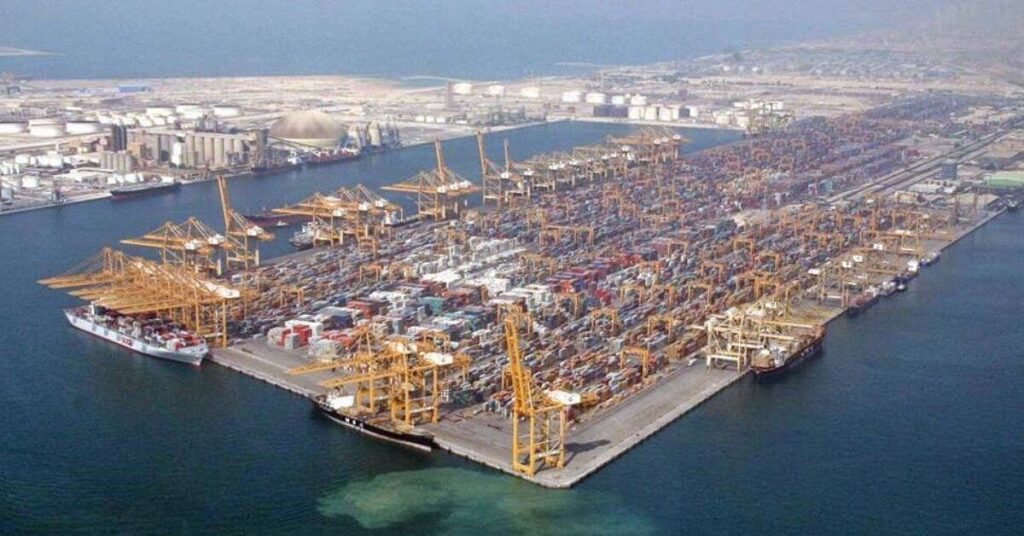
Dubai’s Jebel Ali port has plummeted in global rankings after a dramatic decline in container traffic, dropping from 10th to 32nd place in the first half of 2026. The sharp fall follows disruptions in the Strait of Hormuz, a critical shipping route for vessels entering the Persian Gulf.
The port handled 3.14 million TEU between January and June, a 60% decrease compared to the same period in 2025, when it processed 7.77 million TEU. The downturn worsened in the second quarter, with volumes collapsing to just 374,000 TEU, a 90% drop year-on-year. Even in the first quarter, traffic had already fallen by 23%, signaling the severity of the crisis.
Regional shifts in container traffic: Jebel Ali
The disruption in the Strait of Hormuz, which nearly shut down in March before partially reopening in June, forced shipping companies to reroute vessels. As a result, other ports in the region saw increased activity. Colombo, Sri Lanka’s main port, benefited the most, with container throughput rising 11.9% to 4.44 million TEU. This growth pushed Colombo from 26th to 20th place in global rankings. The Sri Lanka Ports Authority reported that transshipment now accounts for almost 85% of its container business.
India’s Jawaharlal Nehru Port also climbed the rankings, moving from 28th to 21st. In contrast, Abu Dhabi’s Khalifa Port experienced a 50% decline in volumes, falling out of the global top 50 after ranking 32nd the previous year.
UAE’s efforts to bypass the Strait of Hormuz
Facing the disruption, the UAE accelerated alternative transport routes to reduce reliance on the Strait of Hormuz. Since March, DP World has rerouted 500,000 TEU through road and rail corridors across the Gulf Cooperation Council, with a capacity of 3,000 truck movements daily. The company also established bonded routes linking Jebel Ali to the Gulf of Oman ports of Fujairah and Khorfakkan, adding 700 trucks to expand inland container capacity.
In July, DP World secured a 50-year deal to develop two new terminals on the UAE’s east coast. One of these, located at Al Rugaylat in Fujairah, is expected to eventually handle 2.5 million TEU annually, offering ships direct access to the Indian Ocean without passing through the Strait of Hormuz. Additionally, the UAE is constructing a second oil pipeline to Fujairah, which could double the emirate’s crude export capacity to 3.6 million barrels per day.
At the top of the global rankings, Shanghai retained its position as the world’s busiest container port, handling 28.74 million TEU, a 6.2% increase year-on-year. Ningbo-Zhoushan overtook Singapore for the first time in a six-month period, processing 22.9 million TEU compared to Singapore’s 22.74 million. Chinese ports dominated the top 10, with six entries, while Port Klang replaced Jebel Ali in the 10th spot.


Sign up free to ask CAMAL AI for a summary, the key points or anything else about this story.
Related stories
CAMAL AI
 Financial Ports Newsletter
The maritime economy, every morning
Ports, shipping and freight markets in one short email. Free.
Financial Ports Newsletter
The maritime economy, every morning
Ports, shipping and freight markets in one short email. Free.