

Iran’s Oil Pipeline Puzzle: Why Caspian Exports Remain a Pipe Dream
Iran’s 300,000 bpd pipeline to Tehran is no match for the Caspian’s logistical dead ends and Russian bottlenecks.
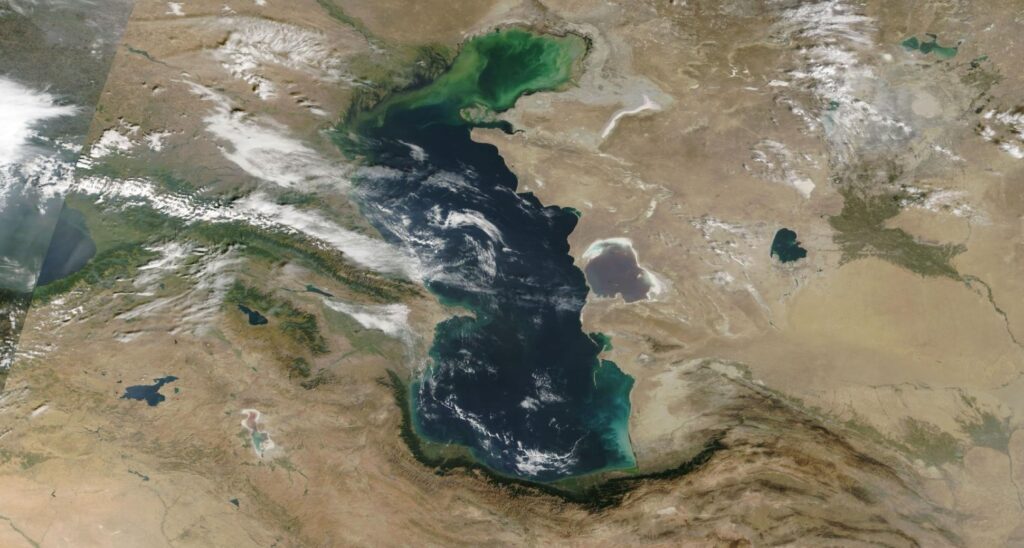
Iran’s ambition to revive oil exports via the Caspian Sea has collided with a brutal reality: the country lacks the pipelines, tankers, and diplomatic goodwill to move crude from its southern oilfields to northern ports.
Iran’s oil production is concentrated in the southwestern province of Khuzestan, home to the Ahvaz, Gachsaran, Marun, and Aghajari onshore fields, alongside offshore fields like Abuzar and Doroud in the Persian Gulf.
The majority of this crude is refined near the production sites, with only two pipelines capable of transporting oil northwards: the Ahwaz-Ahwaz-Ray Oil Pipeline, which delivers 300,000 barrels per day (bpd) from Dezful to Tehran refineries, and a smaller 100,000 bpd pipeline from Yeke Tut on the Caspian coast to Tehran and Tabriz. The latter, however, is currently fed by Russian crude shipped south across the Caspian, not Iranian oil.
Brent Crude
The Pipeline Problem: No Route to the Caspian
The absence of a direct pipeline from Iran’s southwestern oilfields to the Caspian coast is the first major obstacle. While the Ahwaz-Ray pipeline could theoretically be extended northwards, the Zagros Mountains present a formidable geographical barrier.
The existing 100,000 bpd pipeline from Yeke Tut to Tehran is another bottleneck. Currently, it imports Russian crude, but reversing its flow to export Iranian oil would require significant technical modifications. Additionally, the pipeline’s capacity is a fraction of what Iran would need to replace its lost shipborne exports. A separate petroleum product pipeline delivers 204,000 bpd of petrol and diesel to Tehran from the south, but this is designed for refined products, not crude oil.
Tanker Shortages and Diplomatic Tensions
Even if Iran could transport crude to the Caspian coast, it lacks the tanker fleet to move it across the sea. Russia possesses a fleet of shallow-draft tankers capable of navigating the Caspian and the Volga-Don Canal system, but Moscow is already struggling to export its own oil.
Kazakhstan’s five shallow-draft tankers, which shuttle oil from Aktau to Baku, offer no relief. These vessels, owned in part by foreign investors, stick rigidly to the Aktau-Baku route and avoid Iranian waters entirely. Some occasionally visit Makhachkala in Russia, but none have been recorded near Iranian ports. Diplomatic tensions between Iran and Azerbaijan further complicate matters. Baku has no interest in facilitating Iranian oil exports through the BTC pipeline to Ceyhan, nor does it want to risk sanctions by allowing Iranian crude to transit its territory.
The Caspian Pipeline Consortium (CPC), which moves oil from Kazakhstan to China via Alashankou, is another dead end. There is no logistical means to inject Iranian oil into the CPC pipeline, and the Kazakh government has made it clear it will not jeopardise the pipeline’s western exports by facilitating Iranian crude transits. The risk of secondary sanctions is simply too high.
Iran’s predicament is stark. Before the US naval blockade cut off shipborne exports, 90% of Iran’s oil flowed to China. With traditional routes closed, Tehran’s options are limited.
Ante este escenario, Irán explorará alternativas en las próximas semanas, incluyendo conversaciones con Turkmenistán para posibles acuerdos de tránsito, según declaraciones oficiales del Ministerio de Petróleo. La reunión del Consejo de Seguridad Nacional iraní, prevista para el 15 de octubre, evaluará nuevas rutas y medidas para mitigar el impacto del bloqueo, con un informe preliminar esperado antes de finales de mes.


Sign up free to ask CAMAL AI for a summary, the key points or anything else about this story.
Related stories
CAMAL AI
 Financial Ports Newsletter
The maritime economy, every morning
Ports, shipping and freight markets in one short email. Free.



