

Iran’s Oil Exports Hit Zero: The Strait of Hormuz Blockade
Tehran faces a 40% revenue collapse as floating reserves off Malaysia and China dry up this month.
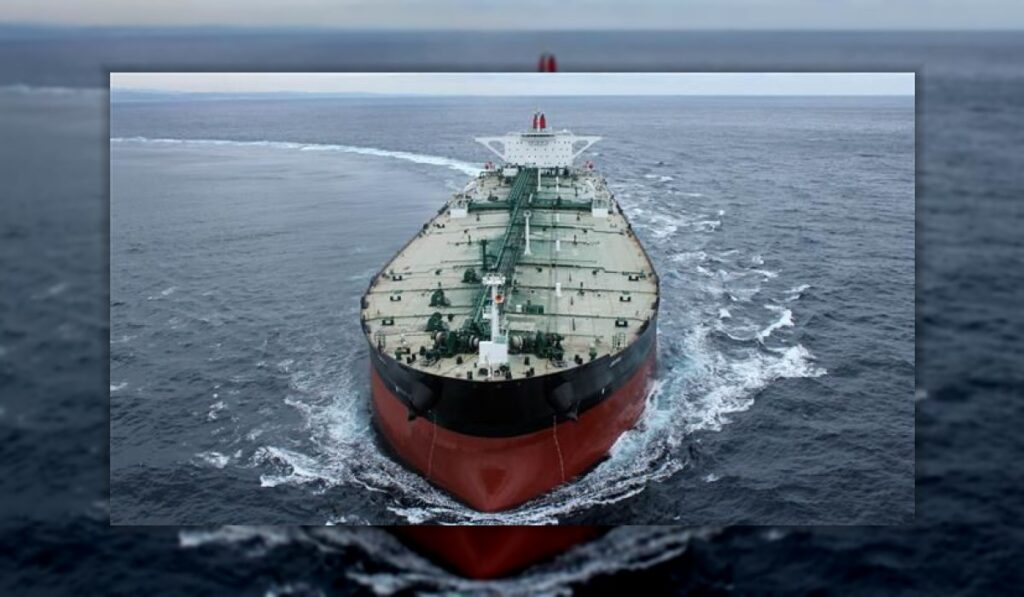
Iran’s oil exports have ground to a halt under a U.S. blockade, leaving Tehran with dwindling reserves and a looming fiscal crisis that could slash government revenues by 40%. With floating stocks off Malaysia and China expected to run dry this month, the regime faces an urgent dilemma: find alternative export routes or accept a drastic cut to its budget.
The collapse in oil shipments, Tehran’s primary source of hard currency, has already forced painful trade-offs. While funding for the nuclear programme, missile stocks, and the Basij internal security apparatus remains untouched, social spending is set to bear the brunt of the shortfall. The last revenues from pre-blockade sales are expected to trickle in by the end of the year, but beyond that, Iran’s options are starkly limited.
One of the most discussed alternatives: Iran Oil
One of the most discussed alternatives is transporting oil by rail to China via Turkmenistan. The route, which passes through Sarakhs, is theoretically viable, Canada shipped 175,000 barrels per day (bpd) by rail from Alberta to U.S. refineries in 2014, equivalent to about 20% of Iran’s pre-blockade exports to China. However, the logistical hurdles are enormous.
The journey from Iran to China would take 10-15 days, with additional time needed to return empty rail cars. Multiple track gauge changes along the route add further complexity, and the U.S. has a history of targeting such infrastructure. Even if Iran could overcome these obstacles, scaling up rail shipments to meaningful volumes would take years, a luxury Tehran does not have.
Road transport through Turkey is equally unfeasible. Truck delays at the Iran-Turkish border routinely stretch to 10 days, and the costs would be prohibitive. Meanwhile, shipping oil across the Caspian Sea is a non-starter. Shallow-draft tankers and unfriendly neighbours like Azerbaijan and Kazakhstan make this route impractical. Russia, already struggling to export its own oil, has little capacity to assist. The Emiratis, who operate a fleet of specialist tankers between Aktau and Baku, have shown no willingness to facilitate Iranian oil movements, further narrowing Tehran’s options.
Shipping oil across the Caspian
Iran’s pipeline link to Zaghmarz on the Caspian Sea, originally built to import Russian oil, was never designed for large-scale exports. The port’s shallow waters and limited storage capacity make it ill-suited for the volumes Iran would need to move to offset the blockade.
Azerbaijan and Kazakhstan, the two most influential Caspian states after Russia, have no incentive to assist Iran.
With traditional export routes severed, Iran’s most plausible workaround involves covert arrangements with Gulf suppliers. The goal? Persuade certain tankers to transit the Strait of Hormuz without being intercepted, particularly if the end-user is a country deemed friendly, such as Malaysia or Pakistan. Such deals, however, would come at a steep price, likely involving a hefty margin paid to intermediaries.
The Strait of Hormuz remains one of the world’s most strategically critical chokepoints, handling roughly one-fifth of global oil trade under normal circumstances. The U.S. Fifth Fleet, based in Bahrain, maintains a constant presence in the region, making any attempt to bypass the blockade a high-stakes gamble.
Iran’s previous attempts at sanctions evasion, such as reflagging vessels, disabling transponders, and using ship-to-ship transfers, have been systematically dismantled by U.S. enforcement actions. The sinking of several Iranian tankers off Jask and Chah Bahar in recent weeks underscores the risks of this approach.
The U.S. Navy has warned vessels against movements between Iranian ports, and the costs of non-compliance are rising. Even if Iran secures a few shipments, the volumes would be a fraction of pre-blockade levels. The revenue generated would barely scratch the surface of the fiscal shortfall, leaving Tehran’s budget in tatters.
Covert arrangements with Malaysia or Pakistan, while theoretically possible, would require significant concessions, including discounted prices and guarantees of non-interference from Washington. Neither country has the refining capacity to absorb large volumes of Iranian crude, further limiting the viability of this strategy.
The blockade’s impact extends beyond economics. Loadings at Kharg Island and other key Iranian ports have ceased entirely, and the regime’s sanctions-evasion playbook, once a source of resilience, has proven woefully inadequate. The 40% curtailment in government revenues will have cascading effects across the economy.
Subsidies for basic goods, already under strain, are likely to be slashed, while public-sector wages and infrastructure projects face delays or cancellations. Inflation, which has averaged over 40% annually in recent years, could spike further as the rial weakens and import costs rise.
For ordinary Iranians, the consequences will be severe. The Basij and military will continue to receive funding, but social services, healthcare, and education budgets are expected to bear the brunt of the cuts. The regime’s prioritisation of national security over domestic stability reflects a long-standing pattern, but the scale of the current crisis is unprecedented.
Previous rounds of sanctions, such as those imposed after the U.S. withdrawal from the Joint Comprehensive Plan of Action (JCPOA) in 2018, caused economic hardship but did not bring Iran’s oil exports to a complete standstill. The current blockade, combined with the depletion of floating reserves, leaves Tehran with few levers to pull.
Iran’s leadership has few good options. Negotiating with Washington would require significant concessions, including curbs on its nuclear and missile programmes, which the regime has repeatedly ruled out. The alternative, deepening austerity, risks fuelling public unrest, particularly in urban centres where discontent has simmered for years. The Basij, tasked with maintaining internal security, may struggle to contain protests if economic conditions deteriorate further, raising the spectre of instability.
Iran’s government has not publicly outlined a detailed plan to address the blockade, but several official channels remain open for engagement. The Ministry of Petroleum, which oversees the country’s oil and gas sector, continues to issue statements through its press office, though these have focused on condemning U.S. actions rather than announcing concrete measures. The Central Bank of Iran, meanwhile, has introduced limited currency controls to stabilise the rial, but these are unlikely to offset the loss of oil revenues.
For businesses and traders reliant on Iranian oil, the outlook remains uncertain. The U.S. Treasury’s Office of Foreign Assets Control (OFAC) has made it clear that any entity facilitating Iranian oil exports risks sanctions, including secondary measures targeting financial institutions. Companies operating in the Gulf region, particularly those with ties to the U.S., have largely complied with the blockade, further isolating Tehran.
Iran’s allies, including China and Russia, have expressed rhetorical support but have taken no tangible steps to alleviate the crisis. China, Iran’s largest pre-blockade oil customer, has shifted its purchases to other suppliers, including Saudi Arabia and Russia, to avoid U.S. penalties. Russia, while sympathetic to Iran’s plight, is preoccupied with its own sanctions-related challenges and lacks the spare capacity to absorb Iranian crude.
The most immediate test for Iran will come in the final months of 2026, as the last of its floating reserves are depleted. If no breakthrough is achieved, the regime may be forced to explore more drastic measures, including barter arrangements with countries like Pakistan or Syria, where sanctions enforcement is less stringent. Such deals, however, would yield minimal revenue and do little to address the structural weaknesses in Iran’s economy.
For now, the Basij and military will continue to receive funding, but the general population will bear the cost. As one analyst noted, “Iran has survived crises before, but this time, the math simply doesn’t add up.” The coming months will reveal whether Tehran can devise a sustainable workaround, or whether the blockade will push the country into a deeper economic and political crisis.


Sign up free to ask CAMAL AI for a summary, the key points or anything else about this story.
Related stories
CAMAL AI
 Financial Ports Newsletter
The maritime economy, every morning
Ports, shipping and freight markets in one short email. Free.
Financial Ports Newsletter
The maritime economy, every morning
Ports, shipping and freight markets in one short email. Free.



