

20m Barrels Flow as US Calls Iran’s Hormuz Blockade a Bluff
US Central Command confirms 20 million barrels of oil transited the Strait of Hormuz on Wednesday.
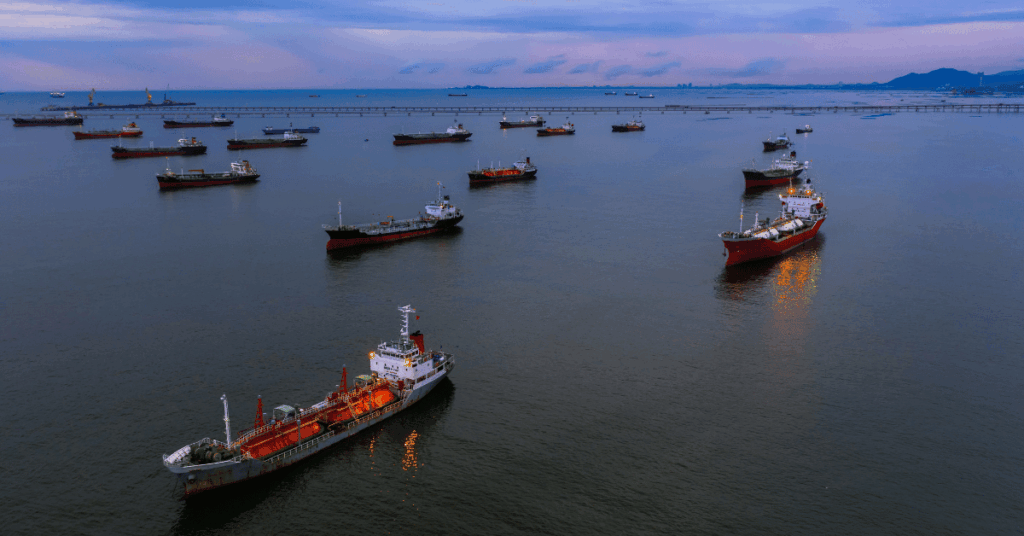
US Central Command has confirmed that 20 million barrels of oil transited the Strait of Hormuz on Wednesday, directly contradicting Iran’s claim that the critical waterway remains closed to shipping. The statement, posted on X, described Tehran’s blockade as ‘false’ and asserted that the US and its regional partners maintain control over the strait.
The Iranian Revolutionary Guard Corps (IRGC) had earlier declared that routes it deemed ‘illegal’ would be shut down, a move dismissed by US officials as posturing. An unnamed adviser to the IRGC commander told the Fars News Agency that the closure was part of a broader strategy to pressure Washington into negotiations. However, US Central Command’s spokesperson countered that commercial and energy traffic was flowing unimpeded at the time of the statement.
Diplomatic efforts have intensified in parallel with the military standoff. Esmaeil Baghaei, spokesperson for the Iranian Foreign Ministry, revealed that Tehran had laid out conditions for ending the war and proposed a dialogue through US mediators. He also disclosed that Iran and Oman had agreed on safe route coordinates for transit, with plans to escalate the matter to an international authority. Abbas Araghchi, Iran’s Foreign Minister, framed the situation as a balance between diplomacy and defence, stating that Iran was ‘serious about diplomacy while defending itself.’
Brent Crude
Diplomacy and Military Posturing Collide in Hormuz: strait of hormuz
Yet, the US has shown little patience for Tehran’s proposals. Araghchi noted that Washington rejected a seven-day plan to reopen the strait during the UN General Assembly, just a day after it was presented.
The confirmation of oil flows through the Strait of Hormuz provided temporary relief to global markets, which have been volatile since the conflict began on 28 February. Despite the dip, analysts warn that the situation remains precarious.
US President Donald Trump weighed in on the conflict during a speech in Washington, DC, declaring that the war would end ‘very soon’ and that oil prices would ‘tumble down’ as a result. He framed the conflict as a defining moment for his administration, stating, ‘In the years to come, they will be writing the history of our country, and they will say the Iran war is one of the most important things that we did.’ Trump also reiterated that Iran would not be allowed to develop a nuclear weapon, a longstanding US red line.
Oil Markets React to Hormuz’s Fragile Stability
«Oil prices are going to be tumbling down just like they were before I had to make that little excursion to the Islamic Republic of Iran.»
Donald Trump·US President
Trump’s rhetoric was matched by military preparedness. The Pentagon has been instructed to remain on high alert, with CENTCOM directed to prepare for potential escalation. While no specific timeline has been set, a new campaign could include extensive strikes on Iranian infrastructure. Trump also spoke with Israeli Prime Minister Benjamin Netanyahu, signalling a coordinated approach between the two allies. The human cost of the conflict has been stark.
Despite the US’s assertion that the strait remains open, the situation is far from resolved. McNally, an analyst at Rapidan, cautioned that the market’s current stability is fragile. ‘If the market believed that this was sustainable, I think you would be seeing much lower prices,’ he said. ‘It’s still costly to deliver and insure and land crude in consuming regions where benchmark prices are set.’ The lingering uncertainty ensures that the Strait of Hormuz will remain a flashpoint in the months ahead.


Sign up free to ask CAMAL AI for a summary, the key points or anything else about this story.
Related stories
CAMAL AI
 Financial Ports Newsletter
The maritime economy, every morning
Ports, shipping and freight markets in one short email. Free.
Financial Ports Newsletter
The maritime economy, every morning
Ports, shipping and freight markets in one short email. Free.



