

Black Sea Drone Strike: Bulgaria Abandons Search for 12 Missing Syrian
Bulgaria called off the rescue operation after finding only debris and life rafts from the sunken cargo ship Alfa Watan.
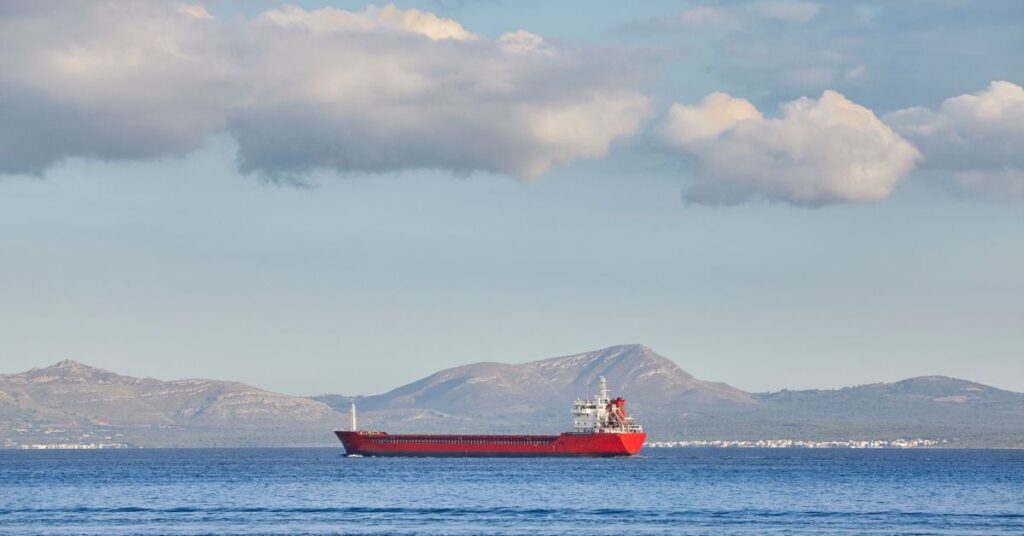
Bulgaria has terminated its search and rescue operation for 12 Syrian sailors missing after their cargo vessel, the Alfa Watan, sank in the Black Sea following a suspected drone strike. The decision comes after teams found only debris, life rafts, and an overturned boat, no survivors, 70 nautical miles off Bulgaria’s coast.
The Alfa Watan, a the vessel managed by a Turkish company, sent a distress signal at 2:54 a.m. before vanishing beneath the waves. Bulgarian authorities confirmed the crew had just three minutes to react before the ship sank. A second vessel, the Able, also suffered damage in the same attack but remained afloat with 18 seafarers rescued.
Rumen Nikolov, head of Bulgaria’s Maritime Search and Rescue Coordination Centre, told reporters the operation was halted on Tuesday after exhaustive efforts yielded no signs of life. “No survivors were found in the area, after which the search had to be called off,” he said. The teams recovered three life rafts and fragments of the ship’s equipment, but Nikolov added, “I have no information about drone debris.”
Bulgaria’s Maritime Search and Rescue Coordination Centre: The Agency Behind the Operation
The Maritime Search and Rescue Coordination Centre (MRCC) is Bulgaria’s primary agency responsible for coordinating emergency responses at sea. Operating under the country’s Maritime Administration, the MRCC oversees distress signals, deploys rescue assets, and liaises with international partners during maritime incidents. Its jurisdiction covers Bulgaria’s territorial waters and exclusive economic zone (EEZ), extending up to 200 nautical miles from the coastline.
The MRCC’s role has grown increasingly critical as the Black Sea becomes a flashpoint for geopolitical tensions. The agency collaborates with NATO allies, including Romania and Turkey, to monitor vessel movements and respond to attacks or accidents. However, its capabilities are often stretched thin by the sheer scale of the Black Sea, which spans over over 436,000 square kilometres square kilometres and serves as a vital corridor for global trade.
Why the Attack Raises Alarms for Black Sea Shipping
The incident marks the second vessel lost in the region in two days, following a separate sinking off Romania that claimed two lives. While Ukraine swiftly blamed Russia for the strikes, Bulgarian officials have not independently confirmed the origin of the drones. President Volodymyr Zelensky, however, claimed a joint investigation with Bulgarian forces pointed to Moscow.
The attack occurred in Bulgaria’s exclusive economic zone (EEZ), a 200-nautical-mile buffer where coastal states hold rights to resources but not full sovereignty. Nikolov emphasised the strike did not breach Bulgaria’s territorial waters, yet the escalation has prompted Prime Minister Rumen Radev to announce plans to acquire five additional surface-to-air missile systems to bolster defences. This move reflects Bulgaria’s growing unease over its exposure to spillover violence from the Ukraine war, despite its non-combatant status.
The Black Sea’s strategic importance cannot be overstated. It serves as a gateway for grain exports from Ukraine and Russia, two of the world’s largest wheat producers. Disruptions to shipping lanes have already contributed to global food price volatility, with the United Nations warning of potential shortages in vulnerable regions. The latest attacks risk further destabilising supply chains, particularly for nations reliant on Black Sea grain, such as Egypt, Lebanon, and parts of sub-Saharan Africa.
For seafarers, the Black Sea has become one of the most dangerous maritime regions in the world. The International Maritime Organisation (IMO) has repeatedly called for de-escalation, but attacks on merchant vessels have continued unabated. The sinking of the Alfa Watan underscores the perilous conditions faced by crews, who often lack adequate protection or evacuation time in the event of a strike.
The drone strike on the Alfa Watan raises complex legal questions about maritime security and state responsibility. Under the United Nations Convention on the Law of the Sea (UNCLOS), coastal states like Bulgaria have a duty to protect vessels within their EEZ from unlawful attacks. However, enforcing this obligation is challenging when the perpetrator remains unidentified, as in this case.
Bulgaria’s reluctance to attribute the attack to Russia or Ukraine reflects the broader diplomatic tightrope walked by NATO members in the region. While Sofia has condemned the strike as “absolutely unacceptable,” it has stopped short of directly accusing Moscow, a move that could escalate tensions. This cautious approach mirrors that of other Black Sea nations, such as Romania and Turkey, which have sought to balance support for Ukraine with a desire to avoid direct confrontation with Russia.
The incident also highlights the limitations of NATO’s collective defence mechanisms in addressing hybrid threats. Drones, which are difficult to trace and can be launched from long distances, present a unique challenge for traditional military deterrence. Bulgaria’s decision to procure additional surface-to-air missile systems is a step toward addressing this gap, but analysts warn that such measures may be insufficient without broader international cooperation.
With the search officially closed, the fate of the 12 Syrian sailors remains unknown. Bulgarian Chief of Defence Admiral Emil Eftimov noted the crew’s limited time to evacuate, suggesting the chances of survival were slim. The Alfa Watan’s rapid sinking mirrors the vulnerability of merchant vessels in the region, where attacks have grown more frequent and sophisticated.
The families of the missing sailors now face an agonising wait for answers. Under international maritime law, flag states, in this case, Togo, are responsible for investigating the incident and providing support to the crew’s next of kin. However, the lack of survivors or conclusive evidence may complicate efforts to determine the exact cause of the sinking or hold those responsible to account.
For shipping companies, the incident underscores the risks of operating in the Black Sea. Both the Alfa Watan and the damaged Able were managed by Turkish firms, highlighting the region’s reliance on cross-border maritime trade. Industry analysts warn that further strikes could disrupt supply chains, particularly for grain and energy shipments, if NATO members like Bulgaria fail to secure the waters. The International Chamber of Shipping has urged governments to enhance patrols and provide armed escorts for high-risk vessels, but such measures remain logistically and politically fraught.
Bulgaria’s decision to end the search reflects the grim reality of modern naval warfare, where drones can strike with little warning and even less accountability. The country’s Maritime Administration has urged shipowners to exercise heightened caution when navigating the Black Sea, advising vessels to maintain constant communication with coastal authorities and avoid areas with known security risks. Meanwhile, the European Union is reportedly considering a proposal to establish a naval task force to protect merchant shipping in the region, though details remain under discussion.
As tensions simmer, the Black Sea’s role as a global trade hub hangs in the balance, with seafarers paying the highest price. The sinking of the Alfa Watan serves as a stark reminder of the human cost of geopolitical conflict, even in waters far from the front lines. For the families of the missing sailors, the search for answers, and for justice, may be far from over.


Sign up free to ask CAMAL AI for a summary, the key points or anything else about this story.
Related stories
CAMAL AI
 Financial Ports Newsletter
The maritime economy, every morning
Ports, shipping and freight markets in one short email. Free.
Financial Ports Newsletter
The maritime economy, every morning
Ports, shipping and freight markets in one short email. Free.



