

Black Sea Pollution Alert: Greenpeace Fears Fallout From Stricken Tanker
A Liberian-flagged Aframax tanker hit by Ukrainian drones off Sochi risks unprecedented environmental damage.
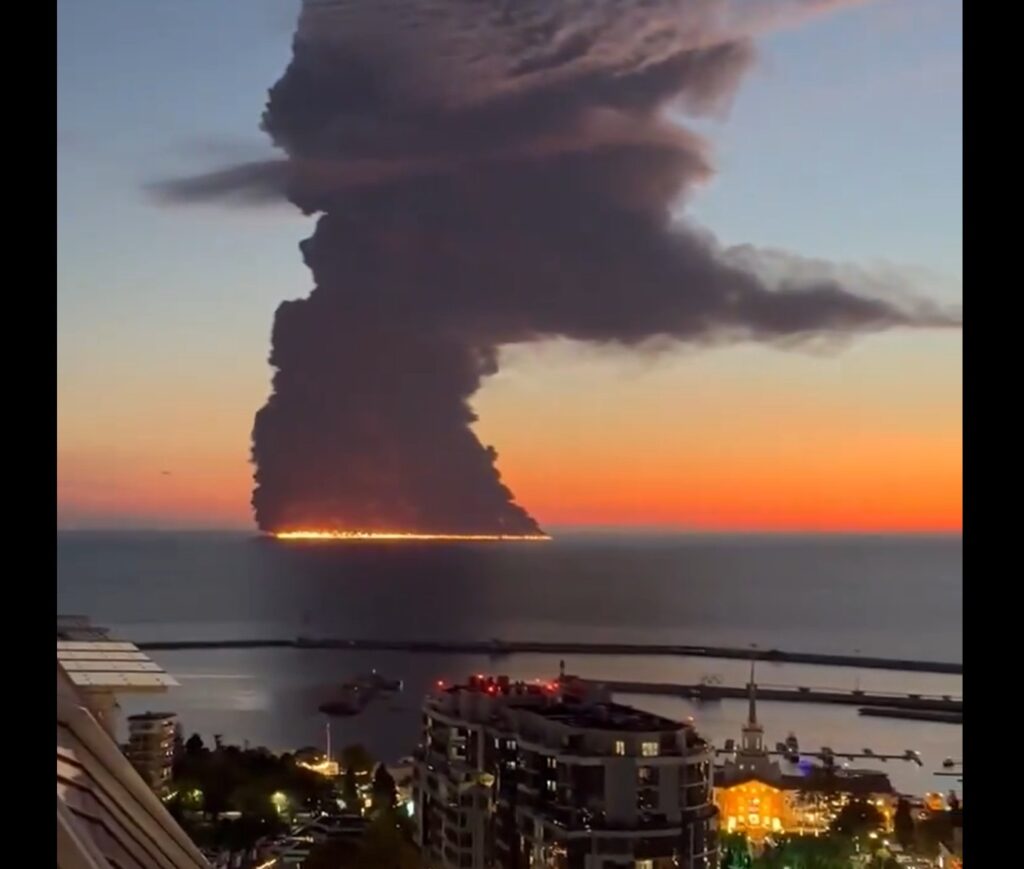
Greenpeace has raised the alarm over potential unprecedented pollution in the Black Sea after a Liberian-flagged Aframax tanker was struck by Ukrainian drones off the Russian resort town of Sochi. The Rio, laden with Russian oil, was hit in what Moscow has termed a “terrorist attack,” sparking a fire that burned for less than 24 hours before being brought under control.
The Russian Ministry of Transport confirmed that all 23 crewmembers, all Indian nationals, were evacuated safely, with no injuries reported. Despite initial claims by Russia’s public health ministry that no pollution had been detected, images of burning petroleum on the water circulated widely, prompting precautionary measures, including the closure of nearby public beaches.
Environmental Risks and Greenpeace’s Warning
The environmental NGO Greenpeace issued a stark warning about the potential fallout from the attack, stating that the incident could lead to “unprecedented pollution of the Black Sea and the destruction of marine ecosystems.” In a statement, the organisation emphasised the broader threat posed by Russian oil, not only to the environment but also to the people of Russia and the entire Black Sea region.
“[Russian oil] poses a direct threat to the people of Russia itself and to the environment of the entire Black Sea region.”
Greenpeace·Environmental NGO
Sochi Mayor Andrey Proshunin urged residents to remain calm and rely on verified information, stating that the city’s emergency response team was continuously monitoring the situation. However, unverified images on social media suggested the tanker had taken on a list to starboard and was drifting with the current along the Lazarevsky District coastline, raising concerns about its salvage status.
Broader Context of Maritime Attacks in the Black Sea
The attack on the Rio marks the second drone-boat strike on Sochi in a month. On September 9, a similar attack targeted a public beach, injuring 30 bystanders. Both Ukraine and Russia have increasingly deployed drone technology to target civilian-crewed merchant vessels, escalating tensions in the region.
Just a day before the Sochi incident, a Russian drone strike sank a Turkish-operated merchant ship off the coast of Bulgaria, killing 10 foreign crewmembers.
As environmental monitoring continues, the fate of the Rio remains uncertain. For now, authorities in Sochi remain on high alert, with restrictions in place to protect public health and safety.


Sign up free to ask CAMAL AI for a summary, the key points or anything else about this story.
Related stories
CAMAL AI
 Financial Ports Newsletter
The maritime economy, every morning
Ports, shipping and freight markets in one short email. Free.
Financial Ports Newsletter
The maritime economy, every morning
Ports, shipping and freight markets in one short email. Free.



