

Chinese Boxship Under Fire: Red Sea Attack Raises Stakes for Global Trade
A Singapore-flagged containership carrying 2,433 TEU was targeted by gunfire north of the Bab el-Mandeb strait on.
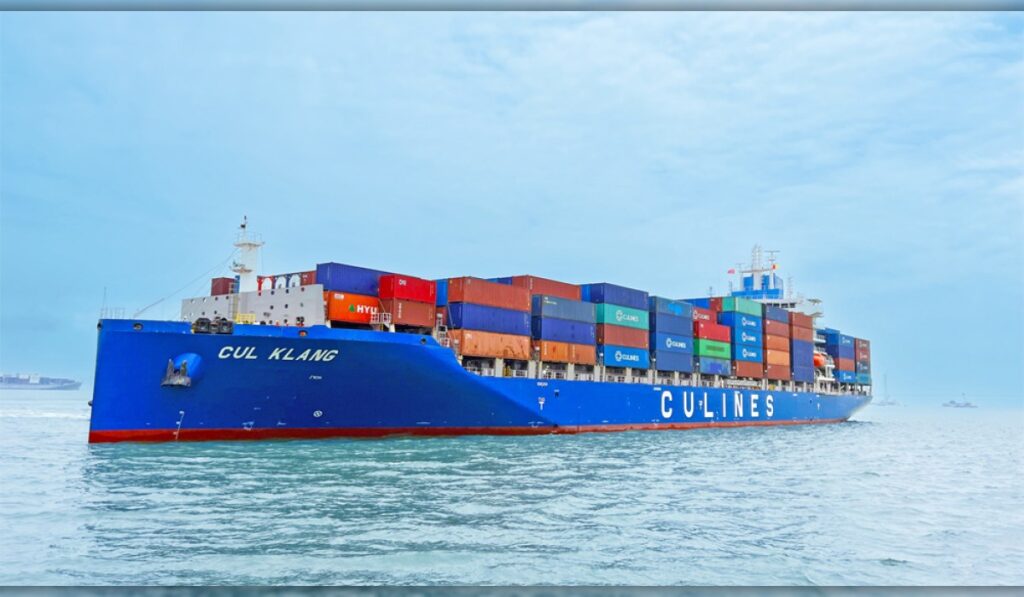
The southern Red Sea witnessed a fresh maritime security incident early on October 7, as a small vessel harassed a passing containership in waters north of the Bab el-Mandeb. According to reports received by the EU-sponsored Maritime Security Centre Indian Ocean (MSCIO), the unidentified craft fired shots at the commercial ship before withdrawing. The crew remained unharmed, and the vessel continued its northbound transit through the Red Sea.
The targeted ship has been identified as the Singapore-flagged CUL Klang, a 35,300-deadweight-ton container vessel operated by Chinese company CUL Lines. Built in 2024, the ship has a capacity of 2,433 TEU and is staffed entirely by Chinese crew members. Its automatic identification system (AIS) currently displays a message indicating its ownership and crew nationality.
No group has claimed responsibility for the attack, leaving the motives unclear. While Houthi rebels have previously targeted vessels linked to Saudi Arabia, they have explicitly stated they would avoid striking Chinese-owned ships. The incident occurs amid heightened tensions, with reports of fishing boats in the region occasionally engaging in defensive actions to protect their equipment—though this appears unrelated to the current case.
Escalation on land fuels maritime uncertainty: Red Sea
Fighting along Yemen’s coastline has intensified in recent days, further complicating security in the Red Sea. Pro-government forces, including Yemen’s Homeland Shield Forces, launched a large-scale offensive near al-Waziya in the Taiz region, while Saudi-backed troops claimed to have retaken the port city of Mocha. However, conflicting reports persist over control of the Bab el-Mandeb, a critical chokepoint for global shipping, with both sides asserting dominance over key coastal areas.
Meanwhile, the Houthis reported launching missile strikes into Saudi Arabia, with confirmed impacts near airports in Abha and Riyadh. Saudi officials stated they intercepted additional missiles and targeted a launch site in Yemen’s capital, Sanaa. The attacks resulted in at least three fatalities and 30 injuries, according to the Associated Press.
Shipping industry braces for prolonged risks
The latest incident marks the first reported attack in the Red Sea since late August, when a tanker was struck off the Saudi port of Yanbu. While the Gulf of Aden has seen sporadic violence—including explosions near a tanker on October 4—the Red Sea had experienced a relative lull in recent weeks.
In response to ongoing threats, the European Union’s naval mission, EUNAVFOR Aspides, continues to escort commercial vessels through high-risk areas. The mission recently reaffirmed its commitment to maintaining maritime security, stating it “supports the confidence of the shipping industry in continuing to use challenged maritime routes.” Reports suggest the EU may deploy additional warships to bolster its presence in the region.
With Yemen’s civil war showing no signs of abating, the safety of commercial shipping in the Red Sea remains precarious. The latest incident underscores the persistent risks faced by vessels navigating one of the world’s most critical maritime corridors.


Sign up free to ask CAMAL AI for a summary, the key points or anything else about this story.
Related stories
CAMAL AI
 Financial Ports Newsletter
The maritime economy, every morning
Ports, shipping and freight markets in one short email. Free.
Financial Ports Newsletter
The maritime economy, every morning
Ports, shipping and freight markets in one short email. Free.



