

Houthi Rebels Hold Bab el Mandeb—What’s Next for Red Sea Shipping?
Houthis reinforce positions after capturing Perim Island and Ras Menhali peninsula, raising stakes for maritime traffic.
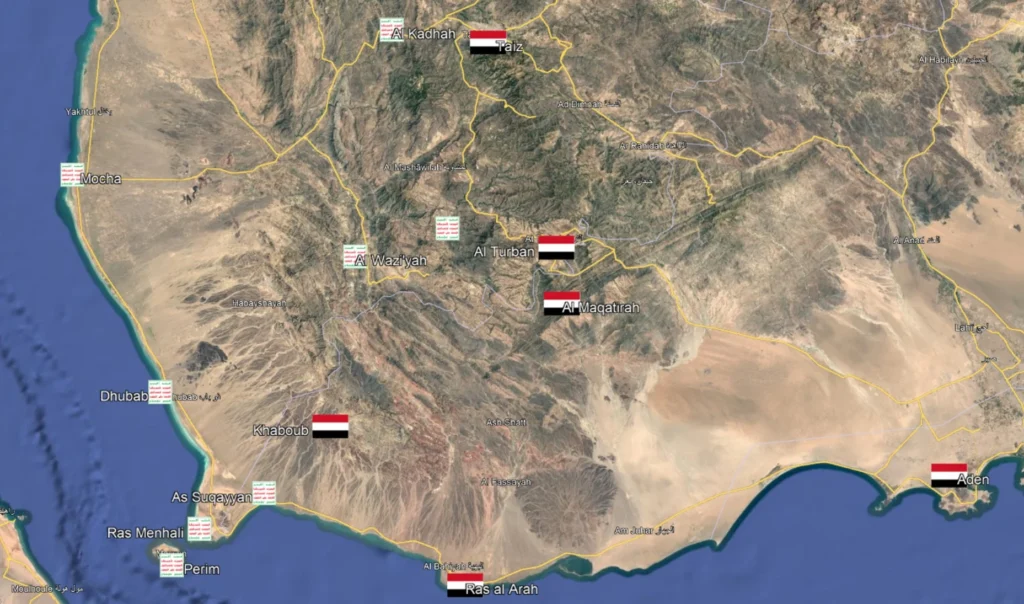
Houthi rebels have consolidated their hold over key positions along the Bab el Mandeb strait, raising fresh concerns for global shipping as they pause before their next offensive. A week after breaking through forces loyal to Yemen’s Internationally Recognized Government (IRG), the Houthis now control Perim Island and the Ras Menhali peninsula, two critical chokepoints overlooking the Red Sea’s narrowest passage.
Their grip, however, remains precarious. Resupply lines to both locations are exposed, and IRG forces still hold high ground in the hills to the east. Yet, the Houthis are wasting no time. Front-line positions are being reinforced with tunneling and defensive structures, while newly captured areas are being brought under administrative control. Municipal administrations are being established, political opponents arrested, taxes imposed, and local policing set up, all signs of a takeover that was planned well in advance.
Why the Bab el Mandeb Matters to Global Trade
For now, maritime traffic appears to be flowing, even slightly increased as of September 24, according to AIS data from VesselFinder. However, the absence of Saudi-flagged vessels is telling. The Houthis are temporarily avoiding antagonizing the U.S. and its allies while they consolidate their position. Once secure, their ability to disrupt shipping will be far greater than before.
The Tihama coast, now under Houthi control, shares tribal ties with northern Yemen, where the group has long held sway. This connection is being exploited to tighten political control, with local administrations already imposing taxes and policing.
The IRG’s Collapse and What It Means for the Region
The Houthis’ rapid advance was no accident. Their military success stems from a clear ideology, internal unity, and the elimination of opposition. In contrast, IRG forces in the region were fractured, split between three factions under the loose command of the National Resistance Forces, led by General Tareq Saleh. A nephew of the late President Ali Saleh, Tareq Saleh proved an active but divisive commander, his leadership undermined by Yemen’s long history of political treachery.
The Emiratis, who previously backed Saleh, were adept at managing such coalitions. the Saudis successors, however, had not yet welded the factions into a coherent force, a weakness the Houthis ruthlessly exploited. After initial resistance, IRG forces collapsed, leaving behind intact ammunition and sophisticated weapons systems, which the Houthis are now turning against their former owners.
The Houthis’ next targets are clear: isolating the city of Taiz and capturing more of Marib, home to Yemen’s oil fields. These moves would not only expand their territorial control but also provide critical economic leverage. With 70% of Yemen’s population already under their rule, though only 30% of its land and none of its oil, the group is playing a long game. Their patience is matched by ambition, and if unchecked, their grip on the southern Red Sea will only tighten.
The Houthis’ relationship with Iran is complex. While they receive lessons, money, and technology from Tehran, they do not necessarily take orders.
For now, the pause in hostilities is deceptive. The Houthis are consolidating, not retreating. And when they decide to act, the Red Sea’s shipping lanes may never be the same.


Sign up free to ask CAMAL AI for a summary, the key points or anything else about this story.
Related stories
CAMAL AI
 Financial Ports Newsletter
The maritime economy, every morning
Ports, shipping and freight markets in one short email. Free.
Financial Ports Newsletter
The maritime economy, every morning
Ports, shipping and freight markets in one short email. Free.