

NATO’s Largest Commando Drill in 30 Years Tests Arctic War Readiness
Over 2,000 troops from six nations simulate submarine infiltration and live-fire strikes off Scotland’s coast.
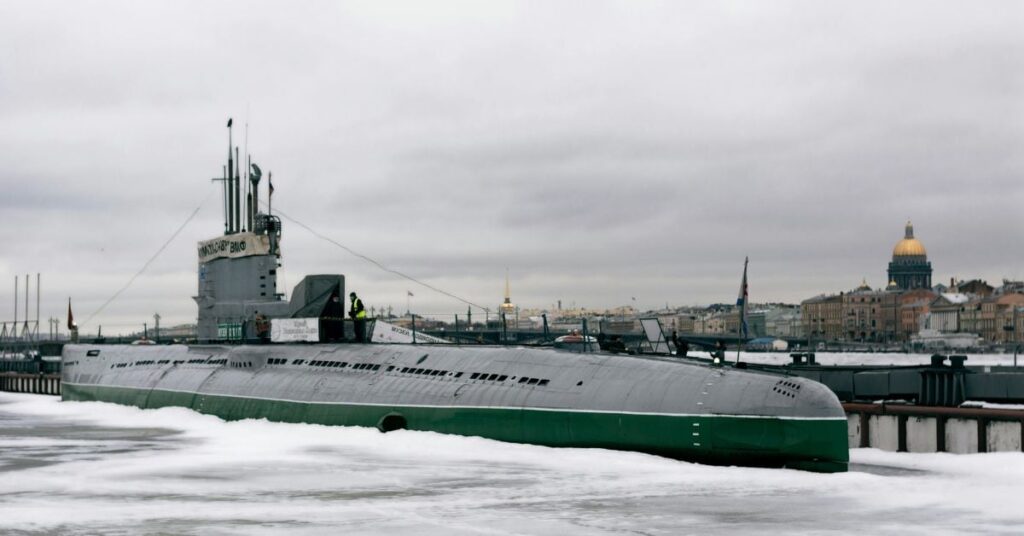
British commandos have conducted their largest military exercise in 15 years, surfacing from a German submarine off the Scottish coast in a high-stakes NATO drill designed to test allied crisis response in the High North. The operation, part of Exercise Strike at Cape Wrath, involved over over 200 personnel from six nations and marked the first full-scale integration of the UK Commando Force’s specialist units since the Afghanistan war.
The exercise, held across the Western Isles, Galloway, and the North-North-West Approaches, saw commandos from the 148 (Meiktila) Commando Forward Observation Battery, Royal Artillery, board a German Navy Type 212A submarine before infiltrating a target area using a small inflatable raiding boat. The submarine provided real-time intelligence and surveillance support, while a Portuguese Navy frigate, the Dom Francisco de Almeida, delivered live fire using its Oto Melara deck gun, a level of coordination not seen in three decades, according to the 148 Battery operations officer.
How the Drill Simulated Real-World Threats in the North Atlantic
The scenario unfolded under some of the most treacherous weather conditions in the North Atlantic, where the UK Commando Force, specialising in reconnaissance, target identification, and amphibious missions, tested its ability to operate across maritime and land domains. After disembarking from the submarine, the commandos stealthily moved to nearby cliffs to establish an observation post, locking onto a simulated enemy target before calling in fire support from the Portuguese frigate.
The 148 Battery operations officer emphasised the significance of the exercise, stating in a verbatim quote:
“This level of coordination and complex operation involving live fire and assets involving partner and allied navies had not been achieved in three decades, making it a significant naval exercise.”
148 Battery Operations Officer·Operations Officer, 148 (Meiktila) Commando Forward Observation Battery
The drill also included float-on/float-off manoeuvres with the commandos’ boats, demonstrating the force’s ability to conduct discreet insertions and extractions in hostile environments. The German submarine submarine’s role in providing Intelligence, Surveillance, and Reconnaissance (ISR) support was critical, allowing the Special Observation Teams to conduct a tactical beach landing and establish a hasty observation post without detection.
Why NATO’s High North Exercise Matters for Future Defence
With tensions rising in the Arctic and North Atlantic, Exercise Strike served as a stark reminder of NATO’s commitment to collective defence in one of the world’s most strategically vital regions. The High North, characterised by harsh weather and sparse infrastructure, presents unique challenges for military operations, making such drills essential for maintaining readiness. The 148 Battery operations officer underscored this point, stating:
“We wanted to demonstrate to our partners across the United Kingdom Commando Force, wider UK Defence and NATO Special Operations Force community the type of missions we are prepared to execute against future threats.”
148 Battery Operations Officer·Operations Officer, 148 (Meiktila) Commando Forward Observation Battery
The exercise also highlighted the growing importance of multi-domain integration, where assets from different nations, such as a German submarine, British commandos, and a Portuguese frigate, work seamlessly to achieve a common objective. This level of interoperability is crucial for NATO’s ability to respond swiftly to crises, whether in the form of hybrid warfare, territorial disputes, or humanitarian emergencies.
For the UK Commando Force, the drill was an opportunity to showcase its evolving capabilities in littoral and expeditionary warfare. The force’s ability to conduct reconnaissance, target identification, and artillery support in austere environments makes it a key asset for NATO’s rapid-response strategies. The 148 Battery operations officer reinforced this, stating:
“Warfighting is our focus, and we are prepared to employ specialist assets to deliver Multi-Domain Fires and Targeting.”
148 Battery Operations Officer·Operations Officer, 148 (Meiktila) Commando Forward Observation Battery
The participation of over 200 personnel from the U.S., Canada, Norway, the Netherlands, and Germany, alongside the UK, underscored the alliance’s unity in addressing emerging threats. The exercise’s scale, involving eight naval ships and 19 fighter planes, reflected NATO’s determination to maintain a credible deterrent in the face of increasing geopolitical instability.
As the drill concluded, the focus now shifts to analysing the lessons learned and refining tactics for future operations. With the Arctic ice melting and new shipping routes opening, the High North is poised to become a flashpoint for great-power competition. NATO’s ability to project force and coordinate complex operations in the region will be critical in shaping the security landscape for decades to come.
For defence analysts and policymakers, Exercise Strike serves as a benchmark for NATO’s readiness. The integration of allied assets, the use of live fire in a simulated combat scenario, and the successful execution of a submarine infiltration mission demonstrate that the alliance remains a formidable force, one capable of adapting to the challenges of modern warfare.


Sign up free to ask CAMAL AI for a summary, the key points or anything else about this story.
Related stories
CAMAL AI
 Financial Ports Newsletter
The maritime economy, every morning
Ports, shipping and freight markets in one short email. Free.
Financial Ports Newsletter
The maritime economy, every morning
Ports, shipping and freight markets in one short email. Free.



