

Germany’s F125 Frigates Get 40km Shield Against Air Threats
Berlin equips four 7,200-ton frigates with IRIS-T SLM surface-to-air missiles to counter modern airspace threats.
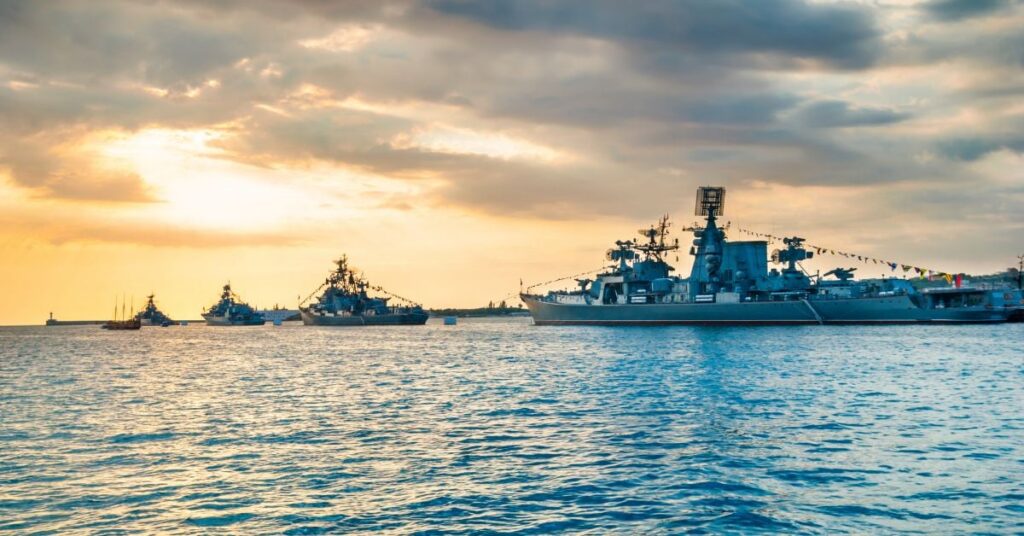
Germany has signed a contract to equip its four Baden-Württemberg-class F125 frigates with IRIS-T SLM surface-to-air missile systems, closing a long-standing gap in medium- and long-range air defence.
BAAINBw (BAAINBw) awarded the contract to Diehl Defence on 2 October 2026, following direct approval by the German parliament’s budget committee on 23 September. The move comes as Berlin seeks to modernise its naval fleet amid evolving airspace threats, with the Federal Ministry of Defence citing the IRIS-T SLM’s operational success in Ukraine as a key factor in the decision.
The F125 frigates, Baden-Württemberg, Nordrhein-Westfalen, Sachsen-Anhalt, and Rheinland-Pfalz, were originally commissioned without medium- or long-range air-defence capabilities. Instead, they relied on short-range anti-ship missiles and RIM-116 Rolling Airframe Missiles (RAM), leaving them vulnerable in high-threat environments. This limitation was starkly illustrated in 2024, when the Baden-Württemberg was forced to detour around the Red Sea during its return from the Indo-Pacific, opting for a longer route via Africa to avoid potential attacks.
How the IRIS-T SLM Upgrade Will Transform F125 Capabilities: F125 Frigates
Under the new adaptation plan, each of the four frigates will be fitted with two deck-mounted launchers, enabling them to carry a total of 32 IRIS-T SLM missiles per vessel. The system boasts an interception range of up to 40 km and an operational altitude of 20 km, providing a robust shield against modern aerial threats, including drones, cruise missiles, and aircraft.
The decision to mount the launchers on deck, rather than integrating them into a below-deck vertical launching system (VLS), was driven by cost and efficiency considerations. Traditional VLS integration requires extensive structural modifications, which would have delayed the upgrade and increased costs. By contrast, the deck-mounted approach allows for faster deployment while maintaining full compatibility with the frigates’ existing radar and command systems.
Diehl Defence will conduct live-firing tests and manufacture prototypes to ensure seamless integration with the frigates’ architecture. The company has already demonstrated the system’s viability during the Maritime Firing Exercise 2025 off Norway, where a navalized IRIS-T SLM module was installed on the Baden-Württemberg in less than 10 months. During the tests, the system successfully engaged multiple targets using ship-supplied radar data, meeting all evaluation objectives.
Why Germany’s Naval Modernisation Matters for European Security
The upgrade reflects Berlin’s broader strategy to enhance its naval capabilities in response to growing security challenges. The Federal Ministry of Defence explicitly linked the decision to the IRIS-T SLM’s proven performance in Ukraine, where the system has been used to counter Russian missile and drone attacks. By equipping its frigates with a similar capability, Germany aims to bolster its ability to operate in contested environments, particularly in regions like the Indo-Pacific and the Mediterranean, where air threats are increasingly prevalent.
The F125 frigates, with their 7,200-ton displacement, are among the largest and most advanced surface combatants in the German Navy. Their primary roles include crisis response, maritime security, and power projection. However, their lack of medium- and long-range air defence had limited their effectiveness in high-risk scenarios. The IRIS-T SLM upgrade addresses this shortcoming, enabling the frigates to operate more independently and in coordination with allied forces.
The contract also underscores the growing importance of modular, adaptable defence systems in modern naval warfare. The IRIS-T SLM’s ability to be rapidly integrated into existing platforms, without requiring extensive structural changes, sets a precedent for future upgrades across Europe’s naval fleets. As air threats continue to evolve, such flexibility will be critical for maintaining operational readiness.
“The IRIS-T SLM has also proven itself in Ukraine’s defensive fight against Russia.”
Federal Ministry of Defence·German defence policy spokesperson
For the German Navy, the upgrade represents a significant step forward in its modernisation efforts. The frigates are expected to begin operational testing with the new missile systems in late 2027, with full deployment anticipated by 2028. Once operational, the IRIS-T SLM will provide the F125 class with a much-needed layer of protection, ensuring they can fulfil their missions in increasingly complex and contested maritime environments.


Sign up free to ask CAMAL AI for a summary, the key points or anything else about this story.
Related stories
CAMAL AI
 Financial Ports Newsletter
The maritime economy, every morning
Ports, shipping and freight markets in one short email. Free.
Financial Ports Newsletter
The maritime economy, every morning
Ports, shipping and freight markets in one short email. Free.



