

German Counter-Drone System Passes 48 Tests
SCILT NAVAL system completes 48 trials to protect vessels from FPV drones and loitering munitions in confined waters.
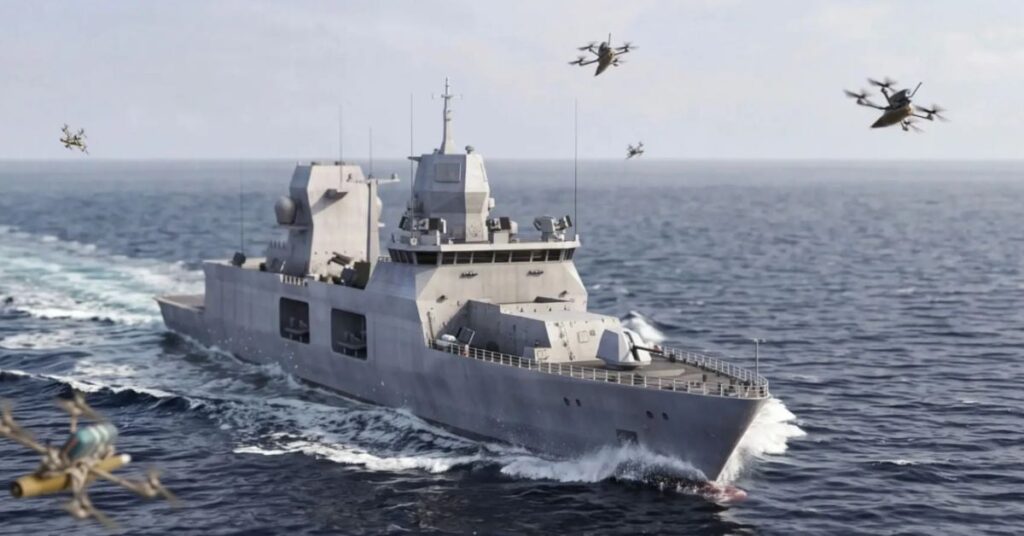
The SCILT NAVAL, created by Mehler Production, targets fast-moving threats like FPV drones and loitering munitions that operate dangerously close to ships, where crews have little time to react.
Tests evaluated its ability to transmit data, withstand saltwater exposure, and function in rough sea conditions.
The company specialises in ballistic protection, including body armour, vehicle armour, and now, naval defence systems.
The rise of inexpensive, commercially available drones has transformed naval warfare. Their low-altitude flight paths make them difficult to detect with long-range air defence systems, particularly in confined waters like ports, canals, and narrow channels. The SCILT NAVAL addresses this vulnerability by focusing on close-range threats.
Mehler Production: The Company Behind the Innovation: System
“The system’s effectiveness depends on the distance of the threat from the ship,” developers noted. “In high-risk environments like ports or floating platforms, every second counts.” The SCILT NAVAL is particularly valuable for smaller vessels that lack dedicated air defence systems, offering an additional layer of protection in critical missions.
For naval operators, the threat posed by drones is not just theoretical. Their ability to evade radar and strike with precision makes them a low-cost, high-impact weapon. The SCILT NAVAL’s design reflects an understanding of these real-world challenges, prioritising speed, adaptability, and ease of deployment.
The SCILT NAVAL’s deployment could reshape naval defence strategies, particularly in regions where drone attacks have become a persistent threat. Its ability to engage multiple targets simultaneously makes it a valuable asset for protecting high-value assets like offshore rigs, floating platforms, and amphibious forces.
Why Close-Range Drones Are a Growing Threat to Naval Vessels
The system’s ammunition options, including armour-piercing variants, allow it to adapt to different threat levels. Human operators retain control over engagement decisions in the initial configuration, but the system’s sensors and automated functions reduce the risk of human error in high-pressure situations.
Mehler Production plans to unveil the SCILT NAVAL at SMM 2026, a leading maritime trade fair, where it is expected to draw interest from navies and commercial operators alike. The system’s modular design means it can be retrofitted onto existing vessels or integrated into new builds, offering a flexible solution for modern naval challenges.
The trade fair, held in Hamburg, Germany, is one of the world’s largest gatherings for the maritime industry, attracting shipbuilders, defence contractors, and naval forces from around the globe. SMM 2026 will provide a platform for Mehler Production to demonstrate the SCILT NAVAL’s capabilities to potential buyers, including those from nations facing heightened maritime security risks.
For commercial shipping companies, the SCILT NAVAL offers a way to mitigate risks in high-threat areas without investing in expensive, large-scale air defence systems. Its relatively low cost and ease of installation make it an attractive option for operators of smaller vessels, such as patrol boats, supply ships, and offshore support vessels.
As drone technology continues to evolve, countermeasures like the SCILT NAVAL will become increasingly vital. For naval forces operating in high-risk areas, the ability to neutralise close-range threats could mean the difference between safety and catastrophe.
With its proven resilience and adaptability, the SCILT NAVAL is poised to become a key component of maritime defence in the years ahead. Its success in 48 trials demonstrates that even the most advanced threats can be countered with the right technology, and that innovation in naval defence is accelerating faster than ever.
The introduction of the SCILT NAVAL reflects a broader shift in maritime security, where asymmetric threats like drones are forcing navies and commercial operators to rethink their defence strategies. Traditional air defence systems, designed to counter missiles and aircraft, are often ill-suited to detect and engage small, fast-moving drones. The SCILT NAVAL fills this gap by providing a dedicated, close-range solution that can be deployed alongside existing systems.
For ports and critical infrastructure, the system offers an additional layer of protection against drone attacks. Ports are particularly vulnerable due to their high concentration of vessels, cargo, and personnel, making them attractive targets for adversaries. The SCILT NAVAL’s ability to operate in confined waterways and near floating platforms makes it a valuable tool for safeguarding these environments.
Naval forces will also benefit from the system’s modularity. The SCILT NAVAL can be installed on a wide range of vessels, from small patrol boats to larger warships, without requiring extensive modifications. This flexibility allows operators to tailor their defence capabilities to specific mission requirements, whether in peacetime patrols or high-intensity conflict zones.
Looking ahead, the SCILT NAVAL could serve as a model for future counter-drone systems. Its reliance on commercially available ammunition and its modular design set a precedent for cost-effective, scalable solutions in maritime defence. As drone technology continues to advance, systems like the SCILT NAVAL will need to evolve in tandem, incorporating artificial intelligence, machine learning, and enhanced sensor capabilities to stay ahead of emerging threats.
For now, the SCILT NAVAL represents a significant step forward in maritime security. Its development in just 18 months and its success in 48 trials underscore the urgency of addressing the drone threat. As Mehler Production prepares to showcase the system at SMM 2026, the maritime industry will be watching closely to see how this innovation shapes the future of naval defence.


Sign up free to ask CAMAL AI for a summary, the key points or anything else about this story.
Related stories
CAMAL AI
 Financial Ports Newsletter
The maritime economy, every morning
Ports, shipping and freight markets in one short email. Free.
Financial Ports Newsletter
The maritime economy, every morning
Ports, shipping and freight markets in one short email. Free.



