

Biofuels undercut fossil bunkers by $75 as Hormuz shock hits shipping
B30 biodiesel blend briefly became $74.61 per tonne cheaper than VLSFO in Rotterdam during April’s Strait of Hormuz.
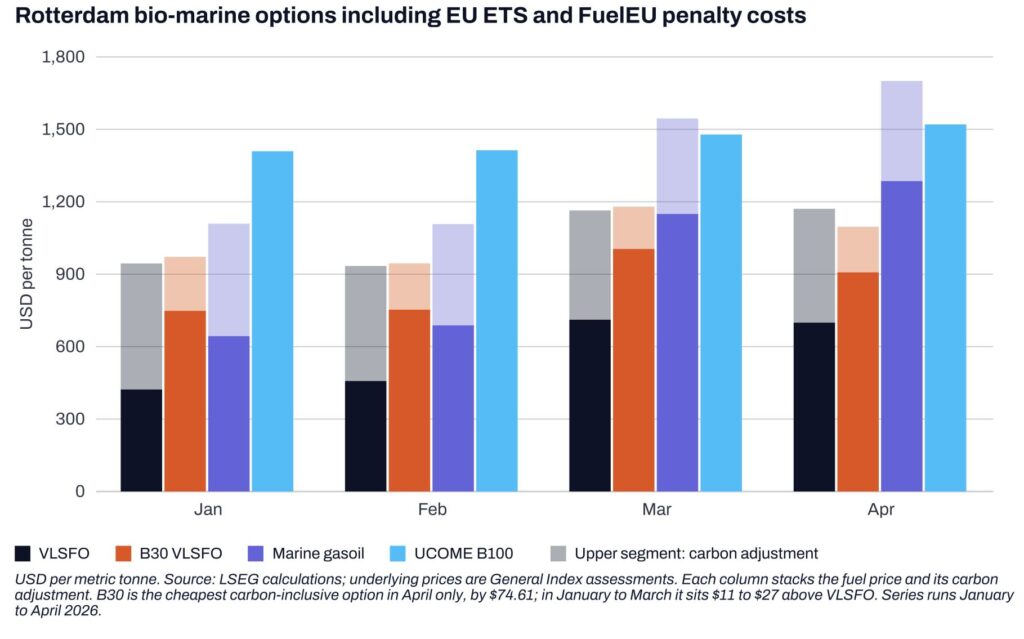
A sudden shift in global energy markets has positioned biodiesel as an unlikely cost leader in marine fuels, at least temporarily. According to a joint analysis by energy pricing firm General Index and the London Stock Exchange Group (LSEG), a 30% biodiesel blend known as B30 became the most economical bunkering option in Rotterdam last April when factoring in European carbon pricing mechanisms.
The study found that B30—a mix of 30% used cooking oil methyl ester (UCOME) and 70% very low sulphur fuel oil (VLSFO)—was priced $74.61 per tonne below conventional VLSFO. This calculation accounted for EU Emissions Trading System (ETS) allowances and potential penalties under the FuelEU Maritime regulations. Just months earlier, the same blend had been $11 to $27 per tonne more expensive than traditional marine fuel.
The price reversal followed the closure of the Strait of Hormuz, which triggered a sharp rise in fossil fuel costs. Between February and March, European gasoil prices surged by $476 per tonne, while UCOME biodiesel increased by only $65 per tonne. The report also noted that pure UCOME biodiesel (B100) traded at a discount to marine gasoil for eight consecutive weeks between March and May after including carbon costs.
Marine Gasoil
Carbon pricing’s role—and its limits: Biofuels
The findings, detailed in the white paper Lessons From Hormuz: Disruptions For Renewable Fuel Cost Competitiveness, suggest that carbon pricing is beginning to make renewable marine fuels commercially viable. However, the authors—General Index lead analyst David Elward and LSEG senior analyst Tim Deehan—warn against viewing this as a permanent change.
Before accounting for carbon costs, biofuels remain more expensive than conventional bunkers. The Rotterdam price comparisons also reflect potential regulatory penalties rather than actual expenses faced by all vessels. Additionally, not all biofuels responded equally to the energy shock. While traditional biodiesels proved resilient, hydrotreated vegetable oil and sustainable aviation fuel (SAF) saw prices climb alongside fossil fuels. SAF, despite having supply chains largely independent of the Strait of Hormuz, jumped by $636 per tonne in the same period.
The report highlights a growing divide between shipping and aviation. While EU carbon regulations briefly made marine biofuels the cheaper compliance option, the researchers estimate that aviation would require carbon prices of $445 per tonne of CO₂ equivalent—roughly five times current levels—to close the cost gap between SAF and conventional jet fuel.


Sign up free to ask CAMAL AI for a summary, the key points or anything else about this story.
Related stories
CAMAL AI
 Financial Ports Newsletter
The maritime economy, every morning
Ports, shipping and freight markets in one short email. Free.



