

Hurricane Isaias Shuts 1.46m bpd of Gulf Oil—Who’s Still Pumping?
Hurricane Isaias has forced the evacuation of 129 platforms, cutting 71% of the Gulf of Mexico’s oil output.
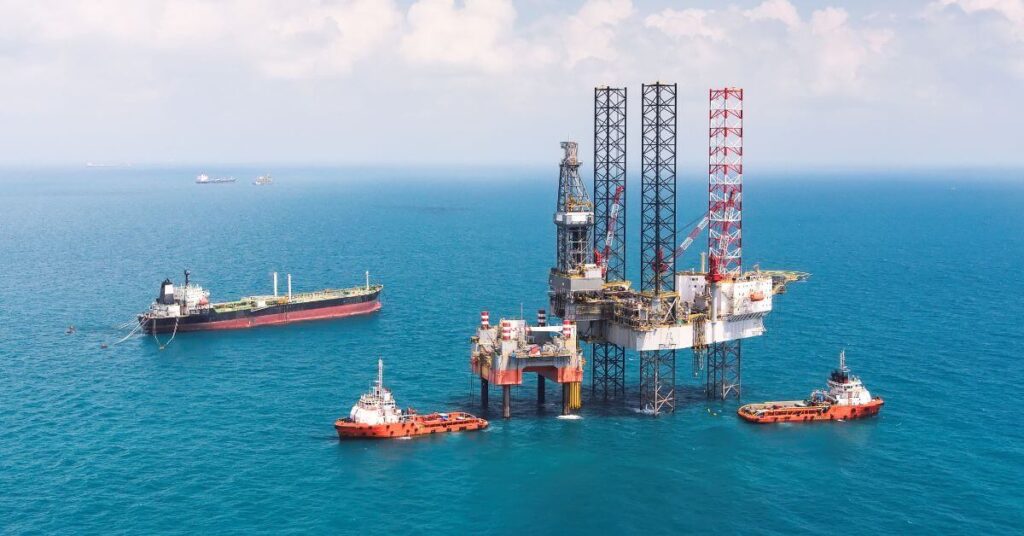
Hurricane Isaias has forced the shutdown of 1.46 million barrels per day of oil production in the Gulf of Mexico, disrupting 71% of the region’s output and triggering the evacuation of 129 offshore platforms.
Marine Minerals Administration, the U.S. federal agency responsible for overseeing offshore mineral resources, confirmed on Friday that producers had also shut in 1.26 billion cubic feet of natural gas per day, accounting for 58.84% of the Gulf’s output. The shutdowns mark a sharp escalation from earlier in the week, when just 9.24% of Gulf oil production was offline before Isaias intensified into a hurricane.
How the Shutdowns Escalated Over Three Days: gulf oil production
The impact of Hurricane Isaias has grown rapidly since Tuesday, when no platforms or rigs had been evacuated. By Thursday, 62.89% of Gulf oil production was offline, rising to 71.51% by Friday. The MMA reported that workers had been evacuated from 34.77% of the Gulf’s 371 staffed production platforms, while crews had also left eight of the 11 non-dynamically positioned drilling rigs. Two of the 17 dynamically positioned rigs were moved away from the storm’s path.
Brent Crude
Consulting firm Earth Science Associates, which specialises in energy sector risk assessment, initially estimated that Hurricane Isaias could disrupt 9 million barrels of Gulf oil production, but revised its forecast downward to 7.2 million barrels after the storm’s path shifted eastward.
The Gulf of Mexico is a critical hub for U.S. energy production, contributing roughly 15% of the country’s total crude oil output. The region’s infrastructure includes not only offshore platforms but also an extensive network of pipelines and onshore processing facilities.
Major Operators Forced to Halt Production
Shell, one of the largest operators in the Gulf, announced late on Thursday that it had completed evacuations at its Appomattox, Mars, Ursa, Olympus, and Vito facilities. Production remained shut down at Mars, Ursa, Olympus, and Vito, while Chevron evacuated most of its personnel from its Gulf of Mexico facilities and halted output at five of its nine operated platforms. BP, Eni, and Murphy Oil are also among the companies most exposed to the storm, according to Earth Science Associates.
The shutdowns do not necessarily mean the oil and gas will be lost permanently. Producers typically halt operations and evacuate workers ahead of hurricanes, with the ability to restart production once the storm passes and facilities are deemed safe. However, damage to platforms, subsea equipment, pipelines, or onshore facilities could delay the restart process. Undamaged platforms may resume operations after safety checks, but the timeline remains uncertain.
The U.S. federal offshore Gulf of Mexico produces about 2 million bpd of oil, or roughly 15% of the country’s total crude oil output, according to the U.S. Energy Information Administration. The region also produces an average of 2.1 billion cubic feet of natural gas per day.
Industry analysts will be closely monitoring fuel inventories and refining margins in the coming weeks.
The National Hurricane Center expects Hurricane Isaias to weaken after landfall, but the full extent of the storm’s impact on Gulf energy production remains unclear. The priority for operators now is to assess damage and ensure the safety of workers before restarting production. Companies will conduct thorough inspections of platforms, pipelines, and onshore facilities, a process that can take days or even weeks depending on the severity of the storm’s impact.
Energy markets are already reacting to the disruptions. Oil futures have seen volatility as traders weigh the potential for prolonged outages against the possibility of a swift recovery. If production resumes quickly, the impact on prices may be limited. However, any signs of structural damage or delays in restarting operations could lead to further price fluctuations.
For those tracking the storm’s impact, the Marine Minerals Administration and the U.S. Energy Information Administration will provide regular updates on production levels and infrastructure status. The MMA’s reports, typically released daily during disruptions, are a key resource for industry stakeholders and analysts. Meanwhile, the National Hurricane Center will continue to monitor the storm’s path and intensity, offering forecasts that help operators plan their next steps.
As the storm moves north-northeast, energy companies are preparing for the possibility of extended outages. The coming days will be critical in determining whether the shutdowns are temporary or if Hurricane Isaias has caused lasting damage to the Gulf’s energy infrastructure. For now, the focus remains on safety and minimising disruptions to one of the U.S.’s most vital energy production regions.


Sign up free to ask CAMAL AI for a summary, the key points or anything else about this story.
Related stories
CAMAL AI
 Financial Ports Newsletter
The maritime economy, every morning
Ports, shipping and freight markets in one short email. Free.



