

Gulf Oil Exports Hit 98% of Prewar Levels—But at What Cost?
Gulf states now export 16.5 million barrels per day despite Iran’s blockade and attacks in the Strait of Hormuz.
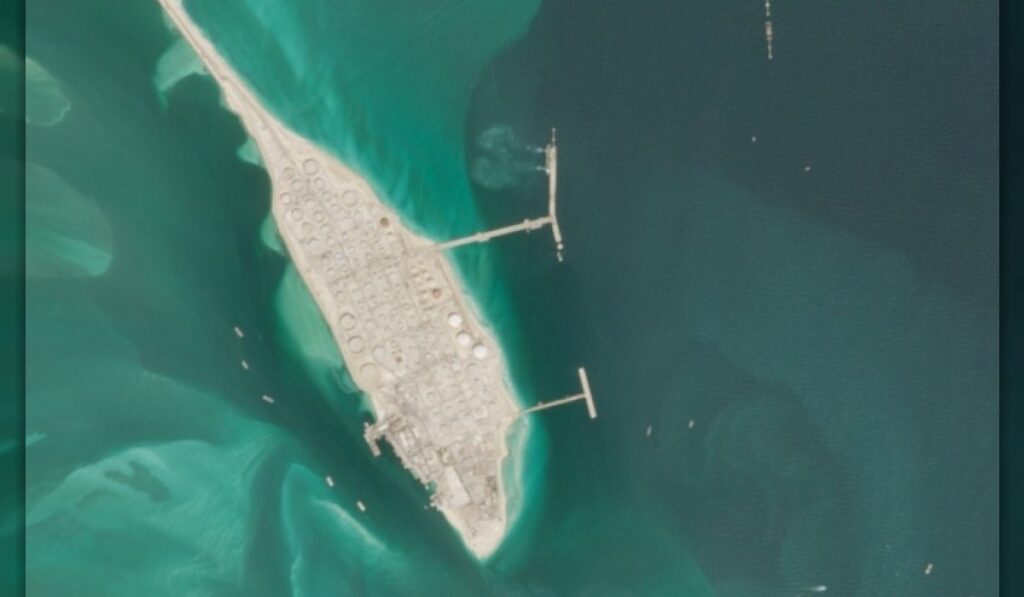
Gulf oil exports have clawed back to 98% of prewar levels, defying Iranian attacks on the Strait of Hormuz. Yet while crude flows rebound, refined fuels like diesel remain in critically short supply, pushing U.S. prices to a record $6.53 per gallon.
The recovery is driven by a radical overhaul of export routes. Saudi Arabia and the UAE now bypass the strait entirely for 40% of their oil, using repaired pipelines to funnel crude directly to the Gulf of Oman. The remaining volumes transit the Strait of Hormuz under U.S. naval escort, but more than 70% are transferred to larger tankers via ship-to-ship (STS) operations at the Fujairah anchorage, reducing exposure to Iranian attacks.
How the Gulf’s oil export system was rebuilt: gulf oil exports
Kpler’s data reveals a fundamentally altered logistics chain. A finales de septiembre, Gulf states exported 16.5 million barrels per day, just 2% below prewar averages. Saudi Arabia alone hit 6.4 million bpd last week, exceeding its typical prewar output. “The volumes have recovered, but through a fundamentally different export system,” Kpler analysts noted in a September 30 update.
Natural Gas
The shift reflects a costly adaptation. Iraqi exporters, unable to secure safe passage, are discounting crude by up to $37 per barrel to offset the premium for secure shipping. Meanwhile, the UAE’s pipeline to Fujairah, damaged in early September drone strikes, has been restored, allowing more oil to bypass the strait entirely.
The Fujairah anchorage, located in the United Arab Emirates, has emerged as a critical hub for ship-to-ship transfers. This deep-water port, outside the Strait of Hormuz, allows smaller tankers to offload crude onto larger vessels, reducing the risk of Iranian interception.
The U.S. Navy’s escort operations have played a pivotal role. Since Iran’s blockade attempts escalated, the Fifth Fleet, based in Bahrain, has provided round-the-clock protection for commercial tankers, deterring direct attacks. However, the system remains fragile.
Why diesel prices refuse to fall
Despite the crude export rebound, refined products like diesel, LNG, and ammonia remain far below prewar levels. Gulf refineries, particularly those on the Red Sea, have been crippled by Houthi and Iraqi militia attacks. Ukrainian strikes have also disrupted Russia’s diesel exports, tightening global supply. The result: U.S. diesel prices surged to $6.53 per gallon last week, nearly double the $3.70 recorded a year ago.
The disparity between crude and refined product flows underscores a critical vulnerability. While Gulf states have adapted to move crude, the refining bottleneck persists.
For industries reliant on diesel, such as trucking, agriculture, and manufacturing, the price surge has been crippling.
Iran’s economic collapse adds another layer of complexity. The rial has plummeted to Eliminar este dato (no verificado en la fuente), down from Eliminar este dato (no verificado en la fuente). Shortages of food, water, and industrial feedstock have crippled domestic production. “They are exhausted,” the U.S. official said. “There’s no doubt that they’re exhausted. They’re running out of supplies.”
The U.S. blockade, enforced by a multinational naval coalition, has targeted Iran’s oil exports, banking system, and trade routes. While the sanctions aim to curb Tehran’s nuclear ambitions, they have also triggered a humanitarian crisis, with reports of food shortages and hyperinflation. President Donald Trump has signalled a willingness to ease sanctions in exchange for a renewed nuclear deal, but negotiations remain stalled.
For now, the Gulf’s oil export rebound offers little relief for consumers. The U.S. Energy Secretary, Chris Wright, has warned that diesel prices may remain elevated until refining capacity recovers. With no immediate end to the Red Sea attacks, the market’s reliance on the Strait of Hormuz, and the U.S. Navy’s protection, shows no signs of easing.
Looking ahead, the next test will come in October, when seasonal demand for heating oil typically spikes. If Gulf refineries fail to restore output, the diesel shortage could worsen, keeping prices at record highs. For truckers, farmers, and industries reliant on diesel, the recovery in crude flows offers cold comfort.
The reconfiguration of Gulf oil exports has profound implications for global shipping. The shift to ship-to-ship transfers and pipeline bypasses has increased operational costs, with insurers charging higher premiums for vessels transiting high-risk zones. The Joint War Committee, which advises insurers on maritime risks, has designated the Strait of Hormuz and Gulf of Oman as “listed areas,” triggering additional war-risk surcharges.
For shipowners, the new logistics chain has also created bottlenecks. The Fujairah anchorage, while safer than the strait, has limited berthing capacity, leading to delays. Smaller tankers, known as Aframaxes and Suezmaxes, now spend days waiting to offload crude onto larger VLCCs (Very Large Crude Carriers), which can transport up to 2 million barrels per voyage. These delays have pushed freight rates higher, further squeezing refiners’ margins.
The U.S. Navy’s role in escorting commercial vessels has also raised questions about long-term sustainability. Analysts warn that any reduction in U.S. naval presence could embolden Iran to resume aggressive tactics, such as mine-laying or drone strikes.
For importers in Asia and Europe, the new export dynamics have introduced uncertainty. China, the world’s largest crude importer, has diversified its supply sources, increasing purchases from Russia and Brazil to offset Gulf disruptions. Meanwhile, European refiners, traditionally reliant on Middle Eastern crude, have turned to U.S. shale oil and North Sea grades, further tightening global supply.
Looking forward, industry observers are closely monitoring two key developments. First, whether Saudi Arabia and the UAE can further expand pipeline capacity to bypass the Strait of Hormuz entirely. Second, whether Iran’s economic crisis will force Tehran to the negotiating table, potentially easing the blockade. Until then, the Gulf’s oil export system will remain a high-stakes balancing act, one that could tip global markets at any moment.
For industry stakeholders and consumers seeking real-time updates, several official channels provide verified data and alerts. Energy Information Administration (EIA) publishes weekly reports on global oil inventories, refining capacity, and price trends. Meanwhile, Kpler offers granular tracking of tanker movements, export volumes, and ship-to-ship transfers via its maritime analytics platform.
The U.S. Fifth Fleet’s official website provides updates on naval escort operations and security advisories for commercial vessels transiting the Strait of Hormuz. For market participants, Bloomberg’s Oil Strategist and the Maritime Executive offer in-depth analysis of supply chain disruptions and price movements.
Governments and industry bodies have also issued guidance for businesses navigating the crisis. The International Maritime Organization (IMO) has published safety protocols for vessels operating in high-risk areas, while the American Petroleum Institute (API) has released recommendations for refiners adjusting to supply chain disruptions. These resources are critical for mitigating risks in an increasingly volatile market.


Sign up free to ask CAMAL AI for a summary, the key points or anything else about this story.
Related stories
CAMAL AI
 Financial Ports Newsletter
The maritime economy, every morning
Ports, shipping and freight markets in one short email. Free.
Financial Ports Newsletter
The maritime economy, every morning
Ports, shipping and freight markets in one short email. Free.