
LNG Prices Plummet as Strait of Hormuz Crisis Eases: Who Wins?
LNG spot prices drop from 2026 peaks despite just 20% of pre-war volumes transiting Hormuz
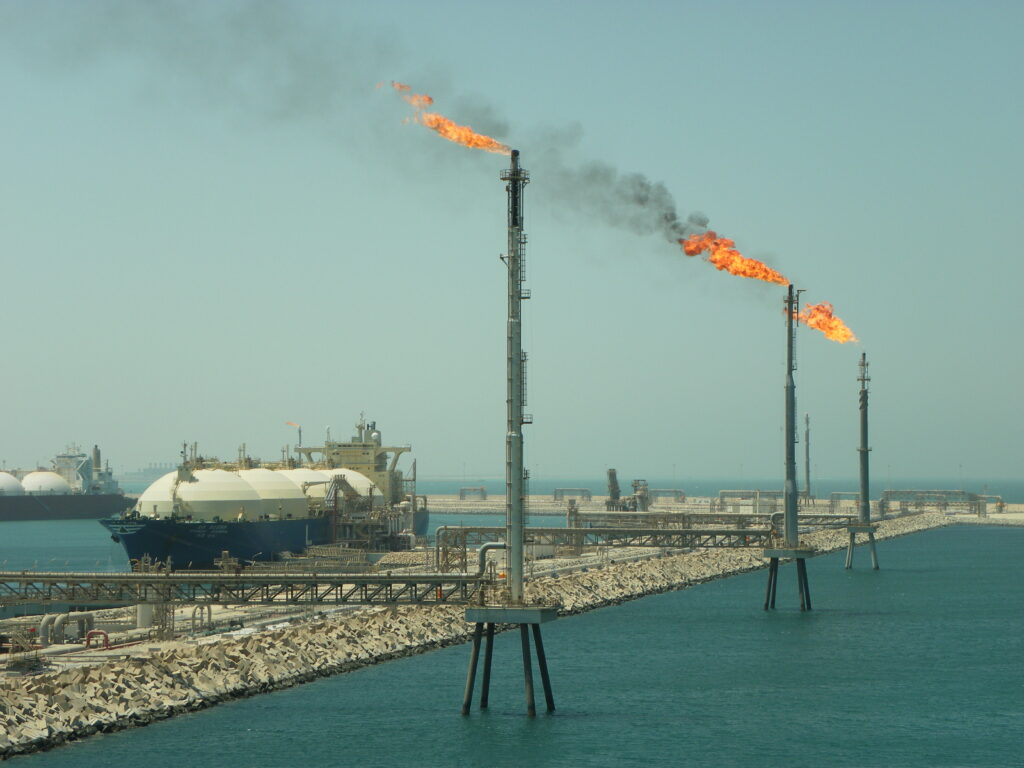
Liquefied natural gas (LNG) prices have tumbled from their 2026 highs, surprising traders as the maritime sector adapts to persistent disruptions in the Strait of Hormuz. Despite no resolution to the geopolitical standoff, alternative routes and a surge in global production have eased the bottleneck, pushing spot prices down from their peak.
The Strait of Hormuz, a critical chokepoint for global energy trade, remains far from normal. Vessels continue to navigate with AIS transponders off, a precautionary measure to avoid detection amid heightened tensions. Commodity brokers estimate that LNG shipments through the strait are running at just 20% of pre-war levels, with shuttle tankers transferring cargoes only after exiting the danger zone. Yet, the market has found a way to cope.
How the Market Is Bypassing the Strait of Hormuz
The shortfall in LNG volumes has been offset by a combination of demand destruction, driven by higher prices, and a sharp increase in production from non-Gulf sources. Canada, the United States, and Malaysia have ramped up output, while Australia and Oman have contributed to a more balanced supply picture. The result? Storage levels in India are nearing capacity, with excess stock now being offloaded onto the market, further depressing prices.
Natural Gas
LNG carriers loaded at Ras Laffan, for instance, are now taking the longer southern route around Oman to reach markets in Pakistan and beyond, avoiding the strait entirely.
Crude oil, meanwhile, has shown remarkable resilience. Saudi Arabia loaded 10 million barrels at Yanbu on September 28, and weekly crude exports from Gulf nations have climbed to 80% of pre-war levels. The kingdom’s crude loadings averaged 8.5 million barrels per day (mbd) over the past week, a figure that defies earlier predictions of prolonged supply shortages.
The maritime sector’s agility in rerouting vessels has played a key role, though analysts warn that the system remains fragile. The lack of alternative strategic trade routes means that any escalation in the region could still trigger a supply shock, particularly for nations reliant on Gulf crude.
One of the most pressing concerns is the failure of some importing nations to maintain adequate reserves of critical petrochemicals. Diesel and jet fuel, for example, have seen stockpiles dwindle in certain markets, leaving them exposed to sudden price swings.
GTT’s Orderbook Swells Amid Market Shifts
As the LNG market adjusts, Gaztransport & Technigaz (GTT), a leading designer of LNG membrane containment systems, has seen its orderbook expand. On September September 23, the company secured an order for the tank design of an 18,700 cubic meter LNG carrier from Hudong-Zhonghua Shipbuilding. GTT’s orderbook now stands at EUR 1.9 billion, encompassing 306 orders, of which 272 are LNG carriers.
GTT, headquartered in France and listed on Euronext Paris, specialises in cryogenic membrane technology for LNG storage and transport. The company’s dominance in the sector is reflected in its orderbook, which has grown steadily as global demand for LNG infrastructure rises.
Despite the positive fundamentals, GTT’s stock has faced pressure. On October 1, shares traded at EUR 209.10 on Lang & Schwarz, a 2.97% drop from the prior close. The decline comes even as Berenberg maintains a Buy rating and a EUR 245.00 price target, citing GTT’s robust order pipeline and projected revenue of EUR 760 million for 2026.
Investors will get an update on the company’s third-quarter performance on October September 23, when GTT releases its activity report. Analysts at Berenberg have modelled third-quarter revenue of EUR 194 million, with a full-year range of EUR 740 million to EUR 780 million, aligning closely with GTT’s own targets.
The broader market, however, is not without risks. While the immediate supply crunch has eased, two critical vulnerabilities remain: the lack of alternative strategic trade routes and the failure of some nations to maintain adequate reserves of critical petrochemicals like diesel and jet fuel. The maritime community’s ability to reroute vessels has been impressive, but the system’s resilience could be tested if another chokepoint emerges, or if the Strait of Hormuz remains contested for years to come.
For stakeholders in the shipping and energy sectors, the current environment presents both opportunities and challenges. The shift in LNG trade flows has created new demand for specialised vessels, benefiting companies like GTT, which are positioned to capitalise on the need for advanced containment systems.
At the same time, the reliance on alternative routes, such as the Omani coastal corridor, has increased voyage times and fuel costs, squeezing margins for shipowners. The London LNG commodities market has responded by adjusting freight rates, but the long-term sustainability of these adjustments remains uncertain.
Another key development is the role of shuttle tankers in mitigating the Strait of Hormuz bottleneck. These vessels, designed for ship-to-ship transfers, have become indispensable in ensuring that LNG cargoes reach their destinations despite the restrictions. The practice, while effective, adds an extra layer of complexity to the supply chain, increasing the risk of delays or operational mishaps. Industry insiders note that the use of shuttle tankers is a temporary fix, not a permanent solution, and that the market’s stability hinges on a resolution to the geopolitical tensions in the Gulf.
For now, the data suggests the storm is being weathered. But with the Islamic Revolutionary Guard Corps (IRGC) still active in the region and the Houthi threat unresolved, the energy market’s stability hangs in the balance. Traders are watching closely, knowing that even a minor incident could trigger another price spike.
The next major test for the market will come in the form of winter demand, which typically sees a surge in LNG consumption for heating and power generation. If the Strait of Hormuz remains constrained, the market could face renewed pressure, particularly if non-Gulf producers struggle to meet the additional demand.
As the situation evolves, industry stakeholders are calling for greater investment in alternative routes and strategic reserves. The current equilibrium is fragile, and the next disruption could come without warning. For companies like GTT, the focus remains on expanding their technological edge, ensuring that their containment systems can support the next generation of LNG carriers.
Meanwhile, governments and energy firms are being urged to diversify their supply chains, reducing their dependence on any single chokepoint. The lessons of the past year have made one thing clear: in the volatile world of energy trade, resilience is not a luxury, it is a necessity.
For readers tracking these developments, key resources include the GTT official website for updates on orderbooks and financial performance, and platforms like Kpler for real-time data on LNG and crude oil shipments.


Sign up free to ask CAMAL AI for a summary, the key points or anything else about this story.
Related stories
CAMAL AI
 Financial Ports Newsletter
The maritime economy, every morning
Ports, shipping and freight markets in one short email. Free.
Financial Ports Newsletter
The maritime economy, every morning
Ports, shipping and freight markets in one short email. Free.